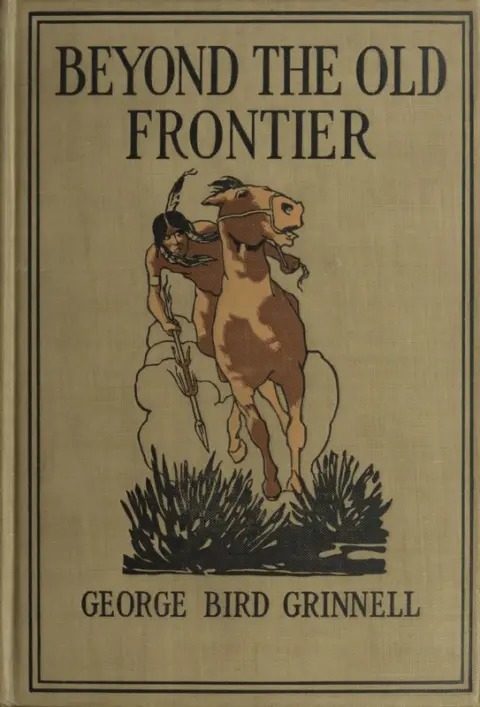
Beyond the Old Frontier: Adventures of Indian-Fighters, Hunters, and Fur-Traders
George Bird Grinnell
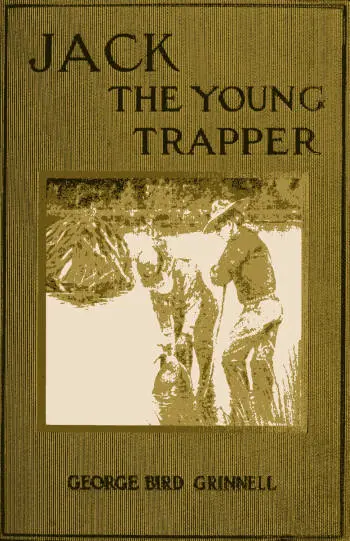
THE CLASSIC COLLECTION · 1907
"Jack the Young Trapper: An Eastern Boy's Fur Hunting in the Rocky Mountains" by George Bird Grinnell is a novel likely written in the early 20th century. The story follows the adventures of Jack Danvers, a young boy from the East who travels to the Rocky Mountains to learn about trapping and fur hunting during the transformative years of America’s westward expansion. With a mix of excitement and learning, Jack’s journey unfolds in a wilderness rich with wildlife, including antelope and beaver, aiming to capture the spirit of the old trappers and the rugged beauty of the western landscape. The opening of the novel introduces Jack Danvers as he returns to his uncle's ranch after a long winter away at school. Full of enthusiasm, he is eager to reconnect with old friends and the natural beauty of the prairie. As he settles in, a conversation between Jack, his uncle Mr. Sturgis, and his friend Hugh Johnson hints at plans for a summer expedition—potentially trapping beaver in North Park. This setting lays the groundwork for Jack's upcoming adventures, showcasing themes of friendship, the challenges of wilderness survival, and the excitement of discovery as they prepare to embark on their trapping journey into the Rocky Mountains.
Introduction adapted from the source catalogue; source summaries may be automatically generated.
Free to read · English · 95,652 words · No account needed
MAKE TIME FOR A GOOD BOOK
On by default. Untick to stop anonymous reading totals. Each page counts after 10 seconds in view. How this works.
Anonymous counting is on unless you have switched it off.
"Well," said Mr. Clifford, "why should we not all go off to-morrow to this place where Jack is going to try Henry's gun, and then both of us can take a lesson? Why will you not come, Mr. Johnson, and teach me while Jack teaches my boy?"
"Why, surely, I'd like to," said Hugh. "No reason why I should stay in camp to-morrow afternoon."
Hugh asked Mr. Clifford and his son and Jones to eat supper with them that night, and they did so, and after the visitors had returned to their camp, Hugh said to Jack, "Son, we are poor for meat again; you or I will have to go up in the hills and kill something, or else we'll have to eat beaver."
"Well," said Jack, "let's wait and see what happens to-morrow. Perhaps we might run on something when we go down the creek."
"We might," said Hugh, "but I don't think we'll go down far enough to see any antelope, and we're not likely to run on any game down here in the valley."
"Well," said Jack sleepily, "we've got to have something to eat, of course," and they went to bed.
Jack was pretty anxious to go up to the bear trap the first thing next morning and see what had been there, but, as usual, they went down over the trapping ground, and this morning their luck was bad. Only one beaver was found, and in the dead-falls there were but three mink. "Time for us to move, I guess, son," said Hugh.
"Looks that way, doesn't it?" said Jack. "Well, never mind; we've done pretty well here, and there are lots more creeks here in the mountains."
"Well, yes," said Hugh; "we can load up both horses with beaver, if we want to, but I don't believe you do."
"No," replied Jack, "I don't believe I do."
When they had reached the skinning ground, Jack looked down on the bear trap and could see that something had been there; in fact, it looked as if a regular trail led through the grass up to the entrance to the pen.
"I declare, Hugh," he said, "it looks to me as if there had been a whole drove of bears down there by the opening of that pen. There seems to be more sign than we saw yesterday, a good deal."
"I wouldn't be surprised," said Hugh, "if quite a lot of bears had come down there. Animals learn soon about good feeding places; I don't know how, but they do."
Your reading position is saved on this browser. Take it to another device with a library code. Reading pages adapt to text, rather than matching a printed edition.
George Bird Grinnell
George Bird Grinnell

Caspar Whitney & George Bird Grinnell & Owen Wister
George Bird Grinnell
BEHIND THE BOOK
This eBook is for the use of anyone anywhere in the United States and most other parts of the world at no cost and with almost no restrictions whatsoever. You may copy it, give it away or re-use it under the terms of the Project Gutenberg License included with this eBook or online at www.gutenberg.org. If you are not located in the United States, you will have to check the laws of the country where you are located before using this eBook. Read the source licence.
The original source file, including credits and licence, is retained by this library. Request an original-format copy at no charge. Please include the book title and Project Gutenberg identifier #45690.
KEEP YOUR CURIOSITY GOING
Coulson Kernahan

Maurice Baring
Frances Wright
Cécile Tormay

Frederic Jesup Stimson

W. H. P. (William Henry Pope) Jarvis