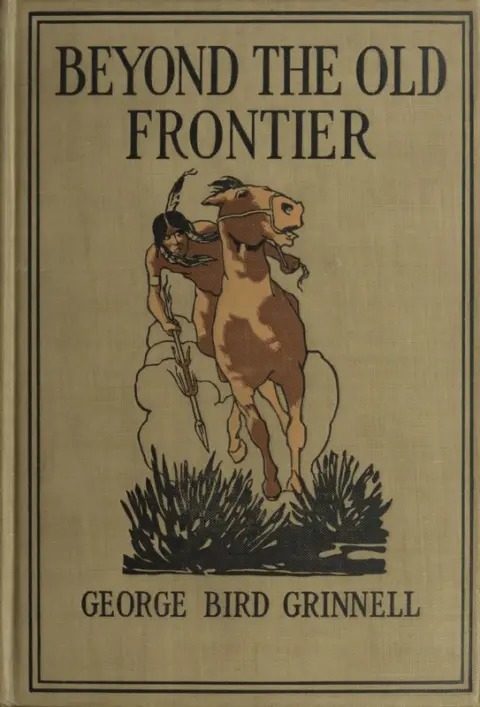
Beyond the Old Frontier: Adventures of Indian-Fighters, Hunters, and Fur-Traders
George Bird Grinnell
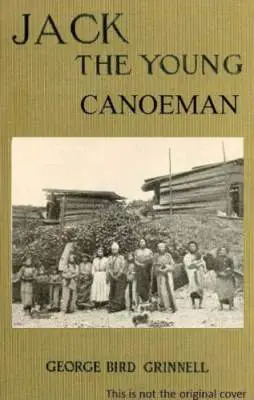
THE CLASSIC COLLECTION · 1906
"Jack the Young Canoeman: An Eastern Boy's Voyage in a Chinook Canoe" by George Bird Grinnell is a fictional adventure novel written in the early 20th century. The story revolves around a boy named Jack and his friend Hugh as they embark on a journey to British Columbia. The narrative explores the beauty of the coastal landscape, the local wildlife, and the interactions with Native American cultures, while also detailing their experiences as they navigate new environments and challenges. At the start of the book, Jack and Hugh arrive in Victoria, British Columbia, with Jack captivated by the unfamiliar coastal scenery and the historical richness of the region. They witness an Indian fishing in a canoe and discuss the unique methods employed by local fishermen. The boys are quickly engrossed in the wonders of their surroundings, from the breathtaking views to the vivid descriptions of fishing, wildlife, and the fishing traditions of the Indigenous peoples. They meet various characters that deepen their understanding of the land, and conversations highlight cultural differences, setting the stage for their upcoming adventures in search of wildlife and exploration of the land's natural beauty.
Introduction adapted from the source catalogue; source summaries may be automatically generated.
Free to read · English · 92,467 words · No account needed
MAKE TIME FOR A GOOD BOOK
On by default. Untick to stop anonymous reading totals. Each page counts after 10 seconds in view. How this works.
Anonymous counting is on unless you have switched it off.
"But about this Indian here," said Hugh, "it seems to me that he ought to be able to understand our Indians. Their villages cannot be more than a hundred miles from one another, and to an Indian a hundred miles is nothing. These Ucletah must sometimes come up to the head of this Inlet, and these people who live up here, Hanéhtsin,--don't you call them,--must go down the inlet and go up and down the shore. It would seem as if they must have met sometimes, and as if they would have some common speech."
"Yes," said Fannin. "They ought to, but I don't believe they have. Of course I know no more about them than you do, but you saw the experiments that were tried upon that old chap that we've just left."
"Yes," said Hugh, "there's no going back on that. He didn't understand, no matter how much he ought to have understood."
"Hugh," said Jack, "did you count the number of people at the village?"
"Yes," said Hugh, "I did: three women, three children, and the old man."
"Well," said Jack, "did you count the dogs?"
"No," said Hugh; "I reckon I forgot to count the dogs. There were a lot
of them, I know."
"Nineteen," said Jack. "I counted them. Three or four times I had them all counted, and then a lot more would show up. There were a lot lying down sunning themselves when I got there, and after they had got up and come round to threaten us, a lot more came out of the house. This nineteen that I counted didn't include the pups. I looked into a little pen built of sticks, near one of the houses, and there were nine puppies in there, just able to waddle, and I saw some others not much older wandering about."
"Ah," said Charlie, "call it 'Dogtown'; we haven't any better name for
it."
"All right," laughed Jack. "I'll put it down."
"Mr. Fannin," said Jack, after a pause, "I was thinking last night of the hammer that that old Siwash was using to mend his canoe. That was a regular primitive implement, wasn't it?"
"Yes," said Fannin; "you often see the Indians still using these hammers. I suppose to an Indian they are just as good, and maybe lots better, than a white man's hammer."
"Yes," said Jack, "I don't see why they shouldn't be; but while the hammer was old-fashioned and primitive, the strip of tin which he was nailing over the cracks in the bottom of the canoe and the tacks were modern. Where do you suppose he got them?"
Your reading position is saved on this browser. Take it to another device with a library code. Reading pages adapt to text, rather than matching a printed edition.
George Bird Grinnell
George Bird Grinnell

Caspar Whitney & George Bird Grinnell & Owen Wister
George Bird Grinnell
BEHIND THE BOOK
This eBook is for the use of anyone anywhere in the United States and most other parts of the world at no cost and with almost no restrictions whatsoever. You may copy it, give it away or re-use it under the terms of the Project Gutenberg License included with this eBook or online at www.gutenberg.org. If you are not located in the United States, you will have to check the laws of the country where you are located before using this eBook. Read the source licence.
The original source file, including credits and licence, is retained by this library. Request an original-format copy at no charge. Please include the book title and Project Gutenberg identifier #46289.
KEEP YOUR CURIOSITY GOING
Coulson Kernahan

Maurice Baring
Frances Wright
Cécile Tormay

Frederic Jesup Stimson

W. H. P. (William Henry Pope) Jarvis