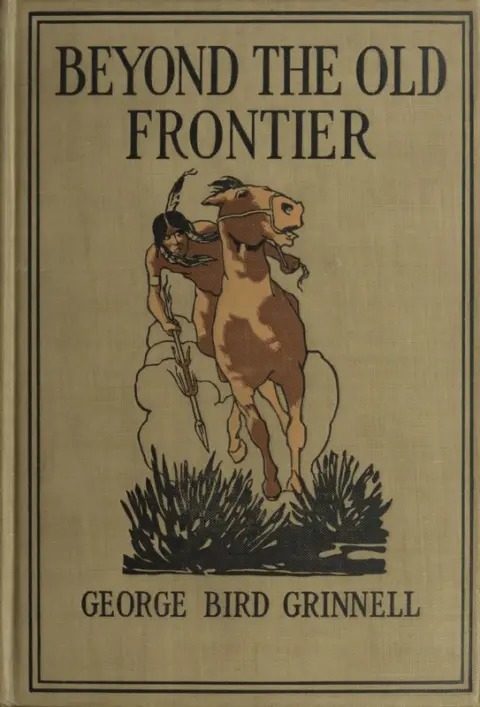
Beyond the Old Frontier: Adventures of Indian-Fighters, Hunters, and Fur-Traders
George Bird Grinnell
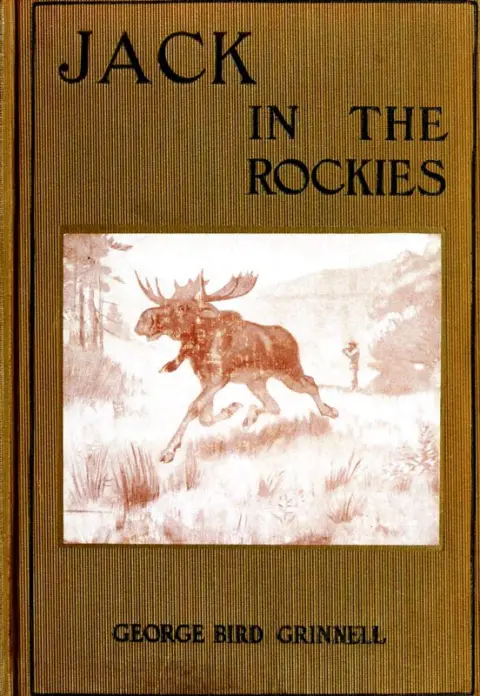
THE CLASSIC COLLECTION · 1904
"Jack in the Rockies: A Boy's Adventures with a Pack Train" by George Bird Grinnell is a children's adventure novel written in the early 20th century. The story follows a young boy named Jack Danvers, who embarks on a journey through the western United States, specifically the Rocky Mountains, alongside his mentor, Hugh Johnson. The narrative captures their experiences with the landscape, wildlife, and local Indigenous tribes, illustrating both the beauty and challenges of frontier life during that era. The opening of the book sets the stage for Jack and Hugh’s adventure as they navigate a river on a steamboat, moving toward their destination, Fort Benton. Jack reflects on his previous experiences with the Piegan tribe and his eagerness to reconnect with nature. The narrative introduces significant historical context by mentioning the challenges faced by Native Americans, such as disease due to contact with Europeans. Additionally, interactions between Jack and various characters aboard the steamboat provide insight into the dynamic and rugged life of the plains, foreshadowing the adventures and encounters awaiting them as they delve deeper into the Rockies.
Introduction adapted from the source catalogue; source summaries may be automatically generated.
Free to read · English · 75,532 words · No account needed
MAKE TIME FOR A GOOD BOOK
On by default. Untick to stop anonymous reading totals. Each page counts after 10 seconds in view. How this works.
Anonymous counting is on unless you have switched it off.
"Well," said Hugh, "this is the place; and if this man Audubon was out here in 1843, that, I think, was just the year before they had the big smallpox here. Men that were here at the time tell me that there were two or three big camps of Indians here, and that they got the smallpox in the fall, just before the ground froze, and the Indians died off like wolves about a poisoned carcass; and the ground was hard, and they could not dig graves for them, and they just stacked up the bodies outside of the fort, in rows, like so much cord-wood, and had to wait till the ground melted in the spring before they could bury 'em. There must have been a pile of Indians died."
"Well, what did they do for smallpox, Hugh? How did they cure
themselves?"
"Why, they didn't know anything about curing themselves, son. When a man got smallpox, or got sick, he just went into a sweat-lodge, and took a sweat, and came out and plunged into the river to cool off, and the ice was running, and some of 'em never came up again, and some of those that did come up were so weak from the shock that they could not get to the shore, and just drowned. If we get to the Blackfoot camp this summer, you ask old man Chouquette about it. He was here then; he'll tell you about it, just the same as he told me."
While Hugh had been talking, the boat had cast off and had once
more started up the river.
It was afternoon, and Hugh was dozing in his chair, tilted up against the cabin, while Jack as usual was watching the river banks, when suddenly from behind a little hill that formed the end of a hog back, which extended well out into the bottom, he saw a herd of seventy or eighty buffalo, come running as hard as they could across the bottom, and plunge into the river just above the boat. The great animals ran as if frightened, and seemed to regard nothing but the danger behind them. As the boat went along, and the buffalo swam to cross the stream, they came nearer and nearer together, and at last it was evident that the buffalo would pass very close to the boat. They swam rapidly, and with them were many little calves, swimming on the down stream side of their mothers, and going swiftly and easily. Jack shouted to Hugh, who, with him, watched the buffalo, and in a very few minutes the boat was actually in the midst of the herd. The animals did not attempt to turn about, but swam steadily after their leaders, and some of them actually swam against the boat, and, only then seeming to understand their danger, turned about and, grunting, snorting, and bellowing, climbed up on each other in tremendous fright. As they came to the boat Jack at first had started to get his rifle, but Hugh called him back, and they both descended to the lower deck, where, with the other passengers, and the deck hands, they were actually within arms length of the buffalos. The mate, forming a noose with a rope, threw it over the head of a two-year-old, and half a dozen of the roustabouts, pulling on the rope, lifted the animal's head up on the deck, when the mate killed it, and it was presently hauled aboard and butchered. As they returned to the upper deck, having watched the buffalo, after the boat had passed, swim to the other bank and climb out of the water, and then stop and look at the boat, Jack said to Hugh, "Well, I saw a lot of buffalo last year, but it sort of excites one to see them again as close as those were."
Your reading position is saved on this browser. Take it to another device with a library code. Reading pages adapt to text, rather than matching a printed edition.
George Bird Grinnell
George Bird Grinnell

Caspar Whitney & George Bird Grinnell & Owen Wister
George Bird Grinnell
BEHIND THE BOOK
This eBook is for the use of anyone anywhere in the United States and most other parts of the world at no cost and with almost no restrictions whatsoever. You may copy it, give it away or re-use it under the terms of the Project Gutenberg License included with this eBook or online at www.gutenberg.org. If you are not located in the United States, you will have to check the laws of the country where you are located before using this eBook. Read the source licence.
The original source file, including credits and licence, is retained by this library. Request an original-format copy at no charge. Please include the book title and Project Gutenberg identifier #44671.
KEEP YOUR CURIOSITY GOING
Coulson Kernahan

Maurice Baring
Frances Wright
Cécile Tormay

Frederic Jesup Stimson

W. H. P. (William Henry Pope) Jarvis