THE CLASSIC COLLECTION✦The Bishop of Cottontown: A Story of the Southern Cotton MillsCLASSIC FREE BOOKS
The Bishop of Cottontown: A Story of the Southern Cotton Mills
John Trotwood Moore
THE CLASSIC COLLECTION · 1911
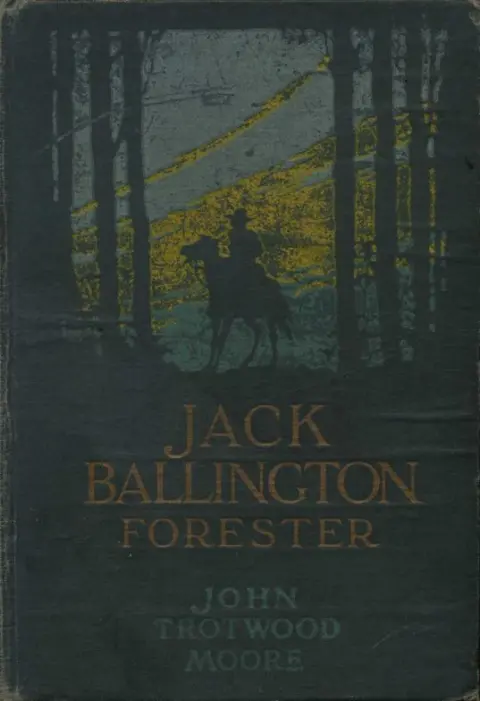
"Jack Ballington, Forester" by John Trotwood Moore is a novel written in the early 20th century. The narrative revolves around Jack Ballington, a forester and agricultural enthusiast, as he navigates his family dynamics, the relationships within his community, and his love for nature and trees. The story is set against the backdrop of the American South, particularly in the beautiful bluegrass region of Tennessee. The opening of the novel introduces readers to Jack Ballington and his deep connection with nature, as well as provides insight into the lively and complex family dynamics at The Home Stretch farm. Jack's fondness for his younger cousin, affectionately known as Little Sister, is highlighted, along with the strong personalities of their relatives, particularly the old General and Aunt Lucretia. The narrative is marked by reflections on life, growth, and the expectations placed upon Jack, who has aspirations to create a positive change in the world through his knowledge of forestry and agriculture. From the start, the text sets up a rich familial tapestry filled with humor and warmth while hinting at the tensions that arise from diverging ambitions and traditional expectations.
Introduction adapted from the source catalogue; source summaries may be automatically generated.
Free to read · English · 78,035 words · No account needed
MAKE TIME FOR A GOOD BOOK
On by default. Untick to stop anonymous reading totals. Each page counts after 10 seconds in view. How this works.
Anonymous counting is on unless you have switched it off.
"And this is the way I'd go to registering my people," she continued. "In all registration there must be a foundation stock. For man, I'd let Truthfulness, Bravery, Honesty, Manliness, and Ability to Do Things, count as Foundations. This would change the present social system radically and let into good society and life a flood of good blood that is at present badly needed but is shut out, unless it suddenly happens to get rich and comes in under a dress suit. I would make accomplishments, the Ability to Do Things, from the Ability to do Poetry, Art, Drama, Music--everything that is worth while--to the ability to make two blades of grass grow, the greatest of them all, count as my classes, and it wouldn't take me long to straighten out Old Humanity and breed a race of people, who, in a few generations, as old Horace says, would strike the stars with their uplifted heads!"
She laughed. "Look, Jack, here it is. I have worked it all out, just for fun." She unrolled a parchment, as immaculately executed in decorated letters as Eloise's pedigree had been. Then she read, glancing over her glasses now and then to emphasize her remarks.
When white men and women meet the following requirements and are duly registered, they shall be accepted as standard bred, and shall be permitted to marry:
FIRST: Any white man, who has a home of his own and is honest, industrious, and truthful, and sound in wind, limb and eye.
SECOND: Any white woman, who can cook a good meal, make her own clothes, keep a home clean, lives a pure life, and has some moral standard for herself and children, and will agree to raise them under it.
THIRD: Every man who is the father of a great man or woman.
FOURTH: Every woman who is the mother of a great man or woman.
The following shall be Non-Standard, and neither they nor their children
shall be registered.
FIRST: Fools.
SECOND: Liars.
THIRD: Cranks.
FOURTH: Idiots.
FIFTH: Geniuses. They are freaks merely, and fools in another form.
SIXTH: Sissy men.
SEVENTH: Consumptives, the cancerous, the insane.
EIGHTH: Impure women.
NINTH: Society people wherever found, and their one child.
TENTH: Married men who lead Germans.
ELEVENTH: The children of women who play cards for money and prizes.
TWELFTH: Evangelists who preach slang from the pulpit.
THIRTEENTH: Praying lawyers.
FOURTEENTH: Trading preachers.
FIFTEENTH: Professional politicians.
SIXTEENTH: Bank cashiers who run Sunday Schools.
SEVENTEENTH: Doctors who cut open people quickly, or dope them with much
medicine.
LUCRETIA RUTHERFORD,
Registrar."
Your reading position is saved on this browser. Take it to another device with a library code. Reading pages adapt to text, rather than matching a printed edition.
BEHIND THE BOOK
This eBook is for the use of anyone anywhere in the United States and most other parts of the world at no cost and with almost no restrictions whatsoever. You may copy it, give it away or re-use it under the terms of the Project Gutenberg License included with this eBook or online at www.gutenberg.org. If you are not located in the United States, you will have to check the laws of the country where you are located before using this eBook. Read the source licence.
The original source file, including credits and licence, is retained by this library. Request an original-format copy at no charge. Please include the book title and Project Gutenberg identifier #45652.
KEEP YOUR CURIOSITY GOING
Coulson Kernahan

Maurice Baring
Frances Wright
Cécile Tormay

Frederic Jesup Stimson

W. H. P. (William Henry Pope) Jarvis