THE CLASSIC COLLECTION✦The Bishop of Cottontown: A Story of the Southern Cotton MillsCLASSIC FREE BOOKS
The Bishop of Cottontown: A Story of the Southern Cotton Mills
John Trotwood Moore
THE CLASSIC COLLECTION · 1911
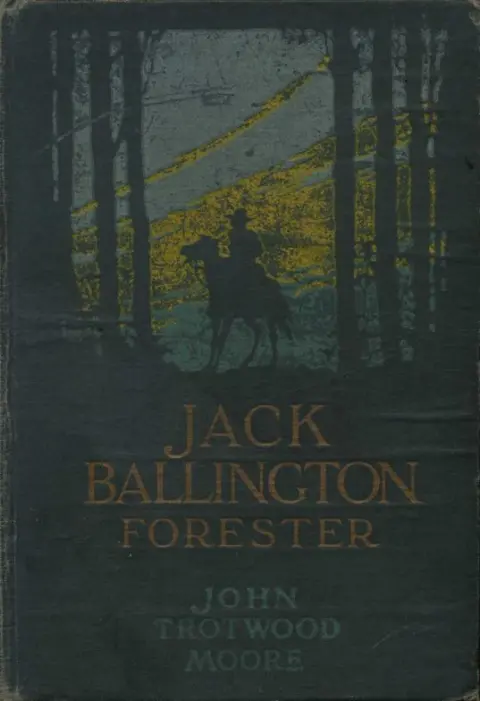
"Jack Ballington, Forester" by John Trotwood Moore is a novel written in the early 20th century. The narrative revolves around Jack Ballington, a forester and agricultural enthusiast, as he navigates his family dynamics, the relationships within his community, and his love for nature and trees. The story is set against the backdrop of the American South, particularly in the beautiful bluegrass region of Tennessee. The opening of the novel introduces readers to Jack Ballington and his deep connection with nature, as well as provides insight into the lively and complex family dynamics at The Home Stretch farm. Jack's fondness for his younger cousin, affectionately known as Little Sister, is highlighted, along with the strong personalities of their relatives, particularly the old General and Aunt Lucretia. The narrative is marked by reflections on life, growth, and the expectations placed upon Jack, who has aspirations to create a positive change in the world through his knowledge of forestry and agriculture. From the start, the text sets up a rich familial tapestry filled with humor and warmth while hinting at the tensions that arise from diverging ambitions and traditional expectations.
Introduction adapted from the source catalogue; source summaries may be automatically generated.
Free to read · English · 78,035 words · No account needed
MAKE TIME FOR A GOOD BOOK
On by default. Untick to stop anonymous reading totals. Each page counts after 10 seconds in view. How this works.
Anonymous counting is on unless you have switched it off.
I saw the straight, fine figure draw back half haughtily into the carriage, and a half-protesting look flash for an instant over the pretty face, profiled through the open space. She threw back her head in the old tribute-demanding way, and her half-closed lids veiled her eyes under great curving, brown-red brows. I caught a gleam of the old daring fun in them, as she smiled and held out both her hands, taking mine.
"Awfully glad to see you, Jack--welcome home."
My heart betrayed itself in the quick glance I gave her. She had developed so wonderfully in those four years. And how I had longed to see her!
She sat smiling kindly into my eyes; I stood looking sillily into hers, holding both of her hands in mine, forgetful of Aunt Lucretia, and with no word that I could say to Eloise.
"Eloise," I began haltingly at last, "is it--have you--is it really
you?"
I bent down to kiss her, but she fenced away and drew back smiling.
I dropped her hand, hurt.
"Jack," and her tone tried to compensate me, "behave now--everybody is looking." Then she added louder, "Have you really grown into this handsome chap--and no lameness any more?"
"Tut--tut," broke in Aunt Lucretia, half irritated, "you two make me tired. Of course he has--you have both grown wonderfully up to your pedigree--I always said so--nothing strange in that. And as you are both grown now," she added patronizingly and with the old return of authority, "I intend to marry you to each other before Christmas--see if I don't."
I blushed and Eloise smiled--a trace of the old fun-loving tease breaking across the corners of her mouth. Her beautiful clear blue-hazel eyes smiled up into mine, full of the old fun and daring.
I bent over her. "Eloise, aren't you really going to kiss me?"
"It is unsanitary, Jack,--and--" she glanced at Aunt Lucretia--"bad form
and--"
I turned, hurt, and shook hands with old Thomas, the driver.
"Mighty glad to see you back home, Marse Jack, mighty glad!" said he.
I looked closely at his horses, with that pretended admiration that I knew would please him, in order to hide my chagrin. There was embarrassment in it too, for I knew I was under inspection from the eyes of Eloise.
"I declare, Marse Jack," he went on, "dis sho'ly ain't you, is it? I declar to goodness if you ain't biggern yo' daddy wuz, and yo' gran'pa--the ole Jineral." He grew easily loquacious. "When I fust seed you a-comin' out dat cyar dore, I didn't know you, and yit I sed to myself, sholy I've seed dat face--hit 'pears mighty complicated to me somehow."
Your reading position is saved on this browser. Take it to another device with a library code. Reading pages adapt to text, rather than matching a printed edition.
BEHIND THE BOOK
This eBook is for the use of anyone anywhere in the United States and most other parts of the world at no cost and with almost no restrictions whatsoever. You may copy it, give it away or re-use it under the terms of the Project Gutenberg License included with this eBook or online at www.gutenberg.org. If you are not located in the United States, you will have to check the laws of the country where you are located before using this eBook. Read the source licence.
The original source file, including credits and licence, is retained by this library. Request an original-format copy at no charge. Please include the book title and Project Gutenberg identifier #45652.
KEEP YOUR CURIOSITY GOING
Coulson Kernahan

Maurice Baring
Frances Wright
Cécile Tormay

Frederic Jesup Stimson

W. H. P. (William Henry Pope) Jarvis