THE CLASSIC COLLECTION✦The Bishop of Cottontown: A Story of the Southern Cotton MillsCLASSIC FREE BOOKS
The Bishop of Cottontown: A Story of the Southern Cotton Mills
John Trotwood Moore
THE CLASSIC COLLECTION · 1911
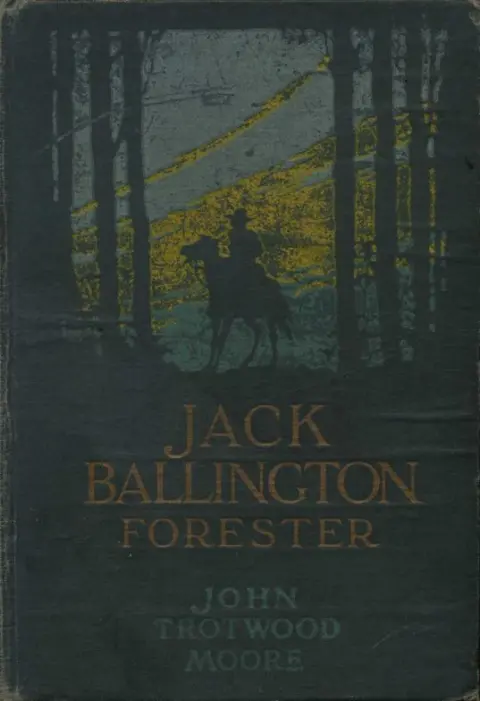
"Jack Ballington, Forester" by John Trotwood Moore is a novel written in the early 20th century. The narrative revolves around Jack Ballington, a forester and agricultural enthusiast, as he navigates his family dynamics, the relationships within his community, and his love for nature and trees. The story is set against the backdrop of the American South, particularly in the beautiful bluegrass region of Tennessee. The opening of the novel introduces readers to Jack Ballington and his deep connection with nature, as well as provides insight into the lively and complex family dynamics at The Home Stretch farm. Jack's fondness for his younger cousin, affectionately known as Little Sister, is highlighted, along with the strong personalities of their relatives, particularly the old General and Aunt Lucretia. The narrative is marked by reflections on life, growth, and the expectations placed upon Jack, who has aspirations to create a positive change in the world through his knowledge of forestry and agriculture. From the start, the text sets up a rich familial tapestry filled with humor and warmth while hinting at the tensions that arise from diverging ambitions and traditional expectations.
Introduction adapted from the source catalogue; source summaries may be automatically generated.
Free to read · English · 78,035 words · No account needed
MAKE TIME FOR A GOOD BOOK
On by default. Untick to stop anonymous reading totals. Each page counts after 10 seconds in view. How this works.
Anonymous counting is on unless you have switched it off.
He stopped, but not in time. It was a nervous-looking, old, fleabitten, gray mare, full of Stackpole, Traveler, Dan Rice and Boston blood. I had seen it so often that I knew the very turn of its tail. In the buckboard she was pulling were three country girls, fat, solid, happy, their lines wabbling around anywhere, and the old mare going where she listeth. They were the kind of girls I knew and loved in my sappy days. I used to commence to kiss 'em about Christmas, knowing they'd wake up and respond about the Fourth of July. Two of them amply filled up the buckboard, but, as usual, a third one had piled on top of the others somewhere, and--
"Great heaven, Horace!" I shouted. "Stop--that one there on top is
holding a baby!"
I sprang out, for I saw the old mare begin to squat, her old, scared, brown eyes blazing in her white face like holes in a big lard can. I heard her snort like a scared bear and saw her feet pattering jigs all over the pike. Then she whirled, running into a fence, where, between the overturned buckboard, the shafts and the rail fence, she stood wedged upon her hind legs, pawing the air.
But the girls surprised me. Without a change in their fat, immutable, expressionless faces, they simply rolled out on the pike in a bunch, the baby on top, like snow folks tilted over by a boy.
They got up, dusting their frocks. They had taken it for granted. It was all right. There was not a squawk, not even from the baby, as one of them picked it up and I grabbed the bits and straightened out the old mare.
"I hope you ladies aren't hurt," said my friend from the roadside, in
his machine.
"Sally, is you hurt?" asked the fattest one.
"Naw," she grunted.
"Mamie, is you?"
Mamie merely wiggled.
"Is Tootsy hurt?"
Tootsy was eating an apple, with unblinking eyes fixed on the wonderful
machine.
Nothing was hurt but the harness.
That was hurt before they started, but I had to spend the next twenty minutes patching it up. Finally we got them all in, Tootsy on top. No word had they spoken, but I could see they were eyeing me, with that country suspicion that makes every maid of them rate every man she meets in the road as Lothario, Jr., or a prince in disguise.
"Now, ladies, you are all right," I said, trying to keep cheerful. "And I am so glad none of you was hurt."
Then one of them drawled, but looking over toward the distant horizon, "Ain't you named Mister Jack?"
Your reading position is saved on this browser. Take it to another device with a library code. Reading pages adapt to text, rather than matching a printed edition.
BEHIND THE BOOK
This eBook is for the use of anyone anywhere in the United States and most other parts of the world at no cost and with almost no restrictions whatsoever. You may copy it, give it away or re-use it under the terms of the Project Gutenberg License included with this eBook or online at www.gutenberg.org. If you are not located in the United States, you will have to check the laws of the country where you are located before using this eBook. Read the source licence.
The original source file, including credits and licence, is retained by this library. Request an original-format copy at no charge. Please include the book title and Project Gutenberg identifier #45652.
KEEP YOUR CURIOSITY GOING
Coulson Kernahan

Maurice Baring
Frances Wright
Cécile Tormay

Frederic Jesup Stimson

W. H. P. (William Henry Pope) Jarvis