THE CLASSIC COLLECTION✦Henry Martyn, Saint and Scholar First Modern Missionary to the Mohammedans, 1781-1812CLASSIC FREE BOOKS
Henry Martyn, Saint and Scholar First Modern Missionary to the Mohammedans, 1781-1812
George Smith
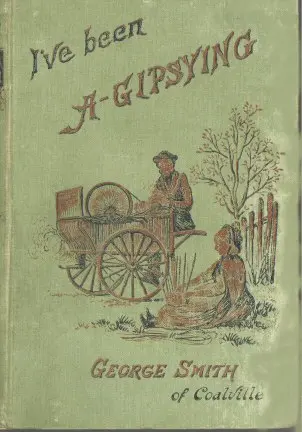
THE CLASSIC COLLECTION · 1883
"I've Been a Gipsying" by George Smith is a travelogue written in the late 19th century. The book documents the author’s experiences and observations among the gipsy communities in England, particularly focusing on their children, culture, and living conditions. Through a series of excursions, he seeks to portray the realities of gipsy life, shedding light on their hardships and the neglect faced by their young ones. The opening of the book introduces the reader to the author's intention of conveying both the struggles and joys of gipsy life. On a rainy Sunday, Smith embarks on a journey to visit gipsy children living in squalor on the outskirts of London. He vividly describes their impoverished living conditions, illustrating their lack of education and basic needs, and expressing a deep concern for their wellbeing. The author's empathetic storytelling aims to evoke a sense of urgency for social change, highlighting the stark contrast between the gipsy children's lives and the privileged existence of other children nearby.
Introduction adapted from the source catalogue; source summaries may be automatically generated.
Free to read · English · 132,003 words · No account needed
MAKE TIME FOR A GOOD BOOK
On by default. Untick to stop anonymous reading totals. Each page counts after 10 seconds in view. How this works.
Anonymous counting is on unless you have switched it off.
I began to puzzle my brains as to how their deliverance was to be accomplished. For some little time I pondered the matter over, when it occurred to me that at the bottom end of the dismal room I had noticed a place upon the wall which looked like a door that had been plastered over in somebody’s time by pieces of old rags and paper.
I drew near to it, and scanned it over more closely. After feeling round the edges of it for a few minutes, one of the oldest and most wretched-looking gipsies spoke out in hasty tones, and with an amount of warmth that led me to hesitate for a moment to hear what further he had to say. He stopped short. So I said, “Well, Righteous Palmer, what is there behind this opening if I should proceed to find out?” “Oh, a lot, I’m told by those who know. Our place is bad enough, as our old witch knows, and you know, sir; but nothing like what there is behind that there ‘opening,’” pointing with his finger, “and if I was you, my dear good gentleman, I would not stir a peg to see any further. We should not like to see any harm come to you. If it had been anybody else we should not have minded a bit; we would as soon given him a chuck to Nick as look at him, and been glad o’ the job, and ground his bones to powder, and played at football with his skull.” I said, “Well now, Palmer, if you do not mind, we will see.”
“If you do,” said Palmer, “and get into any trouble, or into a place out of which you cannot get back, you must not blame us.” “Will you do what you can to help me?” I said. “Oh yes, we will do what we can for you in any way.” “All right,” I said. I now took out my pocket knife and began to cut and pull some of the paper and old rags off what now was appearing to be a door. The old witches, “hags,” and grey-bearded, bloated, and thin, wretched-looking men, and swarms, almost, of poor emaciated children, eagerly closed round me to see what it would end in. The stinking fire was stirred up to cause fresh light; and in the meantime I kept cutting away, which was no light task, for there were many old knots and rusty nails to be faced. Some of the poor children cried out, “By Jove, it is a door! Wonder where it leads to?” “All right,” I said, “wait and we will see.” And I worked, tugged, and toiled, sometimes in the midst of breathless silence, and at others in a gipsy noise loud enough to drown my own voice and noise of my tinkering. At last the door seemed to be pretty loose. Nervousness and fear seemed to creep over me more than ever as I neared the end. Questions kept popping up in my mind, “Where will it lead to? If it did not lead to an opening and daylight,” I said to myself more than once, “I am a done man.” “Lord help me,” I said, as I put my hand to the door to push it or pull it one way or the other. At last I pulled it open. There was the faintest light to be seen from somewhere, but I could not tell where. All the gipsies came nearer to me, and I said to one of the strongest of them, “Hold my hand, for I do not know where it will lead to. It will either be to my ruin or your happiness.” “We will hold you,” cried one and all; “you shan’t fall at any rate.” “Thank the Lord for this,” I said, and with much trembling I took the first step, not knowing whether it was to be downhill or uphill. In putting my feet out I felt my toe go against something hard. I kicked again and again, and found it to be a stone step. I then put my foot upon it. The gipsies were still at my coat tail. I then put both feet upon it, and felt at the walls, which seemed to widen out. A little more light was manifest, but still I could not tell where it came from. I kept groping and feeling my way step after step. More light of a yellowish tint, not of the cold moonlight hues, was now becoming more visible. The gipsies, especially the children, began to get eager to see the end of it. First one and then another of them said more than once, “The light seems nice; I wonder where it comes from?” The old gipsies were, with this light, made to look most horrible, and slunk back, but the children stuck to me. A great wide passage was now manifest; and altogether an uphill work was becoming more pleasant and cheerful. The gipsy children seemed to be round me by hundreds, and for the life of me I could not tell where they came from. A more miserable lot could not be imagined. Some of the children cried out, “Governor, it seems a long way to the top; how far is it?” Another twenty steps brought us to the top in full face to the rising sun; singing birds filling the air with their chanting; lovely flowers and beautiful mansions, blossoming trees rich with bud, blossom, and fragrance; groves, parks, and long walks without end. The deer were bounding, cattle grazing, and the big lambs were calling out for their mothers. In the long winding distance, at the top of a hill, stood a golden city, whose mansions and palaces were built of large blocks of precious stones, with an arch spanning over the whole composed of a succession of rainbows, with rays of glory indescribable, anxiously forcing their way to add lustre to the scene through the occasional openings to be seen in the illuminated arch. My heart was so overjoyed at having arrived at the top, and seeing vast crowds of little gipsy children brought out of darkness, I began to sing out lustily, with tears in my eyes—
Your reading position is saved on this browser. Take it to another device with a library code. Reading pages adapt to text, rather than matching a printed edition.
George Smith
George Smith
BEHIND THE BOOK
This eBook is for the use of anyone anywhere in the United States and most other parts of the world at no cost and with almost no restrictions whatsoever. You may copy it, give it away or re-use it under the terms of the Project Gutenberg License included with this eBook or online at www.gutenberg.org. If you are not located in the United States, you will have to check the laws of the country where you are located before using this eBook. Read the source licence.
The original source file, including credits and licence, is retained by this library. Request an original-format copy at no charge. Please include the book title and Project Gutenberg identifier #62432.
KEEP YOUR CURIOSITY GOING
Wilfrid Scawen Blunt
Wilfrid Scawen Blunt

E. W. (Edgar Watson) Howe
Francis Greenleaf Allinson & Anne C. E. (Anne Crosby Emery) Allinson
Cyrenus Cole

John Martineau