THE CLASSIC COLLECTION✦Henry Martyn, Saint and Scholar First Modern Missionary to the Mohammedans, 1781-1812CLASSIC FREE BOOKS
Henry Martyn, Saint and Scholar First Modern Missionary to the Mohammedans, 1781-1812
George Smith
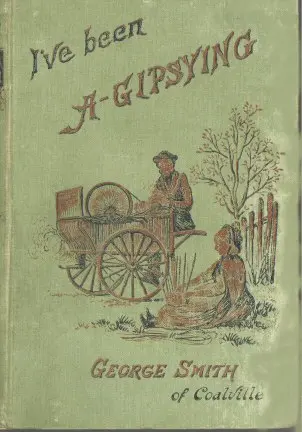
THE CLASSIC COLLECTION · 1883
"I've Been a Gipsying" by George Smith is a travelogue written in the late 19th century. The book documents the author’s experiences and observations among the gipsy communities in England, particularly focusing on their children, culture, and living conditions. Through a series of excursions, he seeks to portray the realities of gipsy life, shedding light on their hardships and the neglect faced by their young ones. The opening of the book introduces the reader to the author's intention of conveying both the struggles and joys of gipsy life. On a rainy Sunday, Smith embarks on a journey to visit gipsy children living in squalor on the outskirts of London. He vividly describes their impoverished living conditions, illustrating their lack of education and basic needs, and expressing a deep concern for their wellbeing. The author's empathetic storytelling aims to evoke a sense of urgency for social change, highlighting the stark contrast between the gipsy children's lives and the privileged existence of other children nearby.
Introduction adapted from the source catalogue; source summaries may be automatically generated.
Free to read · English · 132,003 words · No account needed
MAKE TIME FOR A GOOD BOOK
On by default. Untick to stop anonymous reading totals. Each page counts after 10 seconds in view. How this works.
Anonymous counting is on unless you have switched it off.
“Some angel in the land of love
For love should pity me,
And draw me in like Noah’s dove
From wastes of misery.”
The lark echoes in the air—
“But I would seek on earth below
A space for heaven to win,
To cheer one heart bowed down by woe,
To save one soul from sin.”
I left this hut, after taking a breath of fresh air, for another gipsy dwelling round the corner, picking my way among the masses of filth as well as I could. Here another sight, not quite so sickening, but equally heartrending, presented itself. A gipsy woman was squatting upon the filthy boards, the father was sitting upon a rickety old chair without any bottom in it; i.e., there were a few cords tied across which served to hold up one or two dirty rags, and these were sunk so low that any one sitting upon the chair could feel nothing but the rims, which were not at all comfortable. Round the man and woman were six children of all ages and sizes, partially dressed in filthy rags and old shoes, which seemed to have been picked out of the ashes upon Hackney Marshes, all of which were much too large for their little feet, and were stuffed with rags. One little girl had a pair of cast-off woman’s shoes, possessing little sole and almost less “uppers.”
The gipsy father was partially blind through having been in so many gipsy combats. A kick over the eyes had not only nearly blinded him, but as B. said, “I feel at times as if my senses were nearly gone. Thank the Lord, I can see best when the sun shines clear.” On my approaching nearer to where they were sitting the man got up and kindly offered me his chair, which I accepted, notwithstanding the disagreeable surroundings. On the walls of their dwelling pieces of pictures and old newspapers were pasted. There were parts of The British Workman, Band of Hope Review, Old Jonathan, The Cottager and Artizan, Churchman’s Almanack; in fact, they seemed to have upon the greasy walls a scrap of some of the pictorial publications published by the Wesleyans, Baptists, Church of England, the Unitarians, Congregationalists, the Religious Tract Society, Cassell, Sunday School Union, Haughton and Co., Partridge and Co., Dr. Barnardo, and others. I said to the poor man, “This is a very tumbledown old place.” “Yes,” he said, “people say that it has been built nine hundred years; and I believe it has, for the man who owns it now says he cannot remember it being built.” I said, “How old do you think the man is who owns it?” He answered, “Well, I should think that he is fifty, for he has great grand-children.” Their only table consisted of an old box, upon which, in a wicker basket, there were a young jay and a blackbird which the gipsy woman was trying to rear. As the young birds opened their beaks, almost wide enough to swallow each other, the woman kept thrusting into their mouths large pieces of stinking meat of some kind, about which I did not ask any particulars. These little gipsy attractions and observations being over, I began to inquire about things concerning their present and eternal welfare. I found on inquiry that the only food this family had had to live upon during the last two days had been a threepenny loaf and half an ounce of tea. When I asked them what they did for a living they could scarcely tell me. The man said, “I go out sometimes with a basket and a few oranges in it, and I picks up a bit of a living in this way. Some of the people are pretty good to me. As a rule we begs our clothes. Occasionally I catches a rabbit or picks up a hedgehog. If I can scrape together a shilling to buy oranges I generally manages pretty well for that day. Our firing does not cost us anything, and in summer-time the young uns picks up a lot of birds’ eggs out of the forest, which are very nice for them if they are not too far hatched.” Just at this juncture a practical demonstration took place as to how they dealt with the birds’ eggs. One of the boys, I should think of about seven years, came with a nest of blackbirds’ eggs—poor little fellow he was no doubt hungry, for he had had no Sunday dinner—which he placed into his mother’s hands. The mother was not long before she began to crack them, and into the children’s mouths they went, half hatched as they were, just as she fed the young jay. I really thought that one of the youngsters would have been choked by one of the half-hatched young blackbirds. With a little crushing, cramming, and tapping on the back the poor Sunday dinnerless gipsy child escaped the sad consequences I at one time feared would be the result. To see a woman forcing food of this description down a child’s throat is a sight I never want to see again. Hunger opens a mouth that turns sickening food into dainty morsels. None of these poor gipsy children had ever lisped a godly prayer or read a word in their lives. The father said he would be glad to send the children to school if they would be received there and they could go free. The whole of these children were born in a tent upon a bit of straw among the low bushes of Epping Forest. Some in the depth of severe winter, others in the midst of drenching rains, and even when the larks were singing overhead, with “roughish nurses and midwives” as attendants.
Your reading position is saved on this browser. Take it to another device with a library code. Reading pages adapt to text, rather than matching a printed edition.
George Smith
George Smith
BEHIND THE BOOK
This eBook is for the use of anyone anywhere in the United States and most other parts of the world at no cost and with almost no restrictions whatsoever. You may copy it, give it away or re-use it under the terms of the Project Gutenberg License included with this eBook or online at www.gutenberg.org. If you are not located in the United States, you will have to check the laws of the country where you are located before using this eBook. Read the source licence.
The original source file, including credits and licence, is retained by this library. Request an original-format copy at no charge. Please include the book title and Project Gutenberg identifier #62432.
KEEP YOUR CURIOSITY GOING
Wilfrid Scawen Blunt
Wilfrid Scawen Blunt

E. W. (Edgar Watson) Howe
Francis Greenleaf Allinson & Anne C. E. (Anne Crosby Emery) Allinson
Cyrenus Cole

John Martineau