THE CLASSIC COLLECTION✦Henry Martyn, Saint and Scholar First Modern Missionary to the Mohammedans, 1781-1812CLASSIC FREE BOOKS
Henry Martyn, Saint and Scholar First Modern Missionary to the Mohammedans, 1781-1812
George Smith
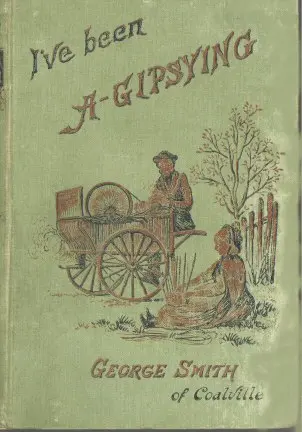
THE CLASSIC COLLECTION · 1883
"I've Been a Gipsying" by George Smith is a travelogue written in the late 19th century. The book documents the author’s experiences and observations among the gipsy communities in England, particularly focusing on their children, culture, and living conditions. Through a series of excursions, he seeks to portray the realities of gipsy life, shedding light on their hardships and the neglect faced by their young ones. The opening of the book introduces the reader to the author's intention of conveying both the struggles and joys of gipsy life. On a rainy Sunday, Smith embarks on a journey to visit gipsy children living in squalor on the outskirts of London. He vividly describes their impoverished living conditions, illustrating their lack of education and basic needs, and expressing a deep concern for their wellbeing. The author's empathetic storytelling aims to evoke a sense of urgency for social change, highlighting the stark contrast between the gipsy children's lives and the privileged existence of other children nearby.
Introduction adapted from the source catalogue; source summaries may be automatically generated.
Free to read · English · 132,003 words · No account needed
MAKE TIME FOR A GOOD BOOK
On by default. Untick to stop anonymous reading totals. Each page counts after 10 seconds in view. How this works.
Anonymous counting is on unless you have switched it off.
Connected with one of the cocoa-nut establishments, and owned by a good-hearted gipsy from London, there were the clowns, fools, hunchbacked old women, and other simpletons to catch the “foolish and the gay.” At the back of this establishment there were all sorts of painted devices, or I should rather say “daubed” devices, upon the sheets, full of satire which the fools with plenty of money could not read. One was a barber shaving his customers; another was a donkey, after he had been well fed, turning his heels towards his silly friends and kicking them in the face and sending them sprawling upon the ground with their pockets empty; and many others with the flags of “Old England” flying in all directions. I learned some time after that the owner of this establishment during the two days’ races cleared nearly twenty pounds out of fools and cocoa-nuts, giving thousands of young folks of both sexes a taste for gambling, and then clearing off to London with smiles and chuckles, and his poaching dogs at his heels, leaving his customers to say the next morning, “What fools we have been, to be sure!” If I had been at the door of their bedroom I should have bawled out, “No greater fools in existence could possibly be. When you went upon the race-course you had money if you had not any sense; this morning you have neither money nor sense, and now you are neither more nor less than a third of a shrivelled-up sausage without any seasoning in your nature, unsuitable for pickling and not worth cooking, fit for nothing but the dunghill, and food for cats and dogs.” I now took another stroll amongst the gipsies at the other end of the “course,” and came up against one who owned the “steam-flying dobby-horses;” but before I began to chat with him one of the gipsy women whispered in my ear, “It is his wife that has made him; she is very good-looking and one of the best women in the world; no one can tell why it was that she took up with the man as his second wife. He would not have been worth twopence had it not been for her. She is a rare good un, an’ no mistake. You must not tell him that I say so. She sees to all the business and he dotes over her. He is not a bad sort of a chap.” I soon began to chat with the “dobby-horse” owner, and he was not long before he began to tell me of his cleverness and what he had passed through, as follows: “You see, sir, a few years ago I had to borrow three shillings and sixpence to help me to get away from this town, now I’ve turned the tide and got at the top of the hill. These ‘shooting galleries,’ ‘dobby-horses,’ ‘flying boxes,’ vans, and waggons are my own.” Pointing with his finger to a new van, he said, “I made that myself last winter, and have done all the painting upon the ‘horses’ myself.” The steam organ, the steam whistle, the shouting, screaming, and hurrahing, and his face having been in the wars, made it difficult for me to hear him. He now spoke out louder and referred to family affairs and some of his early history. “I left Bagworth when I was a lad, owing to the cruel treatment of a stepmother, and wandered up and down the country in rags and barefooted, sleeping in barns, and houses, and piggeries, and other places I could creep into; and in course of time I fell in with the gipsies and married one. But she was a wretch; oh! she was a bad un, and I was glad when she died. I am thankful I have got a better one now. She is a good un; but I must not say anything about her, we get on well together, and she keeps me straight.” “Bang bang” and “crack crack” went the bullets out of the rifle guns close to our ears, against the metal plates, through a long sheet iron funnel of about twelve inches diameter. “Now then,” cried out a little sharp, dark-eyed, nimble woman of about thirty-five years—of course upon this point I had no means of knowing or guessing exactly; I had not examined her teeth. She might say she was only twenty-eight, a favourite age with some maids looking out for husbands—“be quick and rub out the marks upon the plate.” And away the old man trotted at his wife’s bidding, as all good husbands who are not capable of being masters should do. A “slap” and a “dash” with the old gipsy’s brush, and all the “pops” were for over obliterated. What a blessed thing it would be for themselves and future generations if all the sins committed upon the racecourse that day could have been wiped out as easily. Why not?
Your reading position is saved on this browser. Take it to another device with a library code. Reading pages adapt to text, rather than matching a printed edition.
George Smith
George Smith
BEHIND THE BOOK
This eBook is for the use of anyone anywhere in the United States and most other parts of the world at no cost and with almost no restrictions whatsoever. You may copy it, give it away or re-use it under the terms of the Project Gutenberg License included with this eBook or online at www.gutenberg.org. If you are not located in the United States, you will have to check the laws of the country where you are located before using this eBook. Read the source licence.
The original source file, including credits and licence, is retained by this library. Request an original-format copy at no charge. Please include the book title and Project Gutenberg identifier #62432.
KEEP YOUR CURIOSITY GOING
Wilfrid Scawen Blunt
Wilfrid Scawen Blunt

E. W. (Edgar Watson) Howe
Francis Greenleaf Allinson & Anne C. E. (Anne Crosby Emery) Allinson
Cyrenus Cole

John Martineau