THE CLASSIC COLLECTION✦Henry Martyn, Saint and Scholar First Modern Missionary to the Mohammedans, 1781-1812CLASSIC FREE BOOKS
Henry Martyn, Saint and Scholar First Modern Missionary to the Mohammedans, 1781-1812
George Smith
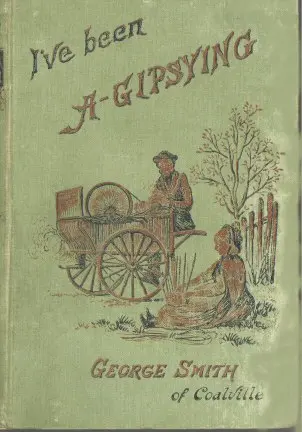
THE CLASSIC COLLECTION · 1883
"I've Been a Gipsying" by George Smith is a travelogue written in the late 19th century. The book documents the author’s experiences and observations among the gipsy communities in England, particularly focusing on their children, culture, and living conditions. Through a series of excursions, he seeks to portray the realities of gipsy life, shedding light on their hardships and the neglect faced by their young ones. The opening of the book introduces the reader to the author's intention of conveying both the struggles and joys of gipsy life. On a rainy Sunday, Smith embarks on a journey to visit gipsy children living in squalor on the outskirts of London. He vividly describes their impoverished living conditions, illustrating their lack of education and basic needs, and expressing a deep concern for their wellbeing. The author's empathetic storytelling aims to evoke a sense of urgency for social change, highlighting the stark contrast between the gipsy children's lives and the privileged existence of other children nearby.
Introduction adapted from the source catalogue; source summaries may be automatically generated.
Free to read · English · 132,003 words · No account needed
MAKE TIME FOR A GOOD BOOK
On by default. Untick to stop anonymous reading totals. Each page counts after 10 seconds in view. How this works.
Anonymous counting is on unless you have switched it off.
My wandering meditation being over, I now drew myself up to a gipsy “grand stand.” To all sensible, good men it appears as a horrible fall rather than the “grand stand.” Thousands of young men and women, trained by Christian, godly parents, have been brought to ruin by its rotten foundation and evil associations. It is a “stand” from which men and women can see—if they will open their eyes—the wrath of God, the roads to destruction, and the “course” to hell.
My first salutation was from three big grizzly poachers’ snaps, a kind of cross between a bloodhound, greyhound, and a bulldog, that lay at the entrance of a wigwam, in which lay a burly fellow marked with small-pox, and whose hair was close shaven off his head and from round his coarse, thick neck. This specimen of an English gipsy possessed a puggish kind of nose, a large mouth, and his clothes seemed “greasy and shiny.” The woman looked an intelligent, strong kind of woman, and well fitted, to all appearance, for a better life. Round a tin pot upon the greensward there were three other gipsy tramps, kneeling and gnawing meat off a bone like dogs, with bread by their sides. They did not growl like dogs, but they showed me their teeth and muttered, and this was quite sufficient. The occupation of this gang seemed to be that of attending to a cocoa-nut establishment, the profits of which, during the races, they had travelled from London by road in three days to secure. To me it appeared all were fish that came to their net; and if they did not come of their own accord, they would not think twice before fetching them. This gipsy wigwam was the kitchen, drawing-room, dining-room, bedroom, &c., for four men, one woman, and two big girls, not one of whom could read and write. The only little gleam of light which shone from the conversation in this dark abode was when they referred to some gipsies, who, they said, had been “putting on a pretence of religion in order to fill their pocket,” and they knew one who “saved over £800 since he had been religious.” “If I must be religious, I would be religious, and no mistake about it,” said another. At this they began to swear fearfully. I mentioned several gipsies who had given up their old habits, and, as I told them, had begun to lead better lives. “Never,” they said, with a vengeance; to which I answered, “By their fruits shall ye know them.” I then shook hands, and wended my way to the next establishment. This was an old cart covered over entirely with calico from the ridge to the ground. Connected with this van there were two men and a boy, who, it seems, are novices at the cocoa-nut profession. To me it appeared that they were tired of the hard work and tightness of town life, and were trying their fortune at gipsying and idle-mongering. On the course there would be nearly twenty cocoa-nut “saloons.” Connected with three of the vans on the course there were sixteen children and eight men and women, only one of whom could read and write. In one of the three vans there was a poor little girl of about nine summers evidently in the last stage of consumption. Her cheeks were sunken, shallow, and pale; her fingers were long and thin; her eyes glassy bright, and black hair hung in tangled masses over her shoulders. I gave the poor girl a penny as she stood at the door of the filthy van, for which, with much effort she said, “Thank you, sir,” and sat down on the floor. I said to the mother, formerly a Smith, but now a G—, “Why don’t you get the poor child attended to?” She replied as follows: “Well, sir, gipsy children have much more to put up with now than they formerly had. They cannot half stand the cold and damp we used to do. They are always catching cold. I only bought a bottle of medicine this morning for which I paid half a crown, and I cannot be expected to do more. She has been staying some time with her grandmother at Bristol, but we did not like leaving her there in case anything happened to her. If she is to die, we gipsies like our children to die in the van or tent with us, as may be. We like to see the last of them. We have hard times of it, we poor women and children have, I can assure you, sir.” The woman had now begun to do some washing in earnest, not before it was needed, and while she was scrubbing away at the rags in a tin pail, she began to tell me some of her history and that of her grandfather. She said that her mother had “had fifteen children, all born under the hedge-bottom, nearly all of whom are alive.” I asked her if any of her family could read and write, and she said, “No, excepting the poor little girl you see, and she can read and write a little, having been to a day school in Bristol for a few weeks last winter. I wish they could read and write, sir, it would be a blessed thing if they could.” She now referred to her grandfather. At this her eyes brightened up. She said, “My grandfather was a soldier in the Queen’s service”—the poor gipsy woman did not understand history so well as cooking hedgehogs in a patter of clay—“and fought in the battle when Lord Nelson was killed. And do you know, sir, after Lord Nelson was killed, he was put into a cask of rum to be preserved, while he was brought to England to be buried; and I dare say that you will not believe me—my grandfather was one of those who had charge of the body; but he got drunk on some of the rum in which Lord Nelson was pickled, and he was always fond of talking about it to his dying day.” I said, “Do you like rum.” “Yes, we poor gipsies could live upon rum and ‘’bacca.’” In the van in which the poor gipsy child and its mother lived there were a man, a baby a few weeks old, and four other children, huddling together night and day in a most demoralizing and degrading condition. While standing by the side of this tumble-down van I found that vans and tents, in which people eat, live, sleep, and die, are put to other shocking, filthy, and sickening purposes during fairs and races than habitations for human beings to dwell in. Sanitary officers, moralists, and Christians must be asleep all over the country. In going by and round one van I noticed an old woman storming away at some children with an amount of temper and earnestness that almost frightened me. Immediately I arrived at the door, and almost before I could say “Jack Robinson,” she dropped down into a position with which miners and gipsies are so familiarly accustomed, and began to tremble, shed “crocodile tears,” and tell a pitiful tale of the sorrows and troubles of her life, intermixing it with “my dear sirs,” “good mans,” “God bless yous.” Every now and then she would look up to heaven, and present a picture of the most saintly woman upon earth. When I asked her how old she was, she said she was a long way over seventy, but could not tell me exactly. She further said that she had had sixteen children, all born under the hedge-bottom, nearly all of them gipsies up and down the country, some of whom were grandmothers and grandfathers at the present time. And then she would begin another pitiful tale as follows, “If you please, my good sir, will you give me a copper, I do assure you that I have not tasted anything to eat this day, and I am almost famished with hunger.” And then with trembling emotion she said, wringing her hands, “I shall die before morning.” After my visits to the other vans, and before going home, I turned unexpectedly to have another peep at the old gipsy woman, whom I found to be a long way off dying, and in all probability I shall see her again before she passes over to the great eternity.
Your reading position is saved on this browser. Take it to another device with a library code. Reading pages adapt to text, rather than matching a printed edition.
George Smith
George Smith
BEHIND THE BOOK
This eBook is for the use of anyone anywhere in the United States and most other parts of the world at no cost and with almost no restrictions whatsoever. You may copy it, give it away or re-use it under the terms of the Project Gutenberg License included with this eBook or online at www.gutenberg.org. If you are not located in the United States, you will have to check the laws of the country where you are located before using this eBook. Read the source licence.
The original source file, including credits and licence, is retained by this library. Request an original-format copy at no charge. Please include the book title and Project Gutenberg identifier #62432.
KEEP YOUR CURIOSITY GOING
Wilfrid Scawen Blunt
Wilfrid Scawen Blunt

E. W. (Edgar Watson) Howe
Francis Greenleaf Allinson & Anne C. E. (Anne Crosby Emery) Allinson
Cyrenus Cole

John Martineau