THE CLASSIC COLLECTION✦Henry Martyn, Saint and Scholar First Modern Missionary to the Mohammedans, 1781-1812CLASSIC FREE BOOKS
Henry Martyn, Saint and Scholar First Modern Missionary to the Mohammedans, 1781-1812
George Smith
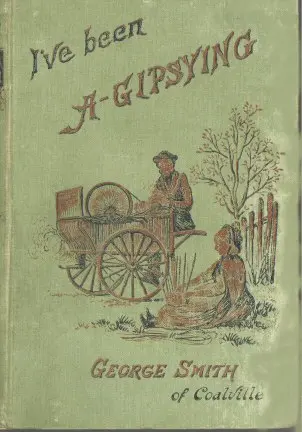
THE CLASSIC COLLECTION · 1883
"I've Been a Gipsying" by George Smith is a travelogue written in the late 19th century. The book documents the author’s experiences and observations among the gipsy communities in England, particularly focusing on their children, culture, and living conditions. Through a series of excursions, he seeks to portray the realities of gipsy life, shedding light on their hardships and the neglect faced by their young ones. The opening of the book introduces the reader to the author's intention of conveying both the struggles and joys of gipsy life. On a rainy Sunday, Smith embarks on a journey to visit gipsy children living in squalor on the outskirts of London. He vividly describes their impoverished living conditions, illustrating their lack of education and basic needs, and expressing a deep concern for their wellbeing. The author's empathetic storytelling aims to evoke a sense of urgency for social change, highlighting the stark contrast between the gipsy children's lives and the privileged existence of other children nearby.
Introduction adapted from the source catalogue; source summaries may be automatically generated.
Free to read · English · 132,003 words · No account needed
MAKE TIME FOR A GOOD BOOK
On by default. Untick to stop anonymous reading totals. Each page counts after 10 seconds in view. How this works.
Anonymous counting is on unless you have switched it off.
In some instances the parents might object to it, as you say, but generally they would not. I think that two-thirds of the children now travelling the country are the children of parents who once followed town and settled employments. If the children I want to introduce to the day schools throughout the country had been gipsy children of past years, with all their evil habits manifested at every step of their lives, I can imagine that strong objection would be raised against their introduction to English school life. Our present gipsy children are, as a rule, our travelling gutter children. I think that the mixing of the travelling children with the town children at school will be one of the first steps towards bringing them back to civilized usages and habits. At the present time gipsy and canal children are the outcasts of society, unknown and unrecognized by others, except by those of their own kith and kin. The mother has at the present time no object to “dress up her children for.” With its introduction to school, natural instincts, parental feelings, love, and hope are brought once more into action, and generally the natural consequence will be that the mother will send her children to school as clean and well dressed as other children are. To have separate schools for canal and gipsy children will not be a workable plan. Sometimes for weeks the teacher would scarcely have anything to do; gipsies especially fluctuate very much.
Question 16. “We should be glad if you could give us additional reasons and facts, and explain a little more to us why you think that vans should be registered annually, or at any rate have their certificates renewed.”
In the first place, I would say that the non-annual registration was, and is so still, one of the principal causes why the Canal Boats Act of 1877 is not so satisfactory as desired. The children living in canal beats under the Act of 1877 really belong to the place at which the boats are registered. This is as it should be, and I want the principle of localizing or identifying the canal children with some place extended to all travelling children living in vans; but that identification must give the parents a choice of selecting other districts or localities from time to time as changes of circumstances and other things might require. Under the present system, when once the boat is registered at a place, the children, under the Act of 1877, belong to that place till they are past school age, and no provision is made under the Act for changes which often occur in a boatman’s life, or would occur in a gipsy’s life. I will try to illustrate my meaning more clearly by taking a case in point as regards the carrying out of the Canal Boats Act, which would apply with equal force to children living in vans. When the Canal Boats Act of 1877 came into operation, either through the strictness or laxity of other registration authorities, more than eight hundred canal boatmen and boat-owners from all parts of the country applied to the Runcorn registration authorities to have their boats registered. Of course they registered the boats, and obtained the five-shilling fees. After a time it was found out that the School Board authorities at Runcorn were called upon to provide school accommodation for nearly two thousand boat children, which they could not do. At any rate, they did not wish to saddle the town with the expenses of educating boat children from all parts of the country, and from whom they received nothing in return; and the consequence is the two thousand boat children whose floating houses are registered at Runcorn are going without education to-day, and their patents cannot, so long as this registration exists, place them in any other School Board district in this country. The annual registration which I propose will give the boating and gipsy parents the opportunity of changing their homes or headquarters without detriment to the children, and the establishment of more registration districts would, I am thoroughly convinced, place the matter on a satisfactory and workable basis. If John Jones during the year ceased working his boat in and out of Runcorn, and took to Paddington’s scented waters, he could, by registering his boat at Paddington at the time of the renewal of his certificate, put his children under the London School Board, which he cannot do under the present system. To meet the case of the gipsy and van children, any sanitary authority should be a registration authority, or at any rate at those towns where hawker’s licences can be obtained.
Your reading position is saved on this browser. Take it to another device with a library code. Reading pages adapt to text, rather than matching a printed edition.
George Smith
George Smith
BEHIND THE BOOK
This eBook is for the use of anyone anywhere in the United States and most other parts of the world at no cost and with almost no restrictions whatsoever. You may copy it, give it away or re-use it under the terms of the Project Gutenberg License included with this eBook or online at www.gutenberg.org. If you are not located in the United States, you will have to check the laws of the country where you are located before using this eBook. Read the source licence.
The original source file, including credits and licence, is retained by this library. Request an original-format copy at no charge. Please include the book title and Project Gutenberg identifier #62432.
KEEP YOUR CURIOSITY GOING
Wilfrid Scawen Blunt
Wilfrid Scawen Blunt

E. W. (Edgar Watson) Howe
Francis Greenleaf Allinson & Anne C. E. (Anne Crosby Emery) Allinson
Cyrenus Cole

John Martineau