THE CLASSIC COLLECTION✦Henry Martyn, Saint and Scholar First Modern Missionary to the Mohammedans, 1781-1812CLASSIC FREE BOOKS
Henry Martyn, Saint and Scholar First Modern Missionary to the Mohammedans, 1781-1812
George Smith
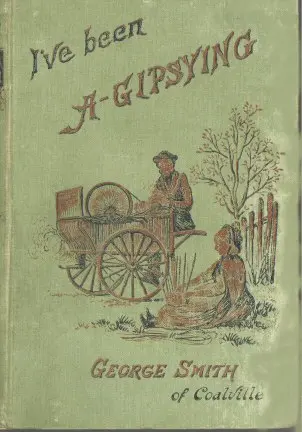
THE CLASSIC COLLECTION · 1883
"I've Been a Gipsying" by George Smith is a travelogue written in the late 19th century. The book documents the author’s experiences and observations among the gipsy communities in England, particularly focusing on their children, culture, and living conditions. Through a series of excursions, he seeks to portray the realities of gipsy life, shedding light on their hardships and the neglect faced by their young ones. The opening of the book introduces the reader to the author's intention of conveying both the struggles and joys of gipsy life. On a rainy Sunday, Smith embarks on a journey to visit gipsy children living in squalor on the outskirts of London. He vividly describes their impoverished living conditions, illustrating their lack of education and basic needs, and expressing a deep concern for their wellbeing. The author's empathetic storytelling aims to evoke a sense of urgency for social change, highlighting the stark contrast between the gipsy children's lives and the privileged existence of other children nearby.
Introduction adapted from the source catalogue; source summaries may be automatically generated.
Free to read · English · 132,003 words · No account needed
MAKE TIME FOR A GOOD BOOK
On by default. Untick to stop anonymous reading totals. Each page counts after 10 seconds in view. How this works.
Anonymous counting is on unless you have switched it off.
Gipsying in this country comes up before us in various forms, enough to send a cold, thrilling shudder through one’s nature. A friend whom I know well, in Leicester, told me only the other day that one of her distant relations at Greetham, in Rutlandshire, had SOLD, some year or so ago, his dark-eyed and dark-haired pretty girl of about twelve summers to a gang of gipsies for TWO SHILLINGS AND SIXPENCE AND A GALLON OF BEER, and the poor lost creature is now tramping and travelling the country, no one knows where. This poor girl’s mother is living in comfortable service in Leicester. One can hardly imagine a husband and wife, father and mother, so utterly lost to all natural feeling as to sell their child for half a crown; but so it is, and no doubt she is making money for the gipsy scoundrels and inhuman brutes. My heart often bleeds for the little lost gipsy girl, concerning whom slap-dash gipsy song-writers can call forth thrills of momentary pleasurable excitement from sensual gipsy admirers as they pass round the “loving cup.”
I often wonder what kind of song it is the poor child’s inhuman mother sings to while away the pleasurable duties of her station and the silent hours of the night; and while her offspring lies like a dog crouched on a heap of straw, half starved, dressed in rags, filth, and vermin, in some tent at the bottom of some dark lane by the side of a wood, listening with wide-open eyes to the screeching of game and weazels, the howling of the wind, and the beating of the hail and rain against her thin midnight shelter from stormy blasts.
While in Scotland a friend told me that recently he was in a hairdresser’s shop, and while he was undergoing shampooing and a scenting process, a poor, half-frozen, half-naked, Scotch gipsy girl, with dishevelled hair, came, with a small tin can in her hand, begging with tears in her eyes for some hot water. My friend was struck with the poor gipsy girl’s sorrowful, soul-mourning condition and request, and he asked her what she wanted the hot water for. “Please, my good gentleman,” said the girl, tremblingly, “my mother’s hair is frozen to the ground, and I want a little hot water to loosen it with. Mother can’t get up till it is loosened, and there is no one else in the tent to fetch the water and to get her up but me, sir.” What a tale of sorrow did the poor child relate. How sadly true is this of the gipsies and show people, and other travelling children all over our highly favoured and heavenly exalted country to-day. Our gipsies, by their own wrong-doings, lying, thieving, poaching, cheating, fortune-telling, idleness, profanity, sabbath-breaking, and other deadly sins, have bound themselves to the ground under our eyes, and we have stood by with our hands in our pockets, winking, blinking, and chuckling at their heartrending condition. Some thirty thousand gipsy children have, for the last three hundred and fifty years, received from door to door cuffs, kicks, crumbs, crusts, smiles, curses, and flattery, but have never, except in a flickering way, had extended to them the hand of practical help and sympathy. They have lived on our commons, in our lanes, by the side of our woods, in our dark, black alleys, in our prisons and workhouses. The little seedlings of hope that God has planted in the breasts of the poor gipsy children, we have, instead of encouraging them, trampled upon, and the little tender buds and blades as they peeped forth we have trodden down.
Your reading position is saved on this browser. Take it to another device with a library code. Reading pages adapt to text, rather than matching a printed edition.
George Smith
George Smith
BEHIND THE BOOK
This eBook is for the use of anyone anywhere in the United States and most other parts of the world at no cost and with almost no restrictions whatsoever. You may copy it, give it away or re-use it under the terms of the Project Gutenberg License included with this eBook or online at www.gutenberg.org. If you are not located in the United States, you will have to check the laws of the country where you are located before using this eBook. Read the source licence.
The original source file, including credits and licence, is retained by this library. Request an original-format copy at no charge. Please include the book title and Project Gutenberg identifier #62432.
KEEP YOUR CURIOSITY GOING
Wilfrid Scawen Blunt
Wilfrid Scawen Blunt

E. W. (Edgar Watson) Howe
Francis Greenleaf Allinson & Anne C. E. (Anne Crosby Emery) Allinson
Cyrenus Cole

John Martineau