THE CLASSIC COLLECTION✦Henry Martyn, Saint and Scholar First Modern Missionary to the Mohammedans, 1781-1812CLASSIC FREE BOOKS
Henry Martyn, Saint and Scholar First Modern Missionary to the Mohammedans, 1781-1812
George Smith
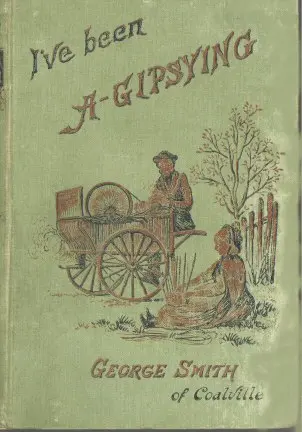
THE CLASSIC COLLECTION · 1883
"I've Been a Gipsying" by George Smith is a travelogue written in the late 19th century. The book documents the author’s experiences and observations among the gipsy communities in England, particularly focusing on their children, culture, and living conditions. Through a series of excursions, he seeks to portray the realities of gipsy life, shedding light on their hardships and the neglect faced by their young ones. The opening of the book introduces the reader to the author's intention of conveying both the struggles and joys of gipsy life. On a rainy Sunday, Smith embarks on a journey to visit gipsy children living in squalor on the outskirts of London. He vividly describes their impoverished living conditions, illustrating their lack of education and basic needs, and expressing a deep concern for their wellbeing. The author's empathetic storytelling aims to evoke a sense of urgency for social change, highlighting the stark contrast between the gipsy children's lives and the privileged existence of other children nearby.
Introduction adapted from the source catalogue; source summaries may be automatically generated.
Free to read · English · 132,003 words · No account needed
MAKE TIME FOR A GOOD BOOK
On by default. Untick to stop anonymous reading totals. Each page counts after 10 seconds in view. How this works.
Anonymous counting is on unless you have switched it off.
I had not gone far up the hill before I found myself in company with a forest ranger; and a rare good-looking fellow he was. He was a short thickset man, and as round almost as a prize bullock. He said the gipsies—so-called gipsies—were the plague of his life. They were squatting about everywhere, breaking the fences and stealing everything they could lay their hands upon. Before the last three years there were hundreds of gipsies in the forest, living by plunder and fortune-telling, and since they had driven them away, they had settled upon the outskirts of the forest and pieces of waste land, some of which were rented by some of the better class gipsies, and relet again to the other gipsies at a small charge per week, who thus escaped the law. This good ranger said there were no real gipsies at the present time in the country. They had been mixed up with other vagabonds that scarcely a trace of the genuine gipsy was left.
Some old gipsies were complaining very much because the price of cocoa-nuts had been raised. “Until now,” said this lot of vagabond gipsies, “we could get cocoa-nuts at one pound per hundred; now we are, to-day, giving thirty shillings per hundred; and it is no joke when you get some of those old cricketers at work among them. They bowl them off like one o’clock.” “How do you do in such a case?” I asked. “Well, sometimes we let them go on till they get a belly-full, and sometimes we cries quits, and will have no more on ’em, and tell them to go somewhere else, we are quite satisfied. You know, sir, better than I can tell you that it is no joke to have your nuts bowled off like that. I feel sometimes,” said one gipsy, with clenched fist raised almost to my face and closed teeth, “that I should like to bowl their yeds off, and no mistake. I feel savage enough to punch their een out, and I could do it in a jiffy.” He now left me and bawled out, “Now, gents, try your luck, try your luck; all bad uns returned.” There was a brisk trade, and a lot of shoeless, dirty little gipsy children were scrambling after the balls, and throwing to the winners the nuts they had won; every now and then there would be a terrible row over a nut—whether it was properly hit, or who was the rightful owner. “Bang” went a ball from a big fellow against a cocoa-nut, sending it and the juice inside flying in all directions, and the youngsters scrambling after the pieces. And then there would be another bawl out by a gipsy woman, “Bowl again, gentlemen; try your luck, try your luck; all good uns and no bad uns; bad uns returned.” I left this lot of gipsies to pursue my way to the “Robin Hood,” where there was a pell-mell gathering of all sorts of human beings numbering thousands. In elbowing my way through the crowd, a sharp, business-kind of a gipsy-woman, well dressed and not bad looking, eyed me over, and, thinking that I was “Johnny” from the country, said to a woman who was near her, “You keep back, I mean to tell this gentleman his fortune.” Three or four steps forward she took, and then stood full in front of me. “A fine day, sir,” said the gipsy woman with a twinkle in her eye and a side laugh, nudging to another gipsy woman at her elbow. “Yes, a very fine day,” I said. She now drew a little nearer, and said in not very loud tones, “Would you like to have your fortune told you, my good gentleman? I could tell you something that would please you, I am sure. There is good luck in your face. Now, my dear good gentleman, do let me tell your fortune. You will become rich and have many friends, but will have many false friends and enemies.” Just as she was beginning to spin her yarn one of the B— gipsies came up. She was dressed in a glaring red Scotch plaid dress, with red, blue, green, and yellow ribbons flying about her head and shoulders; and in her arms was a baby which was dressed in white linen and needlework. This gipsy woman was stout, dark, and with round features, her black hair was waved like I have seen the manes of horses, and her eye the opposite of heavenly. She now turned to the gipsy woman who had accosted me and said, “Mrs. Smith, you need not tell this gentleman his fortune, he knows more than we both can tell him. This is Mr. Smith of Coalville, he had tea with us at K—.” “Oh,” said the gipsy woman named Smith, “this is Mr. Smith of Coalville, is it? I’ve heard a deal about him. I’ll go, or he’ll be putting me in a book. Goodbye.” She put out her hands to shake mine, and then vanished out of my sight, and I never saw her again in the forest during the day. I suppose she fancied that I should be bringing her to book for fortune-telling. I was now left with the gipsy B— and her baby. She threw aside her shawl in order that I might look at the child, who was apparently about four months old. Poor thing! it did not know that it was the child of sin, for its parents were living in adultery, as nearly all the gipsies do. This gipsy woman was earning money for herself, and an idle man she was keeping, by exhibiting her illegitimate offspring and telling silly girls their fortunes. Think about it lightly as we may, fortune-telling is vastly on the increase all over the country, producing most deadly and soul-crushing results. Just as I was touching the poor baby’s face and putting sixpence in its hand, a gentleman connected with the Ragged School Union came up with his two children. I found as we travelled up the hill together that I was talking to Mr. Curtiss, the organizing secretary of the Union, who was in the forest for an “outing,” and could, no doubt, with Dr. Grosart say—
Your reading position is saved on this browser. Take it to another device with a library code. Reading pages adapt to text, rather than matching a printed edition.
George Smith
George Smith
BEHIND THE BOOK
This eBook is for the use of anyone anywhere in the United States and most other parts of the world at no cost and with almost no restrictions whatsoever. You may copy it, give it away or re-use it under the terms of the Project Gutenberg License included with this eBook or online at www.gutenberg.org. If you are not located in the United States, you will have to check the laws of the country where you are located before using this eBook. Read the source licence.
The original source file, including credits and licence, is retained by this library. Request an original-format copy at no charge. Please include the book title and Project Gutenberg identifier #62432.
KEEP YOUR CURIOSITY GOING
Wilfrid Scawen Blunt
Wilfrid Scawen Blunt

E. W. (Edgar Watson) Howe
Francis Greenleaf Allinson & Anne C. E. (Anne Crosby Emery) Allinson
Cyrenus Cole

John Martineau