THE CLASSIC COLLECTION✦Henry Martyn, Saint and Scholar First Modern Missionary to the Mohammedans, 1781-1812CLASSIC FREE BOOKS
Henry Martyn, Saint and Scholar First Modern Missionary to the Mohammedans, 1781-1812
George Smith
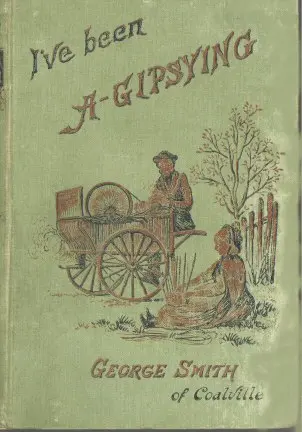
THE CLASSIC COLLECTION · 1883
"I've Been a Gipsying" by George Smith is a travelogue written in the late 19th century. The book documents the author’s experiences and observations among the gipsy communities in England, particularly focusing on their children, culture, and living conditions. Through a series of excursions, he seeks to portray the realities of gipsy life, shedding light on their hardships and the neglect faced by their young ones. The opening of the book introduces the reader to the author's intention of conveying both the struggles and joys of gipsy life. On a rainy Sunday, Smith embarks on a journey to visit gipsy children living in squalor on the outskirts of London. He vividly describes their impoverished living conditions, illustrating their lack of education and basic needs, and expressing a deep concern for their wellbeing. The author's empathetic storytelling aims to evoke a sense of urgency for social change, highlighting the stark contrast between the gipsy children's lives and the privileged existence of other children nearby.
Introduction adapted from the source catalogue; source summaries may be automatically generated.
Free to read · English · 132,003 words · No account needed
MAKE TIME FOR A GOOD BOOK
On by default. Untick to stop anonymous reading totals. Each page counts after 10 seconds in view. How this works.
Anonymous counting is on unless you have switched it off.
In the year 1514 the gipsies landed in Scotland from the Continent, and from that date to the present time we have had in our midst over 30,000 men, women, and children with increasing numbers, going to and from our villages, towns, lanes, and fairs, and mixing with the simple, wise, gay, and foolish, leading the lives of vagabonds, demoralizing all they have been brought in contact with, by their lying, plundering, dirty, filthy, cheating, and crafty habits. In one word, the gipsies have been, and still are, a disgrace to Christian civilization. Of course there are exceptions among them, and I wish from the bottom of my heart that there were more.
They live huddled together regardless of either sex, age, or decency, under hedges, in tents, barns, or on the roadside, with but little regard for marriage ceremonies.
Their food, in many instances, is little better than garbage and refuse, and the most riff-raff of them bed themselves upon rotten straw.
We have also, at this late day, with sunny education gleaming on every hand, over 30,000 poor gipsy children of school age growing up as vagabonds, and not two per cent. of the whole able to read or write a sentence.
If our present-day gipsies had been of the romantic type of some two or three centuries ago, as pictured to us so beautifully by fascinating novelists, we might have wandered down the country green lanes, and by the side of rivulets, to admire their witchery, colours, and gipsy traits, exhibited with much refined skill, artistic touch, and feeling by gipsy writers; but the fact is, to state it plainly, the romantic gipsy of novels and romance has been dead long ago, and neither the stage, romance, nor imagination will ever bring him to life again in this country.
Our gipsies of to-day are neither more nor less than ignorant, idle tramps, scamps, and vagabonds. This I know full well, for I have found it out over and over again, not by hearsay, but by mixing and eating with them in their wretched abodes often during the last five years.
My sorrowful experience of them forty years ago, with casual acquaintances since, and onward to 1878, has not brought any traits of their character, as practised by them, that any sane-thinking, loyal, or observing man can admire, and the sooner our legislators deal with our gipsy vagabonds the better it will be for us as a nation.
Your reading position is saved on this browser. Take it to another device with a library code. Reading pages adapt to text, rather than matching a printed edition.
George Smith
George Smith
BEHIND THE BOOK
This eBook is for the use of anyone anywhere in the United States and most other parts of the world at no cost and with almost no restrictions whatsoever. You may copy it, give it away or re-use it under the terms of the Project Gutenberg License included with this eBook or online at www.gutenberg.org. If you are not located in the United States, you will have to check the laws of the country where you are located before using this eBook. Read the source licence.
The original source file, including credits and licence, is retained by this library. Request an original-format copy at no charge. Please include the book title and Project Gutenberg identifier #62432.
KEEP YOUR CURIOSITY GOING
Wilfrid Scawen Blunt
Wilfrid Scawen Blunt

E. W. (Edgar Watson) Howe
Francis Greenleaf Allinson & Anne C. E. (Anne Crosby Emery) Allinson
Cyrenus Cole

John Martineau