THE CLASSIC COLLECTION✦Henry Martyn, Saint and Scholar First Modern Missionary to the Mohammedans, 1781-1812CLASSIC FREE BOOKS
Henry Martyn, Saint and Scholar First Modern Missionary to the Mohammedans, 1781-1812
George Smith
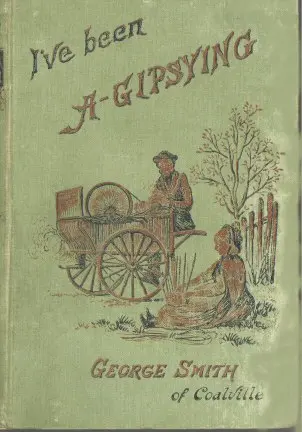
THE CLASSIC COLLECTION · 1883
"I've Been a Gipsying" by George Smith is a travelogue written in the late 19th century. The book documents the author’s experiences and observations among the gipsy communities in England, particularly focusing on their children, culture, and living conditions. Through a series of excursions, he seeks to portray the realities of gipsy life, shedding light on their hardships and the neglect faced by their young ones. The opening of the book introduces the reader to the author's intention of conveying both the struggles and joys of gipsy life. On a rainy Sunday, Smith embarks on a journey to visit gipsy children living in squalor on the outskirts of London. He vividly describes their impoverished living conditions, illustrating their lack of education and basic needs, and expressing a deep concern for their wellbeing. The author's empathetic storytelling aims to evoke a sense of urgency for social change, highlighting the stark contrast between the gipsy children's lives and the privileged existence of other children nearby.
Introduction adapted from the source catalogue; source summaries may be automatically generated.
Free to read · English · 132,003 words · No account needed
MAKE TIME FOR A GOOD BOOK
On by default. Untick to stop anonymous reading totals. Each page counts after 10 seconds in view. How this works.
Anonymous counting is on unless you have switched it off.
In a few minutes after this I was between the sheets, and I could have said with John Harris, as sleep stole gently into my room—
“Hark! What is that? The spirit of the vale?
Or is it some bright angel by the lake?”
And the last I remember was, I was muttering over “by” “by” “the” “lake,” “by” “by” “the” “the” “lake,” “la—la,” and I was bound fast to the bed.
A quondam friend bade me “good morning,” and then jumped into a “first class” to recite his “R’s” and “S’s” so as to give them the finishing touch correctly the next Sunday morning, while I enjoyed the honour and pleasure of a “third.” We arrived together at Nottingham, and I made my way to a “temperance hotel,” not half a mile from the station, with “first-class” appearances outside, but with “third-class” bedroom accommodation. My room was a “top back,” overlooking well-known old friends, viz., bricks, tiles, terra-cotta, sanitary pipes, encaustic tiles, &c, with a board in the corner covered with oilcloth for a washing stand, and a tea saucer for a “soap tray.” The bed was hard, and the blind was of a material that needed no washing; in fact, the room was bare, cheerless, comfortless, and cold. I strolled into the market-place, and was soon talking to some old-fashioned Staffordshire gipsies with short skirts, and apparently, thick legs, heavy boots, with plenty of colour about their “head-gear,” who, taking all things into consideration, were not bad specimens of gipsies of the present day.
After this I spent a short time with my old friend, Mr. William Bradshaw, a name which has been well known in the midland counties for many long years. Writing and gossiping consumed the remainder of the day; and at ten o’clock I mounted and climbed nearer heaven to rub my eyes again at peep o’ day. Between four and five o’clock I was in and out of my hard bed a dozen times, guessing the time and groping in the dark, for fear I might miss the train to Bulwell Forest. At last I got so fidgety that I was determined to get up, “hit or miss.” I dressed, and then went downstairs to find my way out into the street; but, not having an angel, like Peter, to open the doors for me, I had to ring and ring and shout sufficient to awaken all in the house; if they had been as deaf as posts, I could not have had a greater difficulty to awaken them. At last the landlord made his appearance with his shirt on, and his hair on an end like a frightened ghost. Owing to my early movements, and being a suspicious-looking customer, I had to pay my bill, and out I went about half-past five. My train started for Bulwell at six o’clock, and at six thirty I was among the gipsies upon the forest. There were four vans full of gipsies of all sorts and sizes, just turning out of their “bed;” so dirty were they that I should not have been surprised if the “beds” had run away with them. “Smiths” and “Winters” were the two prominent names. “Bless me,” I said, there are “gipsy Smiths here, there, and everywhere.” “Yes, you are right, my good mon,” said Mrs. Gipsy Winter in a Staffordshire twang. In the four vans there would be twelve adults and eighteen poor, rough, dirty, neglected little gipsy children, not one of whom could read or write. The policeman said to me, “The gipsies that come on this forest and about these parts are a rough, dirty, bad lot, and no mistake. Nowt comes amiss that they can lay their hands upon, I can assure you.” I had a chat with Mrs. Gipsy Winter, and told her what my object was, viz., to bring their vans under registration, and also to give their children a free education; to which she replied with delight, “Lor, bless you, my good mon, I’m reight glad you big fokes are going to do sommat in the way o’ givin’ our childer a bit o’ eddication, for they’re nowt as it is. They are growin’ up as ignorant as osses; they conner tell a ‘b’ from a bull’s foot. I conner read mysen, but I should like our childer to be able to read and write. Han you got one o’ your eddication pass books wi’ yer? cause if yer han, I’ll ha’ one.” I told her that the Act was not passed authorizing the use of them; at which she held down her head, and said, “I suppose we mun wait a long time fust.” “Yes,” I said, “it will not be this year.”
Your reading position is saved on this browser. Take it to another device with a library code. Reading pages adapt to text, rather than matching a printed edition.
George Smith
George Smith
BEHIND THE BOOK
This eBook is for the use of anyone anywhere in the United States and most other parts of the world at no cost and with almost no restrictions whatsoever. You may copy it, give it away or re-use it under the terms of the Project Gutenberg License included with this eBook or online at www.gutenberg.org. If you are not located in the United States, you will have to check the laws of the country where you are located before using this eBook. Read the source licence.
The original source file, including credits and licence, is retained by this library. Request an original-format copy at no charge. Please include the book title and Project Gutenberg identifier #62432.
KEEP YOUR CURIOSITY GOING
Wilfrid Scawen Blunt
Wilfrid Scawen Blunt

E. W. (Edgar Watson) Howe
Francis Greenleaf Allinson & Anne C. E. (Anne Crosby Emery) Allinson
Cyrenus Cole

John Martineau