THE CLASSIC COLLECTION✦Henry Martyn, Saint and Scholar First Modern Missionary to the Mohammedans, 1781-1812CLASSIC FREE BOOKS
Henry Martyn, Saint and Scholar First Modern Missionary to the Mohammedans, 1781-1812
George Smith
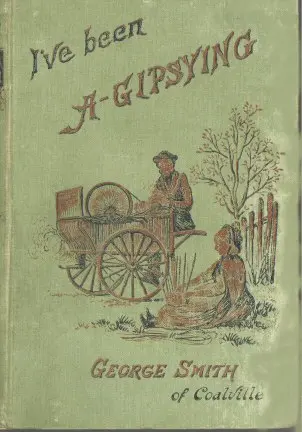
THE CLASSIC COLLECTION · 1883
"I've Been a Gipsying" by George Smith is a travelogue written in the late 19th century. The book documents the author’s experiences and observations among the gipsy communities in England, particularly focusing on their children, culture, and living conditions. Through a series of excursions, he seeks to portray the realities of gipsy life, shedding light on their hardships and the neglect faced by their young ones. The opening of the book introduces the reader to the author's intention of conveying both the struggles and joys of gipsy life. On a rainy Sunday, Smith embarks on a journey to visit gipsy children living in squalor on the outskirts of London. He vividly describes their impoverished living conditions, illustrating their lack of education and basic needs, and expressing a deep concern for their wellbeing. The author's empathetic storytelling aims to evoke a sense of urgency for social change, highlighting the stark contrast between the gipsy children's lives and the privileged existence of other children nearby.
Introduction adapted from the source catalogue; source summaries may be automatically generated.
Free to read · English · 132,003 words · No account needed
MAKE TIME FOR A GOOD BOOK
On by default. Untick to stop anonymous reading totals. Each page counts after 10 seconds in view. How this works.
Anonymous counting is on unless you have switched it off.
At Nuneaton I conversed with a gentleman who gave me a little of his history, some of which was remarkable, especially that part relating to his courtship and marriage. “Ah!” said my friend with a tone of sadness, “I had the misfortune to lose my wife by cruel death, and was left with four little children to get through the world as best we could. It was a sad blow, sir. I don’t know whether you have ever undergone such a trial, but my experience of it is that it is one of the greatest misfortunes that can ever befall mortal man, and I’ve nothing but pity for the man who has had to undergo the sad loss. Oh! it’s terrible, sir. After you have been toiling hard all day in the cold rain, frost, and snow, and then to go home to find no one to warm your slippers, or to speak a kind, soothing, and cheering word to you, was more than I could bear. To sit and eat your bread and butter and drink your tea alone, while the servants and the children were playing in the streets, was enough to turn any man into a wild animal.” I said to him, “Certainly it is a terrible ordeal, and one that I should not like to pass through.” “Yes it is,” said my friend, almost in whimpering tones. “Well, how did you get out of your sad difficulty?” I said. “Well, sir, things went on for some months in a path in which there seemed nothing but vexation. The servants were quarrelling, the children were neglected, and bills seemed to be coming in without end; and while I was brooding over these things one afternoon, in came a minister from Derby, and he saw the fix I was in, and that I could not get him as nice a cup of tea as formerly; and, to help me out of my difficulty, he said, ‘My dear brother, when the proper time comes, I know where there’s a wife that will suit you.’ ‘Do you?’ I said to my ministerial friend. ‘Yes,’ he said, ‘I do.’ At this I pricked up my ears, and he said, ‘I am going to their house for tea next week, and if you like you shall go with me.’ ‘All right,’ I said. Nothing more passed that evening on the subject. During the week he wrote to me, asking me to meet him at Derby station. Of course I thought I would go; they could not take anything of me, and I went. In going to the house I began to get into a nervous stew. On the way my friend said, ‘Now there are two sisters in the house living with their mother. It will be the one with a blue ribbon round her waist who I think will suit you. After they have been in their room to dress for the afternoon she generally comes out the first.’ ‘All right,’ I said, ‘I’ll keep my eyes open.’ At the door the mother met us, and gave us a hearty welcome. The young ladies were in their room, and I was playing with my fingers upon the arm of the sofa. Presently a young lady came downstairs. Of course I had my eyes upon the waistband, to see whether it was a blue one; but, to my astonishment, it was green. In a few minutes the other young lady came downstairs with the blue ribbon round her waist. I concluded that this was the one my friend the parson had selected for me. Tea was got ready, and instead of entering freely into the general conversation, I kept looking first at one and the other of the young ladies at tea, and playing with my fingers between time. When tea was over and the service ended, on the way home my friend the parson said, ‘Well, which of the two do you like best?’ ‘Oh!’ I said, ‘I’m not particular; I’ll take to either of them; but as the eldest is nearer to my age, I think I will make love to her,’ taking it all as a joke. Nothing more was said. During the next week I was a long way from home on business, and I ventured to write to Deborah, telling her who I was, and what little game I was up to, and asking her to meet me at the station to have a chat together on the subject about which I wrote. The young lady was, so I’ve been told since, dumbfounded, and said to her sister, ‘Of all the men in the world I will not have him; I don’t like him a bit. He did not at all seem to make himself comfortable at tea. I shall not go to meet him.’ ‘Well,’ said the other sister with the green waistband, ‘If you don’t go I shall. He will suit me.’ ‘Well,’ said the one with the blue waistband, ‘if he will suit you he will suit me, and I will go to meet him at the station.’ Accordingly I got out of the train, so that she might know me again, and on we went to Derby and made matters square; and—would you believe me, sir?—in three weeks from that time we were married.” I said, “Well, bless me!” The rapidity of his courting expedition almost took the wind out of me. The station bell now rang. I jumped into the train, and as I was moving off towards Leicester I bade my new friend good-bye; and he, in return, waving his hand, said, “I will tell you the rest another day, and what we saw on our wedding tour in London, Antwerp, Brussels, Mastricht, Rotterdam, and Amsterdam.” “All right,” I said, and we puffed away, leaving quite a pother behind.
Your reading position is saved on this browser. Take it to another device with a library code. Reading pages adapt to text, rather than matching a printed edition.
George Smith
George Smith
BEHIND THE BOOK
This eBook is for the use of anyone anywhere in the United States and most other parts of the world at no cost and with almost no restrictions whatsoever. You may copy it, give it away or re-use it under the terms of the Project Gutenberg License included with this eBook or online at www.gutenberg.org. If you are not located in the United States, you will have to check the laws of the country where you are located before using this eBook. Read the source licence.
The original source file, including credits and licence, is retained by this library. Request an original-format copy at no charge. Please include the book title and Project Gutenberg identifier #62432.
KEEP YOUR CURIOSITY GOING
Wilfrid Scawen Blunt
Wilfrid Scawen Blunt

E. W. (Edgar Watson) Howe
Francis Greenleaf Allinson & Anne C. E. (Anne Crosby Emery) Allinson
Cyrenus Cole

John Martineau