THE CLASSIC COLLECTION✦Henry Martyn, Saint and Scholar First Modern Missionary to the Mohammedans, 1781-1812CLASSIC FREE BOOKS
Henry Martyn, Saint and Scholar First Modern Missionary to the Mohammedans, 1781-1812
George Smith
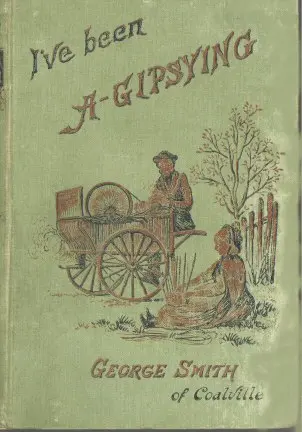
THE CLASSIC COLLECTION · 1883
"I've Been a Gipsying" by George Smith is a travelogue written in the late 19th century. The book documents the author’s experiences and observations among the gipsy communities in England, particularly focusing on their children, culture, and living conditions. Through a series of excursions, he seeks to portray the realities of gipsy life, shedding light on their hardships and the neglect faced by their young ones. The opening of the book introduces the reader to the author's intention of conveying both the struggles and joys of gipsy life. On a rainy Sunday, Smith embarks on a journey to visit gipsy children living in squalor on the outskirts of London. He vividly describes their impoverished living conditions, illustrating their lack of education and basic needs, and expressing a deep concern for their wellbeing. The author's empathetic storytelling aims to evoke a sense of urgency for social change, highlighting the stark contrast between the gipsy children's lives and the privileged existence of other children nearby.
Introduction adapted from the source catalogue; source summaries may be automatically generated.
Free to read · English · 132,003 words · No account needed
MAKE TIME FOR A GOOD BOOK
On by default. Untick to stop anonymous reading totals. Each page counts after 10 seconds in view. How this works.
Anonymous counting is on unless you have switched it off.
“Well, how are you getting on now?” “Well, I am getting on pretty well, thank God. I never work my horse on Sundays, and I do not cheat the same as I used to do. Some days I earn £6 or £7, and then again I shall be for days and days and not earn sixpence. I also go a rat-catching and butchering for people, and they pays me pretty well; and sometimes I fetches a hare or two. I am not particular if partridges or pheasants come in my way. If you will let me know the next time you are this way I will have a first-rate hare for you.” Of course I thanked him, but told my friend that I was not partial to hares.
“Well now, Mr. Pether, let us come back again to the time when you ran away, after felling the chap with the poleaxe. Did you kill the man?” “No,” said Pether, “I have found out since that I did not kill him, but I gave him a terrible scalp. He is dead now, poor chap. I have wished many thousands of times since that I had not struck him, though he did wrong in leathering me with a cow’s tongue.”
“How did your friends find you out at last?” “Well,” said Pether, “after I ran away from home my mother advertised for me all over the country, spending scores of pounds to no purpose. On account of my changing my clothes and name, and travelling with gipsies and tramps, and becoming as one of them, they could never find me out, till I had been away nearly eighteen years. How I was found out arose as follows. One day I was sitting in a beershop with some gipsies, when a man came in who knew me, and he seemed to look, and look and eye me over, head and foot, from top to bottom, as he never had done before. While he was looking at me, it seemed to strike me at once that I was at last found out for the murder I had always thought that I had committed. He went away for a little time out of the public-house, and as it has been told me since, he went to the telegraph office to send a telegram to my brother-in-law, who was in London, not many miles away, to come down by the next train, for they had found out who they thought to be their ‘Jack.’ He was not away very long, and I was in twenty minds to have run out of the house; but as he did not come back in a few minutes, I thought I was wrong in judging that I had been found out. Lord bless you, sir, did not I open my eyes when he came in again and brought one or two men with him, and sat down and called for some beer. My legs and knees began to knock together; I was all of a tremble, and I got up to go out of the house, but they called for some beer and would not let me leave the place. For the life of me I could not make it all out. Sometimes I imagined the new-comers were detectives in disguise. They joked and chaffed and seemed quite merry. I can assure you, sir, that I was not merry. I got up several times to try to get out of the house, and to sneak away. He ordered some dinner, and would have no ‘nay,’ but that I must join them. I tried to eat with them, but I can assure you, sir, it was not much that I could either eat or drink. Presently, after dinner, another man came into the room and sat down and called for some beer. I did not know the man. It has turned out since that the last comer was no other than my brother-in-law. It flashed across me that I was at last found out, and no mistake. I was a doomed man; and this surmise seemed to be doubly true when he took out of his pocket a newspaper and began to read an advertisement giving the description of me at the time I ran away. They now called me by my own name, and asked the landlord to allow me to have a wash, which he readily granted. When this was over and I was ready, they said, ‘Now, Jack, we shall want you to go with us.’ Of course there was nothing for it but to go. The worst was come, and I thought I must screw up courage and face it out as well as I could. On our way we called at the telegraph office, where one of the men sent something by telegraph. I did not know what. I have since heard that it was a telegram to my mother, stating that they had found her son ‘Jack,’ and they were on the way to her house with him. On the way through London to go, as I thought, to the police-station, we turned off the main street to go up a by-street. For the life of me I could not tell where this was, except that they were going to change my clothes, or put ‘steel buckles’ upon my wrists. We went into a tidy sort of a little house, which I thought was the home of one of the detectives who was with us. I was asked to sit upon the old sofa, and the men sat round the fire. For a little while all was as still as death. Presently I heard someone coming downstairs. The footstep did not sound like that of a man. In a minute there stood before me a woman between fifty and sixty years old. I thought I had seen the face somewhere, but could not tell where. The voice seemed to be a voice that I had heard somewhere, times back.
Your reading position is saved on this browser. Take it to another device with a library code. Reading pages adapt to text, rather than matching a printed edition.
George Smith
George Smith
BEHIND THE BOOK
This eBook is for the use of anyone anywhere in the United States and most other parts of the world at no cost and with almost no restrictions whatsoever. You may copy it, give it away or re-use it under the terms of the Project Gutenberg License included with this eBook or online at www.gutenberg.org. If you are not located in the United States, you will have to check the laws of the country where you are located before using this eBook. Read the source licence.
The original source file, including credits and licence, is retained by this library. Request an original-format copy at no charge. Please include the book title and Project Gutenberg identifier #62432.
KEEP YOUR CURIOSITY GOING
Wilfrid Scawen Blunt
Wilfrid Scawen Blunt

E. W. (Edgar Watson) Howe
Francis Greenleaf Allinson & Anne C. E. (Anne Crosby Emery) Allinson
Cyrenus Cole

John Martineau