THE CLASSIC COLLECTION✦Henry Martyn, Saint and Scholar First Modern Missionary to the Mohammedans, 1781-1812CLASSIC FREE BOOKS
Henry Martyn, Saint and Scholar First Modern Missionary to the Mohammedans, 1781-1812
George Smith
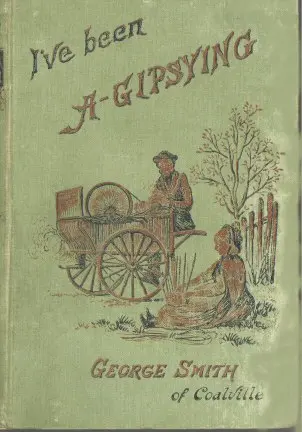
THE CLASSIC COLLECTION · 1883
"I've Been a Gipsying" by George Smith is a travelogue written in the late 19th century. The book documents the author’s experiences and observations among the gipsy communities in England, particularly focusing on their children, culture, and living conditions. Through a series of excursions, he seeks to portray the realities of gipsy life, shedding light on their hardships and the neglect faced by their young ones. The opening of the book introduces the reader to the author's intention of conveying both the struggles and joys of gipsy life. On a rainy Sunday, Smith embarks on a journey to visit gipsy children living in squalor on the outskirts of London. He vividly describes their impoverished living conditions, illustrating their lack of education and basic needs, and expressing a deep concern for their wellbeing. The author's empathetic storytelling aims to evoke a sense of urgency for social change, highlighting the stark contrast between the gipsy children's lives and the privileged existence of other children nearby.
Introduction adapted from the source catalogue; source summaries may be automatically generated.
Free to read · English · 132,003 words · No account needed
MAKE TIME FOR A GOOD BOOK
On by default. Untick to stop anonymous reading totals. Each page counts after 10 seconds in view. How this works.
Anonymous counting is on unless you have switched it off.
After another slow walk I felt drowsy, and sat down upon a mossy bank under a shady tree to rest my bones and wearied limbs. The whistling of the sweet songsters and the bleating of the sheep and lowing of the oxen, together with the lovely summer’s enchantments, sent me into a doze with my elbows upon my knees. I had not been long in this position before the meadow appeared as one vast gipsy encampment, composed of tents, vans, dogs, wretchedness, misery, devilry, ignorance, dirt, filth, and squalor. The gipsy men, women, and children were playing, singing, preying, banging, shouting, fighting, thieving, lying, swearing, poaching, cheating, and fortune-telling to their hearts’ content. Among this vast concourse of English gipsy heathens, there were not a few “spoony” Gorgios, and “posh gipsies.” At one side of the meadow there was a gipsy tent covered with rags and old sheeting. There were several little lost gipsy children playing about it on the grass. Near them stood two gipsy women talking to two silly young ladies, and telling their fortunes. The young ladies, of course, were both in love with fair gentlemen, but the fair gentlemen would prove deceitful and dark gentlemen would take their places; and they would marry well, after crossing the water, and become rich, and have a number of children, who would become dukes and lords, and would live and die rolling in gold and splendour, with horses, carriages, and servants to wait upon them “hand and foot.” One of the young ladies, with glittering wealth hanging about her, would have much trouble and many disappointments before she realized her wishes, but all would be removed and made right as time went on. One of the old fortune-telling wicked hags, who could not read a letter, took out a small pocket Bible, and pretended to read a few verses. The old gipsies made a few signs, repeated some gabble, and looked into the hands of the young ladies, and told them to come again, as they had something of great importance to tell them the next time, which would add much to their happiness, beauty, and pleasure; but before the secrets could be successful they must bring the best and most valuable ring they had in the house for her to make crosses with, so that she might rule her planet properly and dispose of the fair man, who was haunting one of them to make her his wife, but would bring her to ruin. To the other young lady an old gipsy woman said, in a kind of snake’s whisper, “You, my dear young lady, have living with you in your family a fair woman and dark man; they don’t mean you any good. You must have nothing to do with them; be sure and hear what I say. Now mind, you must not listen to what they say, or it will be your ruin, and all my words of counsel will turn to curses.” “But,” said the young lady, “there is no fair woman or dark man in our house, except my father and mother.” “Well,” said the old gipsy, “hear what I have to say. Your father and mother are no friends of yours. Now mark that; goodbye, my sweet girl. The Lord bless you, my dear girl. I shall see you again soon; good-bye. Be sure and bring the best ring in the house. Good-bye, and may the dear Lord bless you. If you can bring two rings it will be all the better for your happiness and fortune. The young gentleman who will be your husband will never be cross. He will always be smiling. He will be beautiful, and he will let you go where you like and do what you like. Bring two rings for your own sake. Good-bye, my darling child. I wish I stood in the way for a fortune and happiness as surely as you do; but all depends upon you bringing me the rings. Good-bye, my sweet child. If you can bring me a spade-ace guinea, or a Queen Victoria sovereign of the present year, it will be all the better. I can influence the planets so that you can have your dear charming little husband, horses, carriages, and footmen to wait upon you earlier. The planets will do anything just now. Good-bye, my sweet darling child. You are so much like your dear aunt; she was one of the prettiest and best ladies I ever knew, and it would be a thousand pities for you not to have a good husband. Bring the two rings, and the guinea or sovereign, and it shall be all right. Good-bye.” “But,” said the young lady, “I have not got any diamond rings and sovereigns. They are my father’s and mother’s.” “Never mind. Hear what I say; you must bring them if you want to be happy. I’ll influence the planets to send your father and mother,” said the old hag, closing her fist, and with fire in her eyes, and a devil’s anger in heart, and frowns upon her face, “more in their places of greater value to them. The planets will not be ruled, my dear young lady, except by the rings that your father and mother have worn; and the sovereign would be all the better if taken out of either your father’s or mother’s pocket. The gold and rings of your mother have the most influence with the planets.”
Your reading position is saved on this browser. Take it to another device with a library code. Reading pages adapt to text, rather than matching a printed edition.
George Smith
George Smith
BEHIND THE BOOK
This eBook is for the use of anyone anywhere in the United States and most other parts of the world at no cost and with almost no restrictions whatsoever. You may copy it, give it away or re-use it under the terms of the Project Gutenberg License included with this eBook or online at www.gutenberg.org. If you are not located in the United States, you will have to check the laws of the country where you are located before using this eBook. Read the source licence.
The original source file, including credits and licence, is retained by this library. Request an original-format copy at no charge. Please include the book title and Project Gutenberg identifier #62432.
KEEP YOUR CURIOSITY GOING
Wilfrid Scawen Blunt
Wilfrid Scawen Blunt

E. W. (Edgar Watson) Howe
Francis Greenleaf Allinson & Anne C. E. (Anne Crosby Emery) Allinson
Cyrenus Cole

John Martineau