THE CLASSIC COLLECTION✦An outlaw’s diary: the CommuneCLASSIC FREE BOOKS
An outlaw’s diary: the Commune
Cécile Tormay
THE CLASSIC COLLECTION · 1895
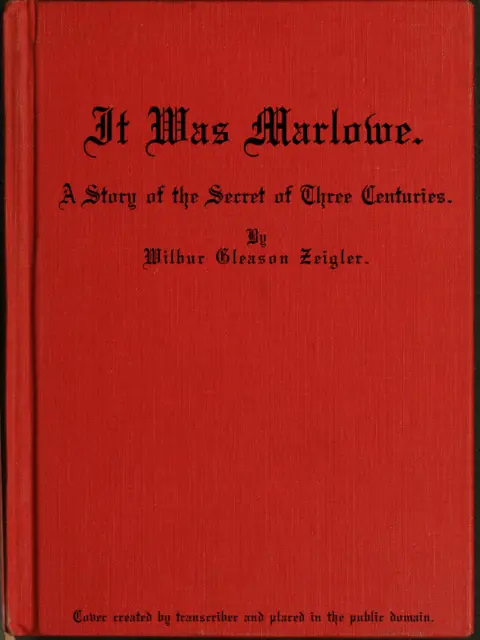
"It Was Marlowe: A Story of the Secret of Three Centuries" by Wilbur Gleason Zeigler is a historical novel written in the late 19th century. The narrative centers around the intriguing figure of Christopher Marlowe, a prominent playwright of the Elizabethan era, as it explores themes of authorship, scandal, and love, all set against the backdrop of the tumultuous societal changes of that time. At the start of the story, we meet Marlowe in the midst of the plague-stricken London of June 1593. A chance encounter with a youth named Tabbard leads to discussions regarding the Lady Anne and a potential romantic connection between them. Meanwhile, tensions brew as Marlowe navigates his professional life as a playwright and actor amid rumors of his controversial reputation and impending danger. Secrets unfold through Tabbard's news and Marlowe's upcoming clandestine meeting with Anne, setting the stage for a tale filled with intrigue, romance, and the shadow of Marlowe’s enigmatic past. This opening lays the groundwork for a plot that promises to delve into the complexities of Marlowe's life and the challenges he faces in a world rife with political and personal peril.
Introduction adapted from the source catalogue; source summaries may be automatically generated.
Free to read · English · 71,165 words · No account needed
MAKE TIME FOR A GOOD BOOK
On by default. Untick to stop anonymous reading totals. Each page counts after 10 seconds in view. How this works.
Anonymous counting is on unless you have switched it off.
One would have expected to have seen a rough doublet of Kendal green, or of homespun russet, with patched trousers and low cockers upon the slender figure beneath this face; but, on the contrary, he was attired in a neat-fitting garb appropriate for the page of a lord or rich country squire. His blue coat, with velvet facing, had even an Italian ruff with a hundred double turnings upon it. A short sword was belted at his waist, and his trunks, of strong material, disappeared into top boots. The latter, however, were patched, of crude manufacture, and looked to have been worn through plowed fields at some recent period. Neither was his hat in keeping with his new body apparel, but was one evidently picked, for wearing on this particular expedition, out of some pile of discarded garments of the man whom he served.
As he saw the man first described a gleam of recognition showed in his
face.
“Ho!” he exclaimed, joyfully, “Is that you?”
“None else,” returned the other, carelessly, as though the discovery of himself by the stranger was of the least concern.
“Sir Kit?” queried the youth, taking off a hat, still adorned with a broken feather, and bowing with a grace which was evidently a recent acquirement, for it savored of a contact with people far removed from a service in which he must have acquired his rough field boots.
“‘Sir,’ if so you will have it, but ‘Kit’ without doubt,” answered the man addressed, smiling at the youth’s appearance, and at the same time taking an interest in the jolly face of its owner. The latter feeling caused him to inquire:
“Hast thou any matter of concern to communicate to me?”
“You do not recognize me,” returned the stranger, as though the matter of his identity was first necessary to be established.
The gentleman studied the other for a moment, and then said:
“I have seen thy face before, but can not place thee. Where was it and
who are you?”
“You saw me in Deptford, and my name is Tabbard. I come now from Sayes Court, where I have lately entered into better service than that of an attendant upon gentle folk in a wayside inn. The duke took a fancy to me.”
“And gave you a new doublet, and his old hat, eh?”
“True,” said Tabbard, “and the promise of long service, good wages and
promotion.”
“Your star is in the ascendant,” laughed the other, and then added, “but what do you want to tell me?”
Your reading position is saved on this browser. Take it to another device with a library code. Reading pages adapt to text, rather than matching a printed edition.
BEHIND THE BOOK
This eBook is for the use of anyone anywhere in the United States and most other parts of the world at no cost and with almost no restrictions whatsoever. You may copy it, give it away or re-use it under the terms of the Project Gutenberg License included with this eBook or online at www.gutenberg.org. If you are not located in the United States, you will have to check the laws of the country where you are located before using this eBook. Read the source licence.
The original source file, including credits and licence, is retained by this library. Request an original-format copy at no charge. Please include the book title and Project Gutenberg identifier #57810.
KEEP YOUR CURIOSITY GOING
Cécile Tormay

Moritz Busch
Coulson Kernahan
John L. Ransom

Maurice Baring
Frances Wright