THE CLASSIC COLLECTION✦An outlaw’s diary: the CommuneCLASSIC FREE BOOKS
An outlaw’s diary: the Commune
Cécile Tormay
THE CLASSIC COLLECTION · 1895
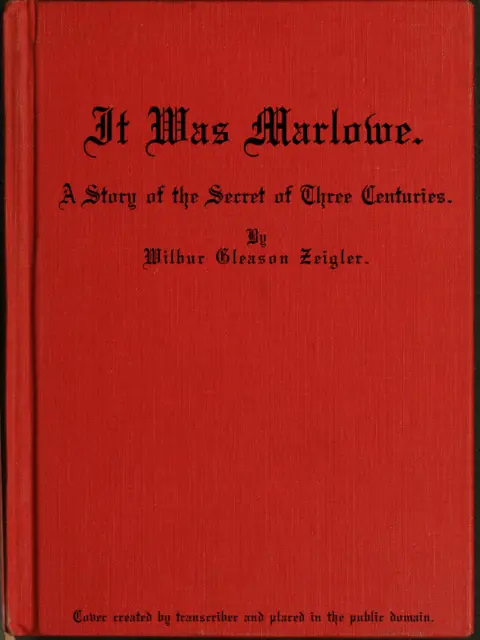
"It Was Marlowe: A Story of the Secret of Three Centuries" by Wilbur Gleason Zeigler is a historical novel written in the late 19th century. The narrative centers around the intriguing figure of Christopher Marlowe, a prominent playwright of the Elizabethan era, as it explores themes of authorship, scandal, and love, all set against the backdrop of the tumultuous societal changes of that time. At the start of the story, we meet Marlowe in the midst of the plague-stricken London of June 1593. A chance encounter with a youth named Tabbard leads to discussions regarding the Lady Anne and a potential romantic connection between them. Meanwhile, tensions brew as Marlowe navigates his professional life as a playwright and actor amid rumors of his controversial reputation and impending danger. Secrets unfold through Tabbard's news and Marlowe's upcoming clandestine meeting with Anne, setting the stage for a tale filled with intrigue, romance, and the shadow of Marlowe’s enigmatic past. This opening lays the groundwork for a plot that promises to delve into the complexities of Marlowe's life and the challenges he faces in a world rife with political and personal peril.
Introduction adapted from the source catalogue; source summaries may be automatically generated.
Free to read · English · 71,165 words · No account needed
MAKE TIME FOR A GOOD BOOK
On by default. Untick to stop anonymous reading totals. Each page counts after 10 seconds in view. How this works.
Anonymous counting is on unless you have switched it off.
“See for thyself; and you,” he continued, directing his eyes upon Peele, “can you not go to the justice at the corner of this street and the Poultry, and bring him here, or if he refuses to stir abroad at this late hour, demand that he light his candle and wait our presence?”
“You are in haste,” remarked Tamworth, “and not at all diffident in making requests of strangers.”
“There is occasion for it.”
“We certainly prefer the justice to attend here,” said Peele, “but why not send one of these watchmen?”
“They may not be as persuasive as a man of dignified bearing,” returned Eliot, bowing slightly.
“Well, Peele,” said Tamworth, “a word with you.”
He drew him and Shakespere into the distant alcove.
“Is the situation serious?” asked Peele.
“Not so far as immediate results are concerned, unless the justice knows and recognizes Marlowe. It is evident that Eliot never saw him before, but thinks he fills Bame’s description of the man who was with him in St. Olave. All that he can demand now is an affidavit. They have no power to take him into custody.”
“Unless by unlawful force,” suggested Peele.
“True,” answered Tamworth, “but the danger lies in the future. The order, upon Eliot’s motion for a new trial, may be made to-morrow, and Marlowe would be detained as a witness. Further concealment here, except for the night, is hopeless. There is no safety for him in London. He must leave for the continent before twenty-four hours have passed over his head.”
“And now, what?” asked Peele.
“There is no occasion for either of you remaining here, and you must leave as though in answer to Eliot’s request to call the justice, whom we do not want here. His presence might be fatal. If you do not depart on this pretense, a watchman may be sent. In the tedious delay which will ensue, I shall find time to outwit this presumptuous barrister and his watchmen. Repair to Shakespere’s quarters and there await our coming.”
The three came forth from behind the portieres.
“Well,” remarked Eliot, quietly, “what is the result of this
uncalled-for conference?”
His manner of looking at Tamworth, more than his words, showed that their withdrawal had raised his suspicions.
“Peele will go for the justice,” said Tamworth.
“And I with him,” continued Shakespere.
“So,” said Eliot, “I have no desire to break up this family meeting; but if you will have it that way, it is well.”
“Midnight is not an early hour for departure,” said one of the group.
Your reading position is saved on this browser. Take it to another device with a library code. Reading pages adapt to text, rather than matching a printed edition.
BEHIND THE BOOK
This eBook is for the use of anyone anywhere in the United States and most other parts of the world at no cost and with almost no restrictions whatsoever. You may copy it, give it away or re-use it under the terms of the Project Gutenberg License included with this eBook or online at www.gutenberg.org. If you are not located in the United States, you will have to check the laws of the country where you are located before using this eBook. Read the source licence.
The original source file, including credits and licence, is retained by this library. Request an original-format copy at no charge. Please include the book title and Project Gutenberg identifier #57810.
KEEP YOUR CURIOSITY GOING
Cécile Tormay

Moritz Busch
Coulson Kernahan
John L. Ransom

Maurice Baring
Frances Wright