THE CLASSIC COLLECTION✦An outlaw’s diary: the CommuneCLASSIC FREE BOOKS
An outlaw’s diary: the Commune
Cécile Tormay
THE CLASSIC COLLECTION · 1895
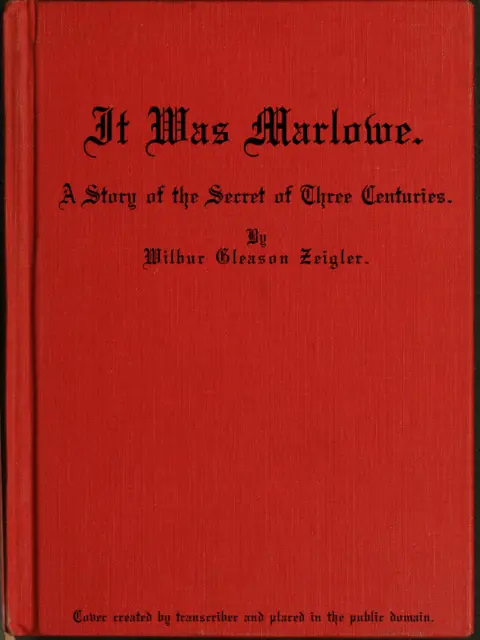
"It Was Marlowe: A Story of the Secret of Three Centuries" by Wilbur Gleason Zeigler is a historical novel written in the late 19th century. The narrative centers around the intriguing figure of Christopher Marlowe, a prominent playwright of the Elizabethan era, as it explores themes of authorship, scandal, and love, all set against the backdrop of the tumultuous societal changes of that time. At the start of the story, we meet Marlowe in the midst of the plague-stricken London of June 1593. A chance encounter with a youth named Tabbard leads to discussions regarding the Lady Anne and a potential romantic connection between them. Meanwhile, tensions brew as Marlowe navigates his professional life as a playwright and actor amid rumors of his controversial reputation and impending danger. Secrets unfold through Tabbard's news and Marlowe's upcoming clandestine meeting with Anne, setting the stage for a tale filled with intrigue, romance, and the shadow of Marlowe’s enigmatic past. This opening lays the groundwork for a plot that promises to delve into the complexities of Marlowe's life and the challenges he faces in a world rife with political and personal peril.
Introduction adapted from the source catalogue; source summaries may be automatically generated.
Free to read · English · 71,165 words · No account needed
MAKE TIME FOR A GOOD BOOK
On by default. Untick to stop anonymous reading totals. Each page counts after 10 seconds in view. How this works.
Anonymous counting is on unless you have switched it off.
“Henslowe had a cup of yellow wine close beside him, and so had Jonson. The face of the former appeared unusually complacent; and nothing, through the medium of his eyes alone could have disturbed his supreme felicity, for thou knoweth the richness of the tapestries of that pleasing den of the opulent manager of the Rose; the works of art upon its walls; the grand display of his costly libraries of unread books; the softness of its Turkish carpets and of its upholstered furniture. The insidious workings of canary wine were for peace and rest.
“I would fain have withdrawn, but being there on thy behalf, I put on a face of unconcern, and sat with back toward Jonson. Methinks the wine had stirred his wits and made him keen for controversy.”
“And fairly gifted he is in such line.”
“As I soon discovered, for before I had time to say to Henslowe the words, ‘To thy good health,’ as I drank, Jonson said, ‘And what cares he for blood when wine will quench his thirst.’ Thus beginning with a sly sneer at Tamburlaine.”
“He evidently considers Shakespere an imitator of the dead Marlowe,” said Peele, looking at Marlowe.
“Not necessarily,” remarked Marlowe, “I hardly think that the passage from Tamburlaine was in his mind. He had evidently just read the first scene of Romeo and Juliet, where the prince rebukes his subjects for quenching their rage ‘With purple fountains issuing from your veins.’”[29]
“Ah! there it is again,” exclaimed Peele.
“Well, I paid no attention to Jonson, but addressed myself to Henslowe. The upshot of the matter was that he wanted no more plays with plots laid in foreign lands.”
“You are right,” interrupted Marlowe, “he is under Jonson’s influence.”
“Jonson had much to say in the conversation. At one time he asked me if I did not think I was following too closely the ‘mighty lines’ of Marlowe to ever be deemed anything more than a mere imitator, and he whipped out this paper, which he said I might keep for future reference, and as a warning that his eyes were open. He either knew that what he had read of Romeo and Juliet was written by thee, Marlowe, or he wanted no thefts to be made from his own plays. This is his arraignment:
‘If love be blind, love cannot hit the mark.’
--Romeo and Juliet, ii, 1.
Love moderately, long love doth so.
--Romeo and Juliet, ii, 6.
Love goes toward love.
--Romeo and Juliet, ii, 2.
And what love can do, that dares love attempt.
--Romeo and Juliet, ii, 2.
Whoever loved that loved not at first sight.
--Hero and Leander.
Love me little, love me long.
Your reading position is saved on this browser. Take it to another device with a library code. Reading pages adapt to text, rather than matching a printed edition.
BEHIND THE BOOK
This eBook is for the use of anyone anywhere in the United States and most other parts of the world at no cost and with almost no restrictions whatsoever. You may copy it, give it away or re-use it under the terms of the Project Gutenberg License included with this eBook or online at www.gutenberg.org. If you are not located in the United States, you will have to check the laws of the country where you are located before using this eBook. Read the source licence.
The original source file, including credits and licence, is retained by this library. Request an original-format copy at no charge. Please include the book title and Project Gutenberg identifier #57810.
KEEP YOUR CURIOSITY GOING
Cécile Tormay

Moritz Busch
Coulson Kernahan
John L. Ransom

Maurice Baring
Frances Wright