THE CLASSIC COLLECTION✦An outlaw’s diary: the CommuneCLASSIC FREE BOOKS
An outlaw’s diary: the Commune
Cécile Tormay
THE CLASSIC COLLECTION · 1895
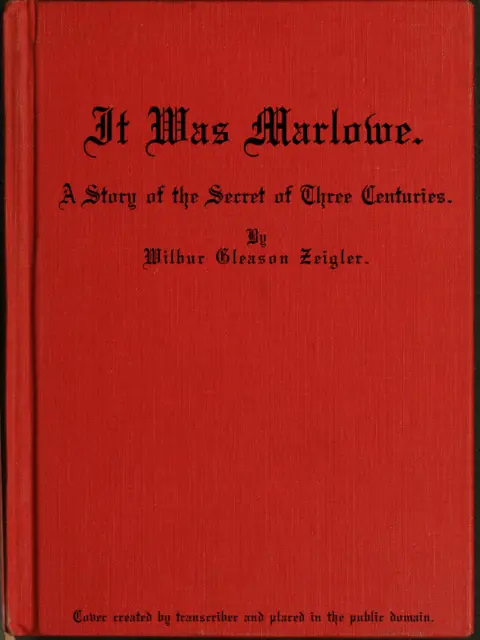
"It Was Marlowe: A Story of the Secret of Three Centuries" by Wilbur Gleason Zeigler is a historical novel written in the late 19th century. The narrative centers around the intriguing figure of Christopher Marlowe, a prominent playwright of the Elizabethan era, as it explores themes of authorship, scandal, and love, all set against the backdrop of the tumultuous societal changes of that time. At the start of the story, we meet Marlowe in the midst of the plague-stricken London of June 1593. A chance encounter with a youth named Tabbard leads to discussions regarding the Lady Anne and a potential romantic connection between them. Meanwhile, tensions brew as Marlowe navigates his professional life as a playwright and actor amid rumors of his controversial reputation and impending danger. Secrets unfold through Tabbard's news and Marlowe's upcoming clandestine meeting with Anne, setting the stage for a tale filled with intrigue, romance, and the shadow of Marlowe’s enigmatic past. This opening lays the groundwork for a plot that promises to delve into the complexities of Marlowe's life and the challenges he faces in a world rife with political and personal peril.
Introduction adapted from the source catalogue; source summaries may be automatically generated.
Free to read · English · 71,165 words · No account needed
MAKE TIME FOR A GOOD BOOK
On by default. Untick to stop anonymous reading totals. Each page counts after 10 seconds in view. How this works.
Anonymous counting is on unless you have switched it off.
“I am deep in the third act,” answered Marlowe, picking up a page of the manuscript of Romeo and Juliet, which lay scattered over the top of the table “And what think you of this as the speech of a love-lorn maiden?
Gallop apace you fiery-footed steeds
Toward Phoebus’ mansion; such a waggoner
As Phaeton would whip you to the West,
And-bring in cloudy night immediately.”
He would have continued, but Peele interrupted: “Hold! you have put similar language in the mouth of Edward II, descriptive of his desire for the shortening of time before battle. I recollect it well; thus:
‘Gallop apace, bright Phoebus, through the sky;
And dusky night in rusty iron car,
Between you both shorten the time, I pray,
That I may see that most desired day.’”
“Well?” exclaimed Marlowe.
“You must change it,” said Shakespere.
“Why should I?” retorted Marlowe, “a man cannot commit plagiary on his own writings; and, although the style of composition is similar, and the figure is used in both places to rail against the slowness of time, you must acknowledge that they are both appropriate in their places.”
“Now this has brought me to the very subject which I came here to talk over with you,” responded Peele.
“Ah, so you are the first one to draw the sword? Has the presentment of my latest drama at the Rose awakened thy unfavorable opinion? Was the fault with the players or with myself?”
“Your work improves with every line you write,” said Peele, enthusiastically, “but still with all the increase of learning displayed, the growing compactness of expression, the sustained fire, the maturity of thought, the diverseness of opinion, the wondrous expanse of human horizon disclosed,--thy style is stamped indisputably upon every passage.”
“So! I have labored to change it.”
“Marry, but thou hast not” [note 41].
“Then it is like my skin, a part of me.”
“No more to be changed than thy countenance, it seems, which with age and experience may get new lines and grow wiser looking, but still shows the old familiar expressions with every change of feeling.”
“Then there is no help.”
“But thou must change thy methods of treatment of some subjects.”
“Again I ask, why should I?”
Peele surveyed him like a father might his recreant son, and Shakespere slowly shook his head as though the case were one beyond all cure, exclaiming as he did so: “Why, man, for thine own safety.”
“Is that in danger?”
Your reading position is saved on this browser. Take it to another device with a library code. Reading pages adapt to text, rather than matching a printed edition.
BEHIND THE BOOK
This eBook is for the use of anyone anywhere in the United States and most other parts of the world at no cost and with almost no restrictions whatsoever. You may copy it, give it away or re-use it under the terms of the Project Gutenberg License included with this eBook or online at www.gutenberg.org. If you are not located in the United States, you will have to check the laws of the country where you are located before using this eBook. Read the source licence.
The original source file, including credits and licence, is retained by this library. Request an original-format copy at no charge. Please include the book title and Project Gutenberg identifier #57810.
KEEP YOUR CURIOSITY GOING
Cécile Tormay

Moritz Busch
Coulson Kernahan
John L. Ransom

Maurice Baring
Frances Wright