THE CLASSIC COLLECTION✦An outlaw’s diary: the CommuneCLASSIC FREE BOOKS
An outlaw’s diary: the Commune
Cécile Tormay
THE CLASSIC COLLECTION · 1895
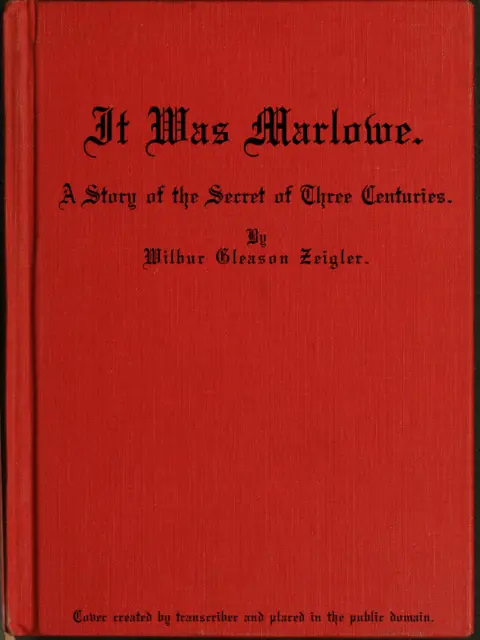
"It Was Marlowe: A Story of the Secret of Three Centuries" by Wilbur Gleason Zeigler is a historical novel written in the late 19th century. The narrative centers around the intriguing figure of Christopher Marlowe, a prominent playwright of the Elizabethan era, as it explores themes of authorship, scandal, and love, all set against the backdrop of the tumultuous societal changes of that time. At the start of the story, we meet Marlowe in the midst of the plague-stricken London of June 1593. A chance encounter with a youth named Tabbard leads to discussions regarding the Lady Anne and a potential romantic connection between them. Meanwhile, tensions brew as Marlowe navigates his professional life as a playwright and actor amid rumors of his controversial reputation and impending danger. Secrets unfold through Tabbard's news and Marlowe's upcoming clandestine meeting with Anne, setting the stage for a tale filled with intrigue, romance, and the shadow of Marlowe’s enigmatic past. This opening lays the groundwork for a plot that promises to delve into the complexities of Marlowe's life and the challenges he faces in a world rife with political and personal peril.
Introduction adapted from the source catalogue; source summaries may be automatically generated.
Free to read · English · 71,165 words · No account needed
MAKE TIME FOR A GOOD BOOK
On by default. Untick to stop anonymous reading totals. Each page counts after 10 seconds in view. How this works.
Anonymous counting is on unless you have switched it off.
“Little at first,” answered Tabbard, “but when once the play was well on, I could not drink for fear of taking my eyes from the stage; not that the devil heads on the tops of the posts on each side interested me, or the dandies on the stools and dried rushes on the stage-floor[8] under these heads, but the actors! Ah, but the actors, Sir Kit! Were there ever such crimson doublets and cloaks with copper lacings worn? And the rich dresses that the men wore, who played the parts of the Queen and ladies, made me think that they had broken into the wardrobe at Whitehall. And do ladies never play such parts, Sir Kit?”
“Never,”[9] answered the other, shaking his head.
“But Dudden swore they were ladies, and when one of the spectators on the stage hissed the Queen for forgetting a line he threw one of the empty bottles of sack at him. It was all so grand, so fierce, so bloody. And Dudden went into a drunken fit when the head of Mortimer was brought in. But that was at the end. My own heart was in my throat at the sight of the mowers, with their Welch hooks, taking the king captive.”
“Art thou so easily disturbed, fellow?” asked Kit, with a twinkle in
his eye.
“Prut!” exclaimed Tabbard, “Thou couldst never have seen the play, if you say that. What man could sit still when the king moaned; ‘Lay me on a litter and to the gates of hell----’”
“Hold,” interrupted the other, “not quite so. These are the words:
‘A litter hast thou? Lay me in a hearse, And to the gates of hell convey me hence: Let Pluto’s bells ring out my fatal knell, And hags howl for my death at Charon’s shore.’”
“Then he throws off his disguise,” continued Tabbard, excitedly. “Why those sound like the very words. Didst thou ever play the part of Edward?”
“Nay,” said Kit, shaking his head.
“Or Gaveston or Mortimer?”
“Nay, neither.”
Tabbard looked at his companion with open mouth, and then asked:
“And what says the king when he hands the Bishop his crown?”
“Now, sweet God of Heaven, make me despise this transitory pomp,” answered the other without hesitation.
“Well, and dost thou know all the play?” asked Tabbard in amazement.
“Much of it,” came the answer.
“And never was in it as an actor?”
“Never.”
“And how comes it that you know it all?”
“I wrote it,” quietly answered the other.
“Wrote it!” exclaimed Tabbard, “and then thou art----”
“Christopher Marlowe,” continued the gentleman, “commonly called Kit.”
Your reading position is saved on this browser. Take it to another device with a library code. Reading pages adapt to text, rather than matching a printed edition.
BEHIND THE BOOK
This eBook is for the use of anyone anywhere in the United States and most other parts of the world at no cost and with almost no restrictions whatsoever. You may copy it, give it away or re-use it under the terms of the Project Gutenberg License included with this eBook or online at www.gutenberg.org. If you are not located in the United States, you will have to check the laws of the country where you are located before using this eBook. Read the source licence.
The original source file, including credits and licence, is retained by this library. Request an original-format copy at no charge. Please include the book title and Project Gutenberg identifier #57810.
KEEP YOUR CURIOSITY GOING
Cécile Tormay

Moritz Busch
Coulson Kernahan
John L. Ransom

Maurice Baring
Frances Wright