Vailima Letters Being Correspondence Addressed by Robert Louis Stevenson to Sidney Colvin, November 1890-October 1894
Robert Louis Stevenson

THE CLASSIC COLLECTION · 1893
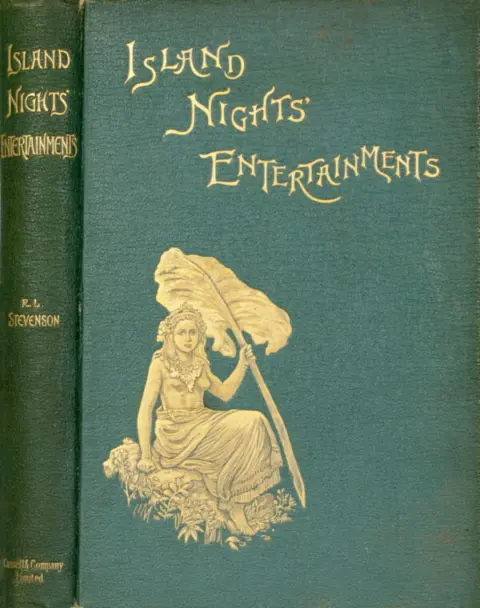
"Island Nights' Entertainments" by Robert Louis Stevenson is a collection of stories written in the late 19th century. The opening tale, "The Beach of Falesá," introduces the character John Wiltshire, who arrives on the island of Falesá after spending years living among the natives of a nearby low island. The story immediately immerses readers in the vibrant yet challenging life of a trader in the South Pacific, where Wiltshire seeks to establish himself amidst the complexities of trade, local customs, and interpersonal relationships. The opening of "The Beach of Falesá" sets the stage with Wiltshire's arrival, showcasing his first impressions of the island and its inhabitants. He feels a mix of excitement and unease as he interacts with the local traders and contemplates his new life. The story conveys a sense of foreboding as he learns about the complexities of island life and the shadowy figures like Case, who manipulate the landscape for their gain. Wiltshire's initial enthusiasm leads him to consider settling down with a local woman named Uma, reflecting both the allure and the potential pitfalls of his romantic interest in her. The narrative introduces themes of isolation, cultural clashes, and the search for belonging, while hinting at conflicts that may arise as Wiltshire navigates his new world.
Introduction adapted from the source catalogue; source summaries may be automatically generated.
Free to read · English · 49,809 words · No account needed
MAKE TIME FOR A GOOD BOOK
On by default. Untick to stop anonymous reading totals. Each page counts after 10 seconds in view. How this works.
Anonymous counting is on unless you have switched it off.
It chanced one day towards the end of the month, that I was sitting in this bay in the edge of the bush, looking east, with a Kanaka. I had given him a fill of tobacco, and we were making out to talk as best we could; indeed, he had more English than most.
I asked him if there was no road going eastward.
“One time one road,” said he. “Now he dead.”
“Nobody he go there?” I asked.
“No good,” said he. “Too much devil he stop there.”
“Oho!” says I, “got-um plenty devil, that bush?”
“Man devil, woman devil; too much devil,” said my friend. “Stop there all-e-time. Man he go there, no come back.”
I thought if this fellow was so well posted on devils and spoke of them so free, which is not common, I had better fish for a little information about myself and Uma.
“You think me one devil?” I asked.
“No think devil,” said he soothingly. “Think all-e-same fool.”
“Uma, she devil?” I asked again.
“No, no; no devil. Devil stop bush,” said the young man.
I was looking in front of me across the bay, and I saw the hanging front of the woods pushed suddenly open, and Case, with a gun in his hand, step forth into the sunshine on the black beach. He was got up in light pyjamas, near white, his gun sparkled, he looked mighty conspicuous; and the land-crabs scuttled from all round him to their holes.
“Hullo, my friend!” says I, “you no talk all-e-same true. Ese he go, he
come back.”
“Ese no all-e-same; Ese Tiapolo,” says my friend; and, with a “Good-bye,” slunk off among the trees.
I watched Case all round the beach, where the tide was low; and let him pass me on the homeward way to Falesá. He was in deep thought, and the birds seemed to know it, trotting quite near him on the sand, or wheeling and calling in his ears. When he passed me I could see by the working of his lips that he was talking to himself, and what pleased me mightily, he had still my trade mark on his brow, I tell you the plain truth: I had a mind to give him a gunful in his ugly mug, but I thought better of it.
All this time, and all the time I was following home, I kept repeating that native word, which I remembered by “Polly, put the kettle on and make us all some tea,” tea-a-pollo.
“Uma,” says I, when I got back, “what does Tiapolo mean?”
“Devil,” says she.
“I thought aitu was the word for that,” I said.
Your reading position is saved on this browser. Take it to another device with a library code. Reading pages adapt to text, rather than matching a printed edition.
Robert Louis Stevenson

Robert Louis Stevenson

Robert Louis Stevenson
BEHIND THE BOOK
This eBook is for the use of anyone anywhere in the United States and most other parts of the world at no cost and with almost no restrictions whatsoever. You may copy it, give it away or re-use it under the terms of the Project Gutenberg License included with this eBook or online at www.gutenberg.org. If you are not located in the United States, you will have to check the laws of the country where you are located before using this eBook. Read the source licence.
The original source file, including credits and licence, is retained by this library. Request an original-format copy at no charge. Please include the book title and Project Gutenberg identifier #329.
KEEP YOUR CURIOSITY GOING
Coulson Kernahan

Maurice Baring
Frances Wright
Cécile Tormay

Frederic Jesup Stimson

W. H. P. (William Henry Pope) Jarvis