Vailima Letters Being Correspondence Addressed by Robert Louis Stevenson to Sidney Colvin, November 1890-October 1894
Robert Louis Stevenson

THE CLASSIC COLLECTION · 1893
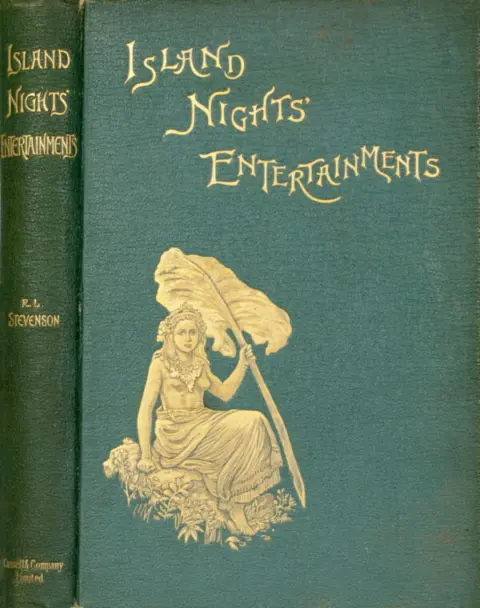
"Island Nights' Entertainments" by Robert Louis Stevenson is a collection of stories written in the late 19th century. The opening tale, "The Beach of Falesá," introduces the character John Wiltshire, who arrives on the island of Falesá after spending years living among the natives of a nearby low island. The story immediately immerses readers in the vibrant yet challenging life of a trader in the South Pacific, where Wiltshire seeks to establish himself amidst the complexities of trade, local customs, and interpersonal relationships. The opening of "The Beach of Falesá" sets the stage with Wiltshire's arrival, showcasing his first impressions of the island and its inhabitants. He feels a mix of excitement and unease as he interacts with the local traders and contemplates his new life. The story conveys a sense of foreboding as he learns about the complexities of island life and the shadowy figures like Case, who manipulate the landscape for their gain. Wiltshire's initial enthusiasm leads him to consider settling down with a local woman named Uma, reflecting both the allure and the potential pitfalls of his romantic interest in her. The narrative introduces themes of isolation, cultural clashes, and the search for belonging, while hinting at conflicts that may arise as Wiltshire navigates his new world.
Introduction adapted from the source catalogue; source summaries may be automatically generated.
Free to read · English · 49,809 words · No account needed
MAKE TIME FOR A GOOD BOOK
On by default. Untick to stop anonymous reading totals. Each page counts after 10 seconds in view. How this works.
Anonymous counting is on unless you have switched it off.
He tried me awhile in the French, and then again in native, which he seemed to think was the best chance. I made out he was after more than passing the time of day with me, but had something to communicate, and I listened the harder. I heard the names of Adams and Case and of Randall—Randall the oftenest—and the word “poison,” or something like it, and a native word that he said very often. I went home, repeating it to myself.
“What does fussy-ocky mean?” I asked of Uma, for that was as near as I
could come to it.
“Make dead,” said she.
“The devil it does!” says I. “Did ever you hear that Case had poisoned
Johnnie Adams?”
“Every man he savvy that,” says Uma, scornful-like. “Give him white sand—bad sand. He got the bottle still. Suppose he give you gin, you no take him.”
Now I had heard much the same sort of story in other islands, and the same white powder always to the front, which made me think the less of it. For all that, I went over to Randall’s place to see what I could pick up, and found Case on the doorstep, cleaning a gun.
“Good shooting here?” says I.
“A 1,” says he. “The bush is full of all kinds of birds. I wish copra was as plenty,” says he—I thought, slyly—“but there don’t seem anything doing.”
I could see Black Jack in the store, serving a customer.
“That looks like business, though,” said I.
“That’s the first sale we’ve made in three weeks,” said he.
“You don’t tell me?” says I. “Three weeks? Well, well.”
“If you don’t believe me,” he cries, a little hot, “you can go and look at the copra-house. It’s half empty to this blessed hour.”
“I shouldn’t be much the better for that, you see,” says I. “For all I can tell, it might have been whole empty yesterday.”
“That’s so,” says he, with a bit of a laugh.
“By-the-bye,” I said, “what sort of a party is that priest? Seems rather a friendly sort.”
At this Case laughed right out loud. “Ah!” says he, “I see what ails you now. Galuchet’s been at you.”—Father Galoshes was the name he went by most, but Case always gave it the French quirk, which was another reason we had for thinking him above the common.
“Yes, I have seen him,” I says. “I made out he didn’t think much of your Captain Randall.”
Your reading position is saved on this browser. Take it to another device with a library code. Reading pages adapt to text, rather than matching a printed edition.
Robert Louis Stevenson

Robert Louis Stevenson

Robert Louis Stevenson
BEHIND THE BOOK
This eBook is for the use of anyone anywhere in the United States and most other parts of the world at no cost and with almost no restrictions whatsoever. You may copy it, give it away or re-use it under the terms of the Project Gutenberg License included with this eBook or online at www.gutenberg.org. If you are not located in the United States, you will have to check the laws of the country where you are located before using this eBook. Read the source licence.
The original source file, including credits and licence, is retained by this library. Request an original-format copy at no charge. Please include the book title and Project Gutenberg identifier #329.
KEEP YOUR CURIOSITY GOING
Coulson Kernahan

Maurice Baring
Frances Wright
Cécile Tormay

Frederic Jesup Stimson

W. H. P. (William Henry Pope) Jarvis




