
The Writing of News A Handbook with Chapters on Newspaper Correspondence and Copy Reading
Charles G. (Charles Griffith) Ross
THE CLASSIC COLLECTION · 1885
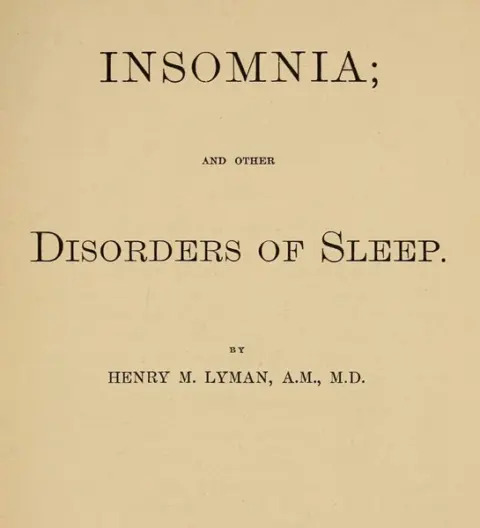
"Insomnia; and Other Disorders of Sleep" by Henry M. Lyman is a scientific publication written in the late 19th century. This work delves into the physiological and pathological aspects of sleep, examining conditions such as insomnia, dreams, and various disorders of sleep. It aims to provide a comprehensive understanding of sleep, discussing physiological functions, causes of sleep and wakefulness, and potential treatments for related disorders. The opening of this publication introduces the subject of sleep as a fundamental physiological process, likening its natural occurrence to vital functions like breathing and circulation. Lyman emphasizes the significance of sleep in restoring energy and the complexities surrounding its mechanisms. He discusses the prelude to sleep, identifying the hypnagogic state that precedes unconsciousness, and begins to outline how sleep differs from other states like coma and lethargy. This establishes a foundation for the subsequent exploration of insomnia, its causes, and its treatments, indicating that the text will focus on both the scientific and therapeutic perspectives of sleep disorders.
Introduction adapted from the source catalogue; source summaries may be automatically generated.
Free to read · English · 65,703 words · No account needed
MAKE TIME FOR A GOOD BOOK
On by default. Untick to stop anonymous reading totals. Each page counts after 10 seconds in view. How this works.
Anonymous counting is on unless you have switched it off.
2. Affections of the nerves of common sensation.--Chief among the causes of sleeplessness thus produced is pain. This is a modification of feeling, caused by excessive or extraordinary excitement of the peripheral nerves of sensation. The seat of the excitement may be in the skin or in the deeper tissues of the body. Cutaneous pain may be caused by the activity of various insects, like flies, mosquitos, fleas and bedbugs, or by the presence of certain parasites, such as the itch-mite, or by ordinary diseases of the skin, of which notable examples are found in erysipelas, erythema, urticaria, lichen, prurigo, certain varieties of eczema and psoriasis. The troublesome forms of pruritus which accompany icterus, or which may occur without any clearly defined cause, are frequent causes of wakefulness. The last mentioned disorder must, however, be sometimes recognized as a consequence of central nervous disorder, rather than a result of peripheral disease. Witness the frightful itching sometimes experienced during the progress of chronic myelitis. All kinds of injuries, wounds, ulcers, and other local inflammations are common causes of insomnia by reason of the painful impressions transmitted from them to the brain. Hence the great importance of anodynes and hypnotic remedies in the course of surgical practice. Diseases or injuries of the various peripheral nerves are notable causes of sleeplessness. Witness the horrible wakefulness caused by neuritis and by neuralgia. The development of neuromata in the stumps of amputated limbs may thus become a most painful cause of insomnia. Inflammations which encroach upon sensitive nerves produce intense pain with consequent loss of sleep. Of this very conspicuous examples are furnished by spinal meningitis, and by the effects of local periostitis causing compression of the branches of the fifth pair of nerves.
3. Affections of the sympathetic nerves.--So much still remains to be learned concerning the pathological functions of the sympathetic nerves that it is impossible to assign with any great degree of precision the exact amount of interference with sleep that may depend upon disordered conditions of this portion of the nervous system. Since their principal functions consist in the regulation of the flow of blood and lymph throughout the body, and in the control of the processes of nutrition, calorification, secretion and excretion, it follows that any considerable derangement of their healthy action must be represented by a corresponding disturbance of the brain. This may reach the field of consciousness in the form of pain, and thus may become a cause of sleeplessness. In all the phenomena of inflammation sympathetic nerves play an active part. In certain portions of the body, as in the principal viscera, and in the periosteal covering of the bones, they are the interstitial nerves of the structures. When the body is in a healthy condition these nerves convey impulses of a sensory character which do not reach the cerebral organ of conscious sensation. But in certain morbid states they become inordinately sensitive, and they then serve to convey and probably also to magnify sensations to an extent that may cause exquisite pain with all its consequences. Witness the pain experienced during the various forms of colic. Rheumatic inflammations, pleurisy, pericarditis, peritonitis, cystitis, metritis, ovaritis, gastro-enteritis, and other similar diseases owe their principal suffering to the affection of the sympathetic nerves connected with the respective organs which become the seat of pain. Including with the sympathetic nerve the pneumogastric nerve, which occupies a functional position between the strictly peripheral and the ganglionic nerves, all the various forms of pain and uneasiness experienced in the region of the heart and of the lungs may be assigned to this system of nerves. Thus the various species of respiratory disturbance, such as asthma and dyspnœa from any cause, and the forms of palpitation and other cardiac disorder may become causes of wakefulness. In like manner the vague and uneasy sensations associated with certain varieties of dyspepsia are frequent sources of sleeplessness, not merely by reason of the pain which they occasion, but also because of the general disorders of nutrition with which they are associated.
Your reading position is saved on this browser. Take it to another device with a library code. Reading pages adapt to text, rather than matching a printed edition.
BEHIND THE BOOK
This eBook is for the use of anyone anywhere in the United States and most other parts of the world at no cost and with almost no restrictions whatsoever. You may copy it, give it away or re-use it under the terms of the Project Gutenberg License included with this eBook or online at www.gutenberg.org. If you are not located in the United States, you will have to check the laws of the country where you are located before using this eBook. Read the source licence.
The original source file, including credits and licence, is retained by this library. Request an original-format copy at no charge. Please include the book title and Project Gutenberg identifier #43415.
KEEP YOUR CURIOSITY GOING
Charles G. (Charles Griffith) Ross
Hannah Webster Foster

Emily Lawless
Edwin Hamlin Carr

Charles De Lano Hine
Andrew Ure