
The Writing of News A Handbook with Chapters on Newspaper Correspondence and Copy Reading
Charles G. (Charles Griffith) Ross
THE CLASSIC COLLECTION · 1885
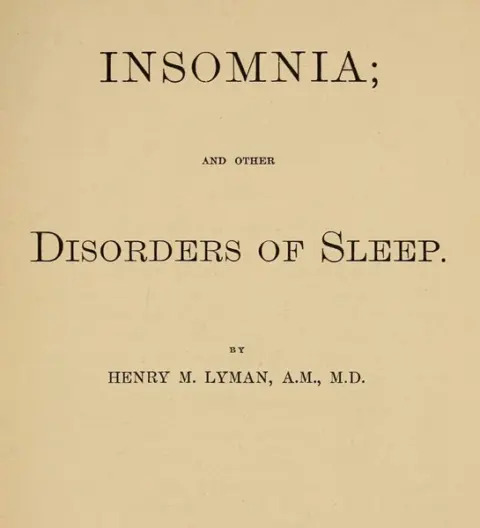
"Insomnia; and Other Disorders of Sleep" by Henry M. Lyman is a scientific publication written in the late 19th century. This work delves into the physiological and pathological aspects of sleep, examining conditions such as insomnia, dreams, and various disorders of sleep. It aims to provide a comprehensive understanding of sleep, discussing physiological functions, causes of sleep and wakefulness, and potential treatments for related disorders. The opening of this publication introduces the subject of sleep as a fundamental physiological process, likening its natural occurrence to vital functions like breathing and circulation. Lyman emphasizes the significance of sleep in restoring energy and the complexities surrounding its mechanisms. He discusses the prelude to sleep, identifying the hypnagogic state that precedes unconsciousness, and begins to outline how sleep differs from other states like coma and lethargy. This establishes a foundation for the subsequent exploration of insomnia, its causes, and its treatments, indicating that the text will focus on both the scientific and therapeutic perspectives of sleep disorders.
Introduction adapted from the source catalogue; source summaries may be automatically generated.
Free to read · English · 65,703 words · No account needed
MAKE TIME FOR A GOOD BOOK
On by default. Untick to stop anonymous reading totals. Each page counts after 10 seconds in view. How this works.
Anonymous counting is on unless you have switched it off.
The ancient explanation of such events consisted in a reference to the Deity, who was supposed to address his favorites through the medium of dreams. The modern skeptical explanation views all such revelations as mere accidents. Among the myriads of dreamers, say the “five-sense philosophers,” the infinite variety of combinations which disturb the brain during sleep, cannot fail to produce occasionally such coincidences. When these are of a striking character, the seemingly prophetic vision is remembered, but the cases of discrepancies between vision and result are not recorded, and are soon forgotten. This opinion may very probably be correct in the vast majority of instances; but, if so, we are not in a position to assert any scientific demonstration of the fact. There is, moreover, so far as the ancient religious view is concerned, a certain transcendental sense in which it is true that God may guide his creatures through the agency of dreams, as well as in a thousand other different ways; but this metaphysical process we can no more comprehend than we can understand or explain the interaction of mind and matter in the brain. The psycho-physiologist must content himself, at present, with the attempt to show that it may not be incompatible with natural law for coming events to cast their shadows before them through the forms of a dream. The following observations lend color to such a possibility.
The extraordinary susceptibility of the brain during certain conditions of sleep has already been noted as a cause for the superior vividness of coloring and intensity of action which sometimes characterizes our dreams. In this respect a slightly morbid condition of the brain, comparable to the effects of hasheesh, probably exists. In such cases the brain may be disturbed to a degree sufficient for the awakening of consciousness by causes that would ordinarily be powerless to reveal themselves. Recording his experience of an earthquake at Lesina, in the night of Sept. 8, 1884, Buschick states, in the Journal of the Austrian Meteorological Society, that a few seconds before the shock he was awakened with a feeling of strange discomfort and apprehension. Once before, on a similar occasion, he had been in like manner aroused from sleep just before the commencement of an earthquake, probably by a feeble and ordinarily imperceptible agitation of the soil. At a time when I was for many months severely overtasked, I always woke up in the night whenever about to receive a call to a patient. Before the sound of footsteps became audible on the sidewalk, I would wake. Presently some one would be heard, approaching the house, and then the doorbell would ring. So often was this experience repeated, that I learned to expect a summons whenever awakened during the night. Gradually, however, as my health improved with rest, this morbid excitability disappeared, and has never been renewed. It seems probable that in this example the sensitiveness of the brain during sleep was so great that audible impressions were received with vigor sufficient to awake consciousness before they were sufficiently strong to arrest the attention when actually awake. The extreme sensibility of the brain, under certain conditions, to impressions from a distance, is further illustrated by the experience of persons laboring under diseases which produce serious departures from a healthy cerebral circulation. Thus, one of my patients, while suffering with cerebral hyperæmia, could hear children talking half a mile away, at a distance where no one else could hear them. This susceptibility is doubtless the foundation of many well authenticated cases of presentiment. Another of my patients, a lady of remarkably sensitive nervous organization, though otherwise in apparently good health, was one evening lying alone upon her bed. Suddenly, she became greatly agitated with the conviction that something had happened to her husband, who had not yet returned from his place of business. He presently, however, came quietly into the house, and greeted his wife as usual. She exclaimed at once, “What has happened to you, my dear?” “Nothing,” he replied. “Yes,” she said, “something has happened, just now; I felt that you were in trouble.” “Oh, yes,” answered he, after a moment’s reflection, “as I was passing by the park, on my way home, two men tried to stop my horse, but I whipped up, and got away from them without any trouble.”
Your reading position is saved on this browser. Take it to another device with a library code. Reading pages adapt to text, rather than matching a printed edition.
BEHIND THE BOOK
This eBook is for the use of anyone anywhere in the United States and most other parts of the world at no cost and with almost no restrictions whatsoever. You may copy it, give it away or re-use it under the terms of the Project Gutenberg License included with this eBook or online at www.gutenberg.org. If you are not located in the United States, you will have to check the laws of the country where you are located before using this eBook. Read the source licence.
The original source file, including credits and licence, is retained by this library. Request an original-format copy at no charge. Please include the book title and Project Gutenberg identifier #43415.
KEEP YOUR CURIOSITY GOING
Charles G. (Charles Griffith) Ross
Hannah Webster Foster

Emily Lawless
Edwin Hamlin Carr

Charles De Lano Hine
Andrew Ure