THE CLASSIC COLLECTION✦My diaries, being a personal narrative of events 1888-1914, Part 2 (1900-1914)CLASSIC FREE BOOKS
My diaries, being a personal narrative of events 1888-1914, Part 2 (1900-1914)
Wilfrid Scawen Blunt
THE CLASSIC COLLECTION · 1899
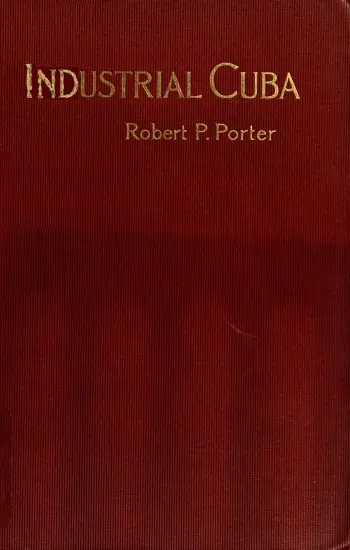
"Industrial Cuba" by Robert P. Porter is a historical account written in the late 19th century. The book offers a detailed study of the commercial and industrial landscape of Cuba following the end of Spanish rule and delves into the country's potential for economic recovery and growth under American influence after the War of 1898. It serves as a report to President McKinley, aiming to explore opportunities for American capital and intervention in Cuba's reconstruction. The opening of the work sets the stage for an examination of Cuba's dire economic status after the devastation wrought by war. Porter outlines the rich natural resources available and juxtaposes them with the negative impacts of Spanish colonization, which left the population and the economy severely depleted. His observations, drawn from extensive inquiries across various regions of Cuba, highlight both the challenges and the untapped potential for development. He emphasizes that without addressing the systemic issues rooted in mismanagement and exploitation, Cuba cannot reach its full economic capacity, advocating for a focus on industrial recovery as a pathway to broader societal progress.
Introduction adapted from the source catalogue; source summaries may be automatically generated.
Free to read · English · 135,099 words · No account needed
MAKE TIME FOR A GOOD BOOK
On by default. Untick to stop anonymous reading totals. Each page counts after 10 seconds in view. How this works.
Anonymous counting is on unless you have switched it off.
Comparative value of cane sugar as against beet sugar, 288
Concha (see La Isabela)
Conclusion--a look ahead, 408-415
Conditions which confront us, 14-31
Consolacion del Sur, population, 123;
description, 133
Constancia mine, 328
Construction of roads necessary to reconstruction of tobacco industry, 309
"Consumption Tax," 26
Coolie labour, 76;
imported from China, 77
Copper, 325
Cornill, Lieutenant, 404
Corral Nuevo, population, 123
Cortes, district of, 307
Cortez, F., 128
Cost, average, of production of German raw sugar, 288
Cost of farming, 83
Cost of production of sugar in Cuba, 289
Cotton, 331, 332
Cramp & Sons, 367
Cuban debt, statement of (table), 259-261
Cuba Submarine Telegraph Company, 361
Cuen wood, 342
Cuero iron mines, 123
Cuevitas, population, 123
Cuia wood, 342
Currency question, 21-26
Custom-House receipts, 213;
1886 to 1897, inclusive, by custom-house districts (table), 218;
during 1895-96, specifying taxes (table), 220
Customs of living, 98-100
Daiquiri, 322
Daiquiri Bay, 320
Davis, Captain, 110
Davis, General, 405
Davis, Surgeon, 162, 163
Death-rate of Havana, 145, 154
Deaths in Havana, first eleven months 1898, 110;
rate in Havana compared with other cities, 111;
table, 165
Debt of Cuba, 259-261
Debt of the city of Havana, 180-183;
compared with United States cities, 182
Decline of Cuban tobacco industry, cause of, 314
De la Plata iron mines, 322
Delinquent taxes, total and percentage, 1886-98, 253;
percentage of each year, 253
Demajobo iron mines, 322
Density of population of Havana, 169, 171
De Soto, 140
Destruction of tobacco industry, causes of, 307, 308
Diana Key, 328
Disbanding of army, discussion with General Gomez, 395, 398
Diseases, principal, 111
Distances, table of, 375
Distribution of fund for relief of army, memorandum between General Gomez and Robert P. Potter, 398, 399
Donaldson, W. A., 69, 71
Dorothea and Recrio iron mines, 322
Dos Bocas manganese mines, 324
Drainage of Havana, 168
Ducasse, General, 106
Dudley, D. E., report on Cienfuegos, 113-115
Duelling, 99
Dumois family in banana business, 67
Ebony, 341
Economic condition at time of signing of protocol, Aug. 12, 1898, 1-13
Economiste Français, article by Paul Leroy Beaulieu on Cuban debt, 258
Economia iron mines, 322
Education, public money for, 388
Education and religion, 376-389
Education under Spanish rule, 28
"Emancipados," 74
Empresa Unida de los C. de H. de Cardenas y Jucaro, traffic
and fiscal statement (table), 359
Encrucijada Railway, 355
Engineering Magazine, article by E. Sherman Gould on
"Commercial relations between Cuba and the
United States," 274
England, sugar exported from Cuba to, 1893-97, 294
English in Jamaica, 47, 61
Enterprises for American and English capital, 414, 415
Equipment of railroads, 357
"Evangelist Island" (see Isle of Pines), 138
Expenditure, annual, of sugar estates, 297, 298
Expenditures of Cuba, analysis of, 256-263;
methods suggested, 265, 266
Expenditures of Jamaica, 57
Expense of producing one hundred bales of tobacco, 310
Expenses, sovereignty (table), 256
Expenses of Havana, 184-186;
for salaries of police department, 174, 175
Exportation of tobacco to United States, 1889-97, 315
Export duty on leaf tobacco to be maintained, 315
Export price of German sugar, 288
Exports, from Cuba to the United States, 1893 (table), 268; from United Stales to Cuba, 1893 (table), 268; from United States to Cuba in 1889 and 1893, value of (table), 275, 276; of sugar to United States, Canada, Spain, and England. 294
Exports and reshipments, 1885-96, values of (table), 217
Your reading position is saved on this browser. Take it to another device with a library code. Reading pages adapt to text, rather than matching a printed edition.
BEHIND THE BOOK
This eBook is for the use of anyone anywhere in the United States and most other parts of the world at no cost and with almost no restrictions whatsoever. You may copy it, give it away or re-use it under the terms of the Project Gutenberg License included with this eBook or online at www.gutenberg.org. If you are not located in the United States, you will have to check the laws of the country where you are located before using this eBook. Read the source licence.
The original source file, including credits and licence, is retained by this library. Request an original-format copy at no charge. Please include the book title and Project Gutenberg identifier #41463.
KEEP YOUR CURIOSITY GOING
Wilfrid Scawen Blunt
Wilfrid Scawen Blunt

E. W. (Edgar Watson) Howe
Cécile Tormay

Moritz Busch
John L. Ransom