THE CLASSIC COLLECTION✦An outlaw’s diary: the CommuneCLASSIC FREE BOOKS
An outlaw’s diary: the Commune
Cécile Tormay
THE CLASSIC COLLECTION · 1900
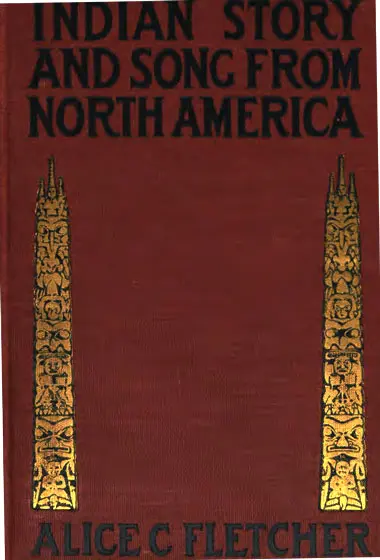
"Indian Story and Song, from North America" by Alice C. Fletcher is a collection of narratives and musical pieces derived from the traditions of Native American tribes, primarily focusing on the Omaha and Pawnee cultures. Written in the late 19th century, this work aims to present an accessible form of indigenous music and storytelling, which until then had mainly been confined to scientific publications. The overarching theme of the book delves into the significant relationship between music and the cultural practices of Native Americans, showcasing how songs are intertwined with rituals, emotions, and social gatherings. The content of the book comprises a series of stories accompanied by traditional songs that illustrate various aspects of Native American life, such as love, warfare, spirituality, and community. Each story is unique, drawing upon historical events, ceremonial practices, and personal experiences of individuals within the tribes. The book not only highlights the richness of Native American oral traditions but also serves as a testament to their connection to the natural world and the spiritual realms. Through a blend of narrative and melody, Fletcher captures the essence of Native American culture, revealing the depth and complexity of their artistic expressions.
Introduction adapted from the source catalogue; source summaries may be automatically generated.
Free to read · English · 16,879 words · No account needed
MAKE TIME FOR A GOOD BOOK
On by default. Untick to stop anonymous reading totals. Each page counts after 10 seconds in view. How this works.
Anonymous counting is on unless you have switched it off.
Ho o Kawas ta wha-ka ra-tsa we
Kawas ta wha-ka ra-tsa we
Ah he-wi! wha-ka ra-tsa we,
Kawas ta wha-ka-ra tsa we.]
The words are in the nature of a prayer, the music has the swing of a
lullaby.
Kawas, thy baby is crying!
Grieving sore, wailing, and weeping.
Aye, forsooth! wailing and weeping,
Kawas, thy baby is crying!
Then the bearers took up the "calumets" and moved with slow rhythmic steps toward the crying child, singing as they went and swaying the sacred symbols to the measure of this song. Its meaning was explained to me as follows:--
"Hah-ars (a contraction of the word meaning father) signifies Ti-ra'-wa, the power that animates all things, all animals, all men, the heavens, and the earth. Ti-ra'-wa is represented by the Hako (the 'calumets'), and it is this power which now approaches to console the child."
In the music one hears the coming of Ti-ra'-wa in the footsteps of his creatures, both great and small.
Thy father is coming,
E'en now he is near thee;
Cry no more: the mighty one,
Thy father, is coming!
[Music: THY FATHER IS COMING.
Pawnee.
Transcribed from Graphophone record and Harmonized by E.S. TRACY.
Ho Hah-ars si-rah ti we-ra,
Hah-ars si-ra ti we-ra
Re-ko ji!
He ti we-ra,
Hah-ars si-ra ti we-ra.]
Upon reaching the child, the golden eagle "calumet" was gently swayed above it, while in the background the other "calumet" was waved to ward off disturbing influences, and the priests sang this song. It is said that on hearing it "the child always looks up and ceases its crying."
The caressing, almost playful rhythm of the music twines about the deep religious feeling expressed in the words, like the arms of an infant about the neck of its thoughtful, reverent parent.
Lift thine eyes, 'tis the gods who come near,
Bringing thee joy, release from all pain.
Sending sorrow and sighing
Far from the child, Ti-ra'-wa makes fain.
Ah, you look! Surely, you know who comes,
Claiming you his and bidding you rise,
Blithely smiling and happy,
Child of Ti-ra'-wa, Lord of the skies!
[Music: LOOK UP!
Pawnee.
Transcribed from Graphophone record, and Harmonized by E.S. TRACY.
Ho Ha!
Is-te wa-ta si wi-ta ha,
Ha! Is-te wa-ta si wi-ta ha
Hah-ars hi re wa-ha-ki,
Ha! Is-te wa-ta si wi-ta ha.]
Music enveloped the Indian's individual and social life like an atmosphere. There was no important personal experience where it did not bear a part, nor any ceremonial where it was not essential to the expression of religious feeling. The songs of a tribe were coextensive with the life of the people.
Your reading position is saved on this browser. Take it to another device with a library code. Reading pages adapt to text, rather than matching a printed edition.
BEHIND THE BOOK
This eBook is for the use of anyone anywhere in the United States and most other parts of the world at no cost and with almost no restrictions whatsoever. You may copy it, give it away or re-use it under the terms of the Project Gutenberg License included with this eBook or online at www.gutenberg.org. If you are not located in the United States, you will have to check the laws of the country where you are located before using this eBook. Read the source licence.
The original source file, including credits and licence, is retained by this library. Request an original-format copy at no charge. Please include the book title and Project Gutenberg identifier #25140.
KEEP YOUR CURIOSITY GOING
Cécile Tormay

Moritz Busch
John L. Ransom

Maurice Baring
Frances Wright
Cécile Tormay