The Art of Story-Telling, with nearly half a hundred stories
Julia Darrow Cowles
THE CLASSIC COLLECTION · 1918
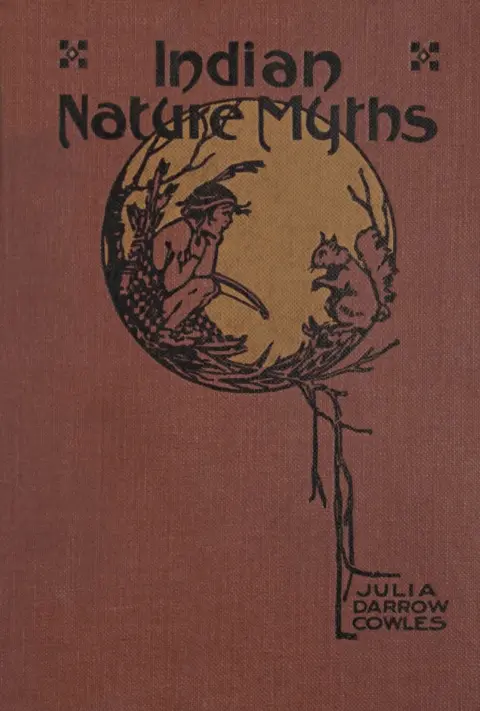
"Indian Nature Myths" by Julia Darrow Cowles is a collection of cultural tales written in the early 20th century. The work delves into the mythology and folklore of North American Indian tribes, illustrating how early Indigenous people interpreted natural phenomena through imaginative storytelling. Each story is likely rich with poetic language and humor, designed not only to entertain but also to educate readers about the belief systems and inner lives of these communities. At the start of the text, the author introduces the theme by explaining the purpose of these myths: to show how Indigenous peoples attributed meaning to aspects of nature, such as seasons and plant life. The first tale recounts how a young boy named Omeme, longing for warmth and the chance to hunt, learns from a squirrel about the blessings of Sky Land. His father, Ojeeg, undertakes a journey to bring back seasons to their cold, unchanging world, showcasing the deep connection between human experience and the natural environment that persists throughout these myths. The opening sets the tone for enlightening tales that honor the traditions of various tribes.
Introduction adapted from the source catalogue; source summaries may be automatically generated.
Free to read · English · 19,663 words · No account needed
MAKE TIME FOR A GOOD BOOK
On by default. Untick to stop anonymous reading totals. Each page counts after 10 seconds in view. How this works.
Anonymous counting is on unless you have switched it off.
“How beautiful the trees are!” cried the Indian children the next morning. “See their bright colors.”
For a few days the leaves danced and whispered, laughing over their beautiful hues. Then Po-poon-o-ki came back, and with his swift, cold breath, he blew against the trees, and the little leaves were tossed and torn from the friendly branches. They did not fly up into the heavens, but frightened and sobbing they dropped to the earth.
“We shall die!” they cried. “We shall die!”
Then a strange thing happened. The guardian spirit of the tree whispered, “No, little leaves, you shall not die. You shall be changed into living forms. I will give you breath and life.” And instantly there arose from the earth where the leaves had dropped, a great flock of winged birds, red, and brown, and yellow, and crimson, all the beautiful colors that Po-poon-o-ki had given the leaves. Then they flew away to the South Land, where winter’s breath could not reach them.
But in the spring, when Ni-poon-o-ki, the spirit of summer, came stealing up from the South, and Po-poon-o-ki went back to his ice lodge in the far North, then the birds came back, too. There were new leaves on the trees, but the birds flew straight to the branches which had been their home, and there, safely sheltered by the new leaves, they built their nests.
And after awhile, when there were eggs in all the home nests, the hearts of the birds became so full of joy that they could no longer be silent. Their throats swelled, and opening wide their little mouths, they filled all the air with bursts of happy song.
(Algonquin)
WHEN the pale moon looks down from the sky, and when the wind cries mournfully around the wigwam, this is the story that the old man of the tribe tells to the Indian children:
Many, many moons ago the great chief of our tribe had a very beautiful
daughter.
“She shall marry a great warrior,” said the Chief, “and a mighty hunter. Then she will be well cared for, and I shall be happy.”
So the great Chief kept watch of the young men of the tribe, to see which one would prove worthy of his daughter.
One day, as the Chief sat in the door of his lodge, there came a sudden rushing sound, and a young man stood before him. It was the Wind, who had made himself visible that he might talk with the Chief.
When he had saluted, he said, “Great Chief, I love your daughter. May I carry her away to my lodge, and make her my wife?”
Your reading position is saved on this browser. Take it to another device with a library code. Reading pages adapt to text, rather than matching a printed edition.
Julia Darrow Cowles
BEHIND THE BOOK
This eBook is for the use of anyone anywhere in the United States and most other parts of the world at no cost and with almost no restrictions whatsoever. You may copy it, give it away or re-use it under the terms of the Project Gutenberg License included with this eBook or online at www.gutenberg.org. If you are not located in the United States, you will have to check the laws of the country where you are located before using this eBook. Read the source licence.
The original source file, including credits and licence, is retained by this library. Request an original-format copy at no charge. Please include the book title and Project Gutenberg identifier #70318.
KEEP YOUR CURIOSITY GOING

Maurice Baring
Francis Greenleaf Allinson & Anne C. E. (Anne Crosby Emery) Allinson

Abby Morton Diaz
Helen Hunt Jackson
Mary Frances Blaisdell
Stuart Dodgson Collingwood