The Art of Story-Telling, with nearly half a hundred stories
Julia Darrow Cowles
THE CLASSIC COLLECTION · 1918
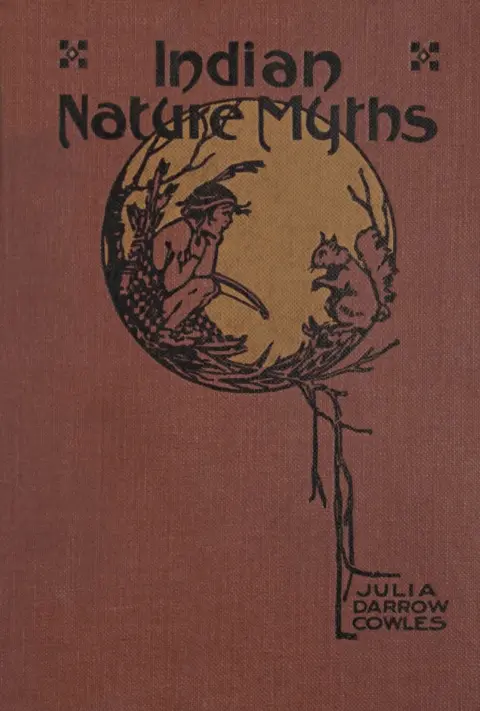
"Indian Nature Myths" by Julia Darrow Cowles is a collection of cultural tales written in the early 20th century. The work delves into the mythology and folklore of North American Indian tribes, illustrating how early Indigenous people interpreted natural phenomena through imaginative storytelling. Each story is likely rich with poetic language and humor, designed not only to entertain but also to educate readers about the belief systems and inner lives of these communities. At the start of the text, the author introduces the theme by explaining the purpose of these myths: to show how Indigenous peoples attributed meaning to aspects of nature, such as seasons and plant life. The first tale recounts how a young boy named Omeme, longing for warmth and the chance to hunt, learns from a squirrel about the blessings of Sky Land. His father, Ojeeg, undertakes a journey to bring back seasons to their cold, unchanging world, showcasing the deep connection between human experience and the natural environment that persists throughout these myths. The opening sets the tone for enlightening tales that honor the traditions of various tribes.
Introduction adapted from the source catalogue; source summaries may be automatically generated.
Free to read · English · 19,663 words · No account needed
MAKE TIME FOR A GOOD BOOK
On by default. Untick to stop anonymous reading totals. Each page counts after 10 seconds in view. How this works.
Anonymous counting is on unless you have switched it off.
But the meat that Manabozho had ready for his guests, he had prepared by magic--though of that no one knew except himself.
When all had assembled, Manabozho gave to each a portion of meat. The woodpecker was the first to taste of his, and as he took the delicious looking morsel in his mouth, it turned to ashes on his tongue, so that he was choked and began to cough. But the meat looked so good, and he was so hungry that he tasted again, and again it turned to ashes and choked him.
Every guest had the same experience. The little mouse, the otter, the badger, the fox, the wolf, and even the moose tasted his portion and it turned to ashes on his tongue.
In vain the guests tried to be courteous and to stifle their coughing, but it grew worse and worse as first one and then another ate of the meat.
At length there was such a deafening noise in the wigwam, caused by the chorus of coughing and strangling from so many throats great and small, that Manabozho picked up a club in pretended anger. Threatening them with it, he drove them out of doors, where he changed them all to squirrels.
And that, the Indians tell us, is the reason that the squirrel coughs.
(Algonquin)
“MO-O-O-O-RE, mo-o-o-o-re!” croaked a big frog in the marshes. “’Tis enough, ’tis enough, ’tis enough!” answered a smaller frog.
But the big frog called again, “Mo-o-o-o-re, mo-o-o-o-re!” And again the smaller frog answered, “’Tis enough! ’Tis enough!”
“What is it the frogs are quarreling about, grandmother?” asked a little Indian girl, and the grandmother replied, “About the water, I suppose.”
“Why do they quarrel about the water? Is it a story, grandmother?”
“Yes,” said the grandmother, “it is a story. Listen and I will tell it
to you!
“In the long-time-ago all the waters of the land were tied up. The Indian people grew thirsty, and more thirsty. Their fields were drying up. The flowers withered. The people said, ‘We shall die!’
“Then there came to one of the villages the giant, Rabbit, and he said, ‘What is this I hear about the waters being tied up?’
“The Chief answered, ‘For many days there has been no water. The streams are empty. No little rivers come down the mountain side. Our corn is drying up. Our people’s throats are parched.’
“The giant, Rabbit, said, ‘I will go into the mountains and see who has tied up the water.’ Then he strode away, taking such great steps that he was out of sight in a moment.
Your reading position is saved on this browser. Take it to another device with a library code. Reading pages adapt to text, rather than matching a printed edition.
Julia Darrow Cowles
BEHIND THE BOOK
This eBook is for the use of anyone anywhere in the United States and most other parts of the world at no cost and with almost no restrictions whatsoever. You may copy it, give it away or re-use it under the terms of the Project Gutenberg License included with this eBook or online at www.gutenberg.org. If you are not located in the United States, you will have to check the laws of the country where you are located before using this eBook. Read the source licence.
The original source file, including credits and licence, is retained by this library. Request an original-format copy at no charge. Please include the book title and Project Gutenberg identifier #70318.
KEEP YOUR CURIOSITY GOING

Maurice Baring
Francis Greenleaf Allinson & Anne C. E. (Anne Crosby Emery) Allinson

Abby Morton Diaz
Helen Hunt Jackson
Mary Frances Blaisdell
Stuart Dodgson Collingwood