
Pegeen
Eleanor Hoyt Brainerd
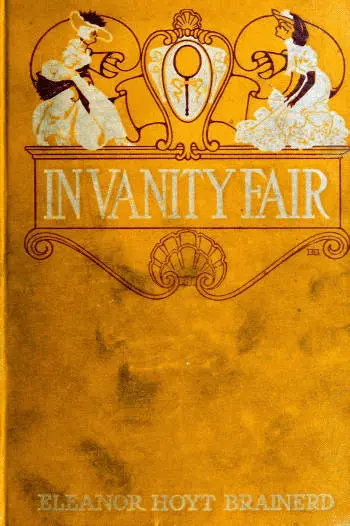
THE CLASSIC COLLECTION · 1906
"In Vanity Fair: A Tale of Frocks and Femininity" by Eleanor Hoyt Brainerd is a novel written in the early 20th century. The book delves into the extravagant world of Parisian fashion and the societal implications of femininity within that context. It explores the lives of women who passionately pursue fashion, showcasing their charm and obsession through a culture that both celebrates and critiques the frivolities of a luxurious lifestyle. The opening of the story introduces the reader to the concept of "chic," a quintessentially French term that encapsulates the allure and elegance of Parisian women. It discusses how these women, from their early years to old age, cultivate an artful coquetry that remains captivating despite the passage of time. The narrative paints vivid scenes of the Parisienne culture, where each frock and feminine expression is steeped in meaning and societal commentary. Through a mix of humor and insight, the text sets the stage for a broader examination of the interplay between fashion, identity, and the relentless pursuit of charm in the vibrant yet superficial realm of Vanity Fair.
Introduction adapted from the source catalogue; source summaries may be automatically generated.
Free to read · English · 57,548 words · No account needed
MAKE TIME FOR A GOOD BOOK
On by default. Untick to stop anonymous reading totals. Each page counts after 10 seconds in view. How this works.
Anonymous counting is on unless you have switched it off.
"Voyons, M'sieu, we will consider." He tiptoed to a window, looked into the dining-room, and returned with the air of a comic opera conspirator.
"C'est bien, M'sieu. They arrive at the salad. There is always the dessert, the coffee, the cigar, the liqueur. One can do it, but it is to be hoped that M'sieu and his friends do not object to speed."
That was a wild ride to Paris,--up hill and down, at top speed, with never a slackening for corners or for foot passengers. The Americans were dropped where they could take cabs and the hundred francs changed hands.
"Much obliged. Good luck to you," said the man from New York.
The chauffeur consulted his watch. "Provided always that they have not quarrelled," he murmured anxiously--and the machine shot away into the night.
Down in the heart of Paris, the Café de Paris, the Café Paillard, and the Ritz are the restaurants in which one may best study purple and fine linen. There are other cafés famed for cuisine and cellars, but my Lady of the Chiffons finds them dull, and in the creed of a Parisienne dulness heads the list of mortal sins.
Americans and English are the mainstay of the Ritz, save during the tea hour, when the crowd becomes cosmopolitan. At the Café Paillard one finds the diners of the Madrid a clique aristocratic, mondain, and chiefly French. The Café de Paris repeats the story of Armenonville, though without the picturesque woodland setting and the attractive al fresco features. The two cafés have the same clientèle, the same atmosphere,--even the same proprietor. He is a subject for congratulation, this proprietor. The famous old Café Foyot, under the shadow of the Luxembourg, is his too, and the Café de Paris of Trouville, and the Helder at Nice,--all, save the Foyot, tremendously popular with the crowd vowed to extravagance and folly, and, as a result of that popularity, all phenomenally successful from a financial point of view. The Foyot also has a success, but of a different kind.
Naturally, the man who manages these restaurants is rich. His private establishments are handsome, he spends money lavishly, but--and here is the secret of his success--he is first of all a restaurateur, eternally vigilant, neglecting no detail, proud of his metier, glorying in his triumphs. He could buy, twice over, many of his patrons, yet one will see him moving about among his hurrying waiters, suggesting, prompting, reprimanding, seeing all things, adjusting all difficulties, pouring oil on all troubled waters.
He stops for a moment beside an old patron.
"Ah, Comte X----, bon soir."
Your reading position is saved on this browser. Take it to another device with a library code. Reading pages adapt to text, rather than matching a printed edition.
Eleanor Hoyt Brainerd
BEHIND THE BOOK
This eBook is for the use of anyone anywhere in the United States and most other parts of the world at no cost and with almost no restrictions whatsoever. You may copy it, give it away or re-use it under the terms of the Project Gutenberg License included with this eBook or online at www.gutenberg.org. If you are not located in the United States, you will have to check the laws of the country where you are located before using this eBook. Read the source licence.
The original source file, including credits and licence, is retained by this library. Request an original-format copy at no charge. Please include the book title and Project Gutenberg identifier #45791.
KEEP YOUR CURIOSITY GOING
Coulson Kernahan

Maurice Baring
Frances Wright
Cécile Tormay

Frederic Jesup Stimson

W. H. P. (William Henry Pope) Jarvis