
Pegeen
Eleanor Hoyt Brainerd
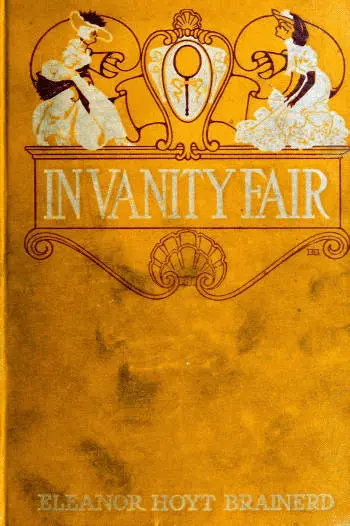
THE CLASSIC COLLECTION · 1906
"In Vanity Fair: A Tale of Frocks and Femininity" by Eleanor Hoyt Brainerd is a novel written in the early 20th century. The book delves into the extravagant world of Parisian fashion and the societal implications of femininity within that context. It explores the lives of women who passionately pursue fashion, showcasing their charm and obsession through a culture that both celebrates and critiques the frivolities of a luxurious lifestyle. The opening of the story introduces the reader to the concept of "chic," a quintessentially French term that encapsulates the allure and elegance of Parisian women. It discusses how these women, from their early years to old age, cultivate an artful coquetry that remains captivating despite the passage of time. The narrative paints vivid scenes of the Parisienne culture, where each frock and feminine expression is steeped in meaning and societal commentary. Through a mix of humor and insight, the text sets the stage for a broader examination of the interplay between fashion, identity, and the relentless pursuit of charm in the vibrant yet superficial realm of Vanity Fair.
Introduction adapted from the source catalogue; source summaries may be automatically generated.
Free to read · English · 57,548 words · No account needed
MAKE TIME FOR A GOOD BOOK
On by default. Untick to stop anonymous reading totals. Each page counts after 10 seconds in view. How this works.
Anonymous counting is on unless you have switched it off.
The Camille, named for Madame du Gast herself, and a motor boat more pretentious than the Turquoise, entered, with owner aboard, the famous and foolhardy high seas race from Tangiers to Toulon, and though strong winds and rough seas played havoc with all of the tiny craft, and the Camille and her owner were rescued at the eleventh hour by her escorting yacht, Madame did not lose for a moment her sporting nerve. She was obtaining excitement in large blocks and the thrill was well worth the danger.
It goes without saying that the young Duchesse d'Uzes has taken up
motor boating.
When has she ever passed by a new sport, a new chance for diversion, this gay little Duchess, who is the typical fine flower of modern French civilization, the most piquant and perhaps the most popular figure in French society to-day.
She was born to social eminence, daughter of the great and ancient family of de Luynes, sister of the ninth Duke of Chaulnes and Pecquinguy, rich in her own name, good to look at, keen of wit, exquisite of taste, and stranger to fear. As if this were not enough, she must needs marry Louis Emmanuel, fourteenth Duke d'Uzes, and add his prestige and wealth to hers.
The dowager Duchesse d'Uzes, she who came so near mounting Boulanger on the back of France, is of the old régime, strong, keen, autocratic still, but surrounding herself with the old customs, the old traditions, refusing to admit that the world has moved and France with it.
But the young Duchess--she is all that there is of the most modern, the most representative type of the motoring, racing, golfing, hunting, hockey-playing Parisienne. She is all restlessness, all nerves. There is nothing new that she has not tried, and she is always reaching out for something more novel, more exciting, more audacious. And yet with it all she is grande dame, the little pleasure-seeking Duchess, and she wears her title right royally in spite of her vagaries. She has the traditions of her race, too, behind her modern caprices. She is devôte, has her private chaplain, is heart and soul in sympathy with the church party as opposed to state, she loves politics and ranges herself with her class. Not for nothing is one of de Luynes and d'Uzes. She was in the heart of the turmoil on the Place de la Concorde, at the meeting of protest against the state's measures concerning the nuns, and she was taken by the troops, this hot-headed little Duchess, though it was the dowager Duchess who was arrested and fined. She would go to the scaffold humming a tune and wearing her smartest Paquin frock, were she called upon to tread the path many of her ancestors trod, but, since scaffolds are out of date, she runs a motor boat and speeds an automobile, and dances a cake walk, and plays an extraordinary game of billiards, and is one of the best shots in France, and plays tennis and hockey and golf, and rides cross country, and swims like a fish, and has made ballooning the fashion. She is one of the prettiest, the most amusing, the cleverest and the best dressed women of Paris, and she, beyond all of her set, is the champion of le sport.
Your reading position is saved on this browser. Take it to another device with a library code. Reading pages adapt to text, rather than matching a printed edition.
Eleanor Hoyt Brainerd
BEHIND THE BOOK
This eBook is for the use of anyone anywhere in the United States and most other parts of the world at no cost and with almost no restrictions whatsoever. You may copy it, give it away or re-use it under the terms of the Project Gutenberg License included with this eBook or online at www.gutenberg.org. If you are not located in the United States, you will have to check the laws of the country where you are located before using this eBook. Read the source licence.
The original source file, including credits and licence, is retained by this library. Request an original-format copy at no charge. Please include the book title and Project Gutenberg identifier #45791.
KEEP YOUR CURIOSITY GOING
Coulson Kernahan

Maurice Baring
Frances Wright
Cécile Tormay

Frederic Jesup Stimson

W. H. P. (William Henry Pope) Jarvis