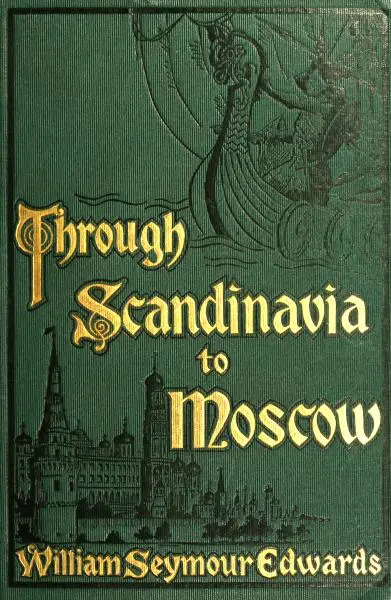
Through Scandinavia to Moscow
William Seymour Edwards
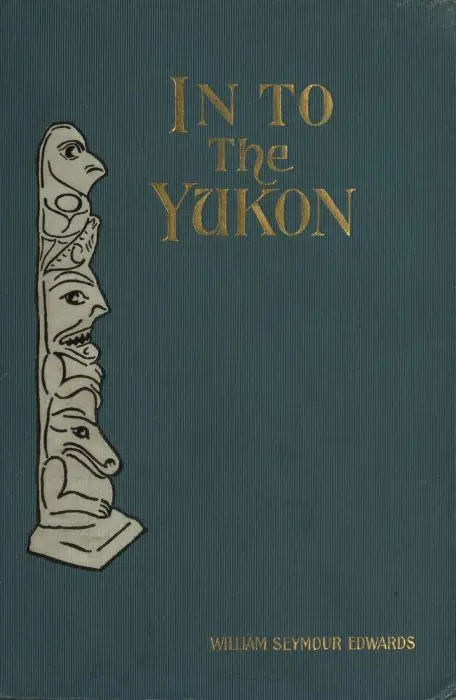
THE CLASSIC COLLECTION · 1904
"In to the Yukon" by William Seymour Edwards is a narrative travelogue written in the early 20th century. The book recounts the author's delightful two-month journey through the northern expanses of North America, exploring various locations from the Great Lakes to the thrilling Yukon territory. The work captures a vivid tapestry of experiences, interactions with locals, and the profound beauty of the landscapes encountered throughout the travels. At the start of the book, Edwards describes his arrival in Cleveland and initial voyage across the Great Lakes. He vividly details the landscapes, cities, and the vibrancy of life along the waterways, blending personal anecdotes with observations about the people and places he encounters. The opening chapters establish a sense of excitement and adventure as he travels towards the Yukon, setting the stage for the explorations and encounters that will unfold in the more remote regions of North America.
Introduction adapted from the source catalogue; source summaries may be automatically generated.
Free to read · English · 50,432 words · No account needed
MAKE TIME FOR A GOOD BOOK
On by default. Untick to stop anonymous reading totals. Each page counts after 10 seconds in view. How this works.
Anonymous counting is on unless you have switched it off.
In 1875, a U. S. man-of-war tried to pass through when the tides were low, and, caught in the swirling maelstrom, sank in one hundred fathoms of water. In 1883, a coastwise steamer ventured at improper moment to make the passage, was caught in the mad currents, and was engulfed with nearly all on board; half a dozen men alone were saved. Hence the captains are now very careful in making the passage, and so we lay at anchor--or lay to--from seven to twelve, midnight, waiting for the tide.
To-day we are spinning down the Gulf of Georgia and Puget Sound, the wind direct astern, and have already left Vancouver and Victoria to the north. The sun is clear and soft, not hard and brilliant as in Dawson. Whales are blowing at play about the ship, gulls skimming the air in multitudes. All our company are over their seasickness and now mostly on deck. We are repacking our bags and the steamer trunk, taking off heavy winter flannels and outer wear, and preparing to land at Seattle clad again in semi-summer clothes.
THE PORTLAND HOTEL, }
Portland, Oregon, October 3, 1903. }
Just one week ago to-day the steamer "Dolphin" landed us safely at the pier at Seattle. The sail on Puget Sound, a body of deep water open for one hundred miles to the ocean, was delightful. We passed many vessels, one a great four-masted barque nearing its port after six or eight months' voyage round the Horn from Liverpool.
Seattle lies upon a semi-circle of steep hills, curving round the deep waters of the Sound like a new moon. An ideal site for a city and for a mighty seaport, which some day it will be. Many big ships by the extensive piers and warehouses. The largest ships may come right alongside the wharves, even those drawing forty feet. The tracks of the Great Northern and Northern Pacific Railways bring the cars along the ship's side, and there load and unload. All this we noted as our boat warped in to her berth. A great crowd awaited us. Many of our passengers were coming home from the far north after two and three years' absence. Friends and families were there to greet them; hotel runners and boarding-house hawkers; citizens, too, of the half world who live by pillage of their fellowmen were there, and police and plain clothes men of the detective service were there, all alike ready to greet the returning Klondiker with his greater or lesser poke of gold. It was exciting to look down upon them and watch their own excitement and emotion as they espied the home-comers upon the decks. We, as well, had all sorts of people among our passengers. Mostly the fortunate gold-finders who had made enough from the diggings to "come out" for the winter, and some, even to stay "out" for good. A young couple stood near me; they were on their wedding trip; they would spend the winter in balmy Los Angeles and then return to the far north in the spring. An old man stood leaning on the rail. Deep lines marked his face, on which was yet stamped contentment. He had been "in" to see his son who had struck it rich on Dominion Creek, who had already put "a hundred thousand in the bank," he said. He had with him a magnificent great, black Malamute, "leader of my boy's team and who once saved him from death. The dog cost us a hundred dollars. I am taking him to Victoria. I couldn't let him go. His life shall be easy now," the old man added. Just then I noted a tall man in quiet gray down on the dock looking intently at two men who stood by one another a little to my left. They seemed to feel his glance, spoke together and moved uneasily away. They were a pair of "bad eggs" who had been warned out of the Yukon by the Mounted Police, and who were evidently expected in Seattle. One, who wore a green vest and nugget chain, played the gentleman. The other, who worked with him, did the heavy work and had an ugly record. He was roughly dressed and wore a blue flannel shirt and a cap. A bull neck, face covered with dense-growing, close-cropped red beard, shifty gray eyes. He had been suspected of several murders and many hold-ups. Detectives frequently travel on these boats, keeping watch upon the "bad men" who are sent out of the north. We probably had a few on board. In the captain's cabin, close to our own, were piled up more than half a million dollars in gold bars; the passengers, most of them, carried dust. But the pair, and any pals they may have had along, had kept very quiet. They were spotted at the start. They knew it. Now they were spotted again, and this, too, they discerned.
Your reading position is saved on this browser. Take it to another device with a library code. Reading pages adapt to text, rather than matching a printed edition.
William Seymour Edwards
William Seymour Edwards
BEHIND THE BOOK
This eBook is for the use of anyone anywhere in the United States and most other parts of the world at no cost and with almost no restrictions whatsoever. You may copy it, give it away or re-use it under the terms of the Project Gutenberg License included with this eBook or online at www.gutenberg.org. If you are not located in the United States, you will have to check the laws of the country where you are located before using this eBook. Read the source licence.
The original source file, including credits and licence, is retained by this library. Request an original-format copy at no charge. Please include the book title and Project Gutenberg identifier #42611.
KEEP YOUR CURIOSITY GOING
Wilfrid Scawen Blunt
Wilfrid Scawen Blunt

E. W. (Edgar Watson) Howe
Francis Greenleaf Allinson & Anne C. E. (Anne Crosby Emery) Allinson
Cyrenus Cole

John Martineau