
Moving the Mountain
Charlotte Perkins Gilman

THE CLASSIC COLLECTION · 1893
"In This Our World" by Charlotte Perkins Gilman is a collection of poems and reflections written in the late 19th century. The work explores various themes such as nature, existential musings, societal roles, and the human experience, often addressing the struggles and aspirations of women. Through its multifaceted lenses, it sheds light on the joys and challenges of life, underlining the interconnectedness of all beings and the importance of understanding one's place in the world. The beginning of the work introduces readers to an intricate tapestry of thoughts and emotions. The opening poem, titled "Birth," conveys a profound appreciation for life and existence, celebrating the freedom and joy that comes from being alive. It depicts a journey from confinement to birth and connection with the universe. Following this, "Nature’s Answer" presents a more sobering view of existence, suggesting that life’s lessons often come through pain and loss, intertwining the beauty of life with its inherent struggles. The early verses set a reflective tone, inviting readers to ponder the deeper meanings behind their circumstances and the universal truths that bind humanity together.
Introduction adapted from the source catalogue; source summaries may be automatically generated.
Free to read · English · 34,956 words · No account needed
MAKE TIME FOR A GOOD BOOK
On by default. Untick to stop anonymous reading totals. Each page counts after 10 seconds in view. How this works.
Anonymous counting is on unless you have switched it off.
When man, the hunter, winning in the race, Had conquered much, and, conquering, grown apace, Till out of victory he found defeat, And, having eaten all, had naught to eat,— Then might some Jeremiah sad have said, Seeing his hopeless case, “The King is dead!”
But man is master most in power to change; He turned his forest to a cattle range; There was no foe to strive with—wherefore strive? No food to kill—he kept his food alive. Herding his dinner, see him sit and sing Serene, “The King is dead! Long live the King!”
When man the shepherd, after years did pass,
By nature’s increase grew, until the grass
Failed to support the requisite supply
Of cattle who must live lest he should die;
Again a grieved observer might be led
To pitifully say, “The King is dead!”
But man, who turned his prey into a pet, To outwit hunger, was not baffled yet; He’d searched for grass so long he’d learned to praise it, And now that grass was short—why, he could raise it! His dinner sprouted with the happy spring Profuse, “The King is dead! Long live the King!”
When man, the farmer, growing very great, Out of his children built the busy State, Those greedy children, to his loud alarm, Pinched all the profits off the old man’s farm, Killing the golden goose, and while he bled, Cried sage economists, “The King is dead!”
But he, good sooth, was never more alive; He watched the pools and trusts around him strive, And when he’d learned the trick—it was not long— He organized himself—a million strong! Cornered the food supply! A Farmer’s Ring! Hurrah! “The King is dead! Long live the King!”
“Whene’er I take my walks abroad, how many poor I see!” Said pious Watts, and thanked the Lord that not so poor was he. I see so many poor to-day I think I’ll walk no more, And then the poor in long array come knocking at my door. The hungry poor! The dirty poor! The poor of evil smell! Yet even these we could endure if they were only well! But, O, this sick and crippled crew! The lame, the deaf, the blind! What can a Christian person do with these upon his mind! They keep diseases growing still like plants on greenhouse shelves, And they’re so generous they will not keep them to themselves; They propagate amazing crimes and vices scandalous, And then at most uncertain times they wreak the same on us! With charity we would prevent this poverty and woe, But find the more we’ve fondly spent, the more the poor do grow! We’ve tried by punishment full sore to mend the case they’re in; The more we punish them the more they sin, and sin, and sin! We make the punishment more kind, we give them wise reform, And they, with a contented mind, flock to our prisons warm! Then science comes with solemn air, and shows us social laws, Explaining how the poor are there from a purely natural cause. ’Tis natural for low and high to struggle and to strive; ’Tis natural for the worse to die and the better to survive. We swallowed all this soothing stuff, and easily were led To think if we were stern enough, the poor would soon be dead. But, O! in vain we squeeze, and grind, and drive them to the wall— For all our deadly work we find it does not kill them all! The more we struggle they survive! increase and multiply! There seem to be more poor alive, in spite of all that die! Whene’er I take my walks abroad how many poor I see, And eke at home! How long, O Lord! How long must this thing be!
Your reading position is saved on this browser. Take it to another device with a library code. Reading pages adapt to text, rather than matching a printed edition.
Charlotte Perkins Gilman

Charlotte Perkins Gilman

Charlotte Perkins Gilman
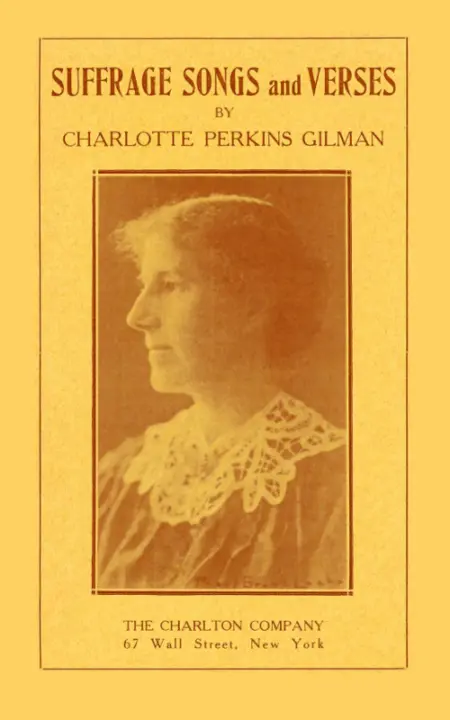
Charlotte Perkins Gilman
BEHIND THE BOOK
This eBook is for the use of anyone anywhere in the United States and most other parts of the world at no cost and with almost no restrictions whatsoever. You may copy it, give it away or re-use it under the terms of the Project Gutenberg License included with this eBook or online at www.gutenberg.org. If you are not located in the United States, you will have to check the laws of the country where you are located before using this eBook. Read the source licence.
The original source file, including credits and licence, is retained by this library. Request an original-format copy at no charge. Please include the book title and Project Gutenberg identifier #60481.
KEEP YOUR CURIOSITY GOING

Eric Mackay
Edmund Gosse
Sophia Margaretta Hensley
Gilbert Parker
George MacDonald

Elizabeth Bibesco