
Labor and the Angel
Duncan Campbell Scott
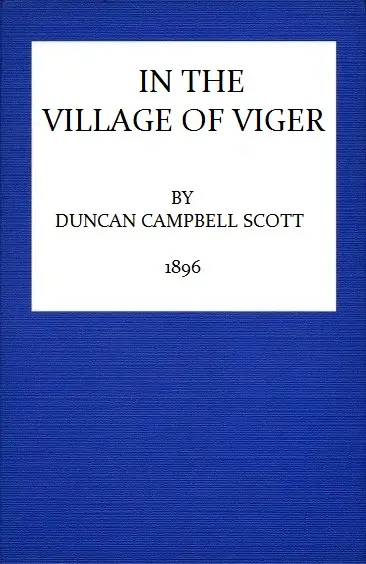
THE CLASSIC COLLECTION · 1896
"In the Village of Viger" by Duncan Campbell Scott is a collection of stories written in the late 19th century. The narrative captures the essence of a small village in Canada as it faces the encroaching influences of urbanization, showcasing the characters who inhabit this tranquil yet changing environment. Central to the collection are various characters including Mademoiselle Viau, the enigmatic milliner, and Louis Bois, an old soldier, each revealing different facets of life in Viger. At the start of the book, readers are introduced to the village of Viger, where change looms on the horizon but hasn't yet fully arrived. The narrative establishes a sense of nostalgia, detailing the village's scenic beauty and the quaint lives of its inhabitants. Mademoiselle Viau becomes a focal point as she opens a millinery shop, stirring curiosity and competition among the locals, particularly from Madame Laroque, who fears losing her status in the community. As the stories unfold, the themes of secrecy, aspiration, and the impact of modernization on traditional life begin to emerge, setting the stage for deeper explorations of these characters and their intertwined fates.
Introduction adapted from the source catalogue; source summaries may be automatically generated.
Free to read · English · 27,891 words · No account needed
MAKE TIME FOR A GOOD BOOK
On by default. Untick to stop anonymous reading totals. Each page counts after 10 seconds in view. How this works.
Anonymous counting is on unless you have switched it off.
“Have you lost your voice?” asked Villeblanc, getting nettled.
“No, no; listen to this—‘Daring Jewel Robbery. A Thief in the Night.’” These were the headings of the column, and then followed the particulars. In the morning the widow borrowed the paper, as she had been too busy the night before to come and hear it read. She looked over the front page, when her eye caught the heading, “Daring Jewel Robbery,” and she read the whole story. As she neared the end her eyebrows commenced to travel up her forehead, as if they were going to hide in her hair, and with an expression of surprise she tossed the paper to her second cousin.
“Look here!” she said, “read this out to me.”
The second cousin commenced to read at the top.
“No, no! right here.”
“‘The man Durocher, who is suspected of the crime, is not tall, wears a heavy mustache, has gray eyes, and wears an ear-ring in his left ear. He has not been seen since Saturday.’”
“I told you so!” exclaimed the widow.
“You told me nothing of the kind,” said the second cousin.
“He had no ear-ring in his ear,” said the widow—“but—but—but it was the right ear that I saw. Hand me my shawl!”
“Where are you going?”
“I have business; never mind!” She took the paper with her and went straight to the constable.
“But,” said he, “I cannot come.”
“There is no time to be lost; you must come now.”
“But he will be desperate; he will face me like a lion.”
“Never mind! you will have the reward.”
“Well, wait!” And the constable went upstairs to get his pistol.
He came down with his blue coat on. He was a very fat man, and was out of breath when he came to the little milliner’s.
“But who shall I ask for?” he inquired of Madame Laroque.
“Just search the house, and I will see that he does not escape by the back door.” She had forgotten that there was no back door.
“Do you want a bonnet?” asked Mademoiselle Viau. She was on excellent terms with the constable.
“No!” said he, sternly. “You have a man in this house, and I have come
to find him.”
“Indeed?” said mademoiselle, very stiffly. “Will you be pleased to
proceed?”
“Yes,” said he, taking out his pistol and cocking it. “I will first look downstairs.” He did so, and only frightened a cat from under the stove. No one knew that Mademoiselle Viau had a cat.
“Lead the way upstairs!” commanded the constable.
“I am afraid of your pistol, will you not go first?”
Your reading position is saved on this browser. Take it to another device with a library code. Reading pages adapt to text, rather than matching a printed edition.
Duncan Campbell Scott
Duncan Campbell Scott
Duncan Campbell Scott
BEHIND THE BOOK
This eBook is for the use of anyone anywhere in the United States and most other parts of the world at no cost and with almost no restrictions whatsoever. You may copy it, give it away or re-use it under the terms of the Project Gutenberg License included with this eBook or online at www.gutenberg.org. If you are not located in the United States, you will have to check the laws of the country where you are located before using this eBook. Read the source licence.
The original source file, including credits and licence, is retained by this library. Request an original-format copy at no charge. Please include the book title and Project Gutenberg identifier #48998.
KEEP YOUR CURIOSITY GOING
Coulson Kernahan

Maurice Baring
Frances Wright
Cécile Tormay

Frederic Jesup Stimson

W. H. P. (William Henry Pope) Jarvis