
Labor and the Angel
Duncan Campbell Scott
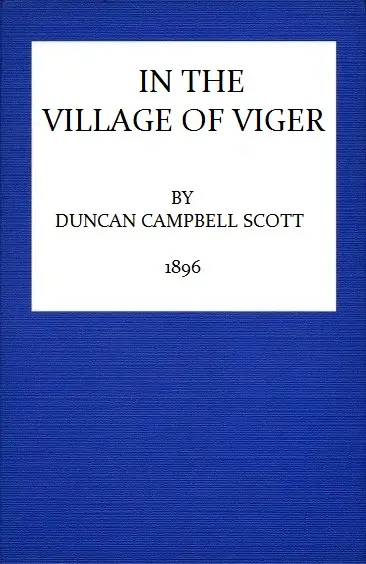
THE CLASSIC COLLECTION · 1896
"In the Village of Viger" by Duncan Campbell Scott is a collection of stories written in the late 19th century. The narrative captures the essence of a small village in Canada as it faces the encroaching influences of urbanization, showcasing the characters who inhabit this tranquil yet changing environment. Central to the collection are various characters including Mademoiselle Viau, the enigmatic milliner, and Louis Bois, an old soldier, each revealing different facets of life in Viger. At the start of the book, readers are introduced to the village of Viger, where change looms on the horizon but hasn't yet fully arrived. The narrative establishes a sense of nostalgia, detailing the village's scenic beauty and the quaint lives of its inhabitants. Mademoiselle Viau becomes a focal point as she opens a millinery shop, stirring curiosity and competition among the locals, particularly from Madame Laroque, who fears losing her status in the community. As the stories unfold, the themes of secrecy, aspiration, and the impact of modernization on traditional life begin to emerge, setting the stage for deeper explorations of these characters and their intertwined fates.
Introduction adapted from the source catalogue; source summaries may be automatically generated.
Free to read · English · 27,891 words · No account needed
MAKE TIME FOR A GOOD BOOK
On by default. Untick to stop anonymous reading totals. Each page counts after 10 seconds in view. How this works.
Anonymous counting is on unless you have switched it off.
When a sufficient cloud of smoke was spread around the room, Cuerrier asked, “Where is she?” Alexis darted a glance in the direction of the village, removing his pipe and pointing to the same quarter; then he heaved a relieved sigh, and commenced smoking again.
“So you are sure she’s out?” said Cuerrier.
Alexis looked uneasy. “No,” he answered, “I can’t be sure she’s out.”
Cuerrier burst into a hearty laugh. Alexis stepped to the door and listened; when he came back and sat down, Cuerrier said, without looking at him, “Look here, Alexis, I’m going to get married.”
His companion started so that he knocked some of the ashes from his pipe, then with a nervous jump he snatched the candle and went into the kitchen. Cuerrier, left in the dark, shook with silent laughter. Alexis came back after making sure that Diana was not there, and before seating himself he held the candle close to his friend’s face and surveyed him shrewdly.
“So, are you not mad?”
“No, I’m not mad.”
Alexis sat down, very much troubled in mind. “You see I’m not young, and the mother is getting old—see? Now, last week she fell down into the kitchen.”
“Well, your getting married won’t prevent her falling into the kitchen.”
“It is not that so much, Alexis, my good friend, but if you had no one to look after things—” here Alexis winced—“you would perhaps think of it too.”
“But you are old—how old?”
Cuerrier took his pipe from his mouth and traced in the air what to Alexis’s eyes looked like the figure fifty. Cuerrier offered him the candle. “There is not a gray hair in my head.” Girouard took the light and glanced down on his friend’s shock of brown hair so finely disordered. He sat down satisfied.
“To whom now—tell me what charming girl is to be the postmistress of Viger; is it the Madame Laroque?”
Cuerrier broke again into one of his valiant laughs.
“Guess again,” he cried, “you are near it. You’ll burn yourself next
time.”
“Not the second cousin—not possible—not Césarine Angers?”
Cuerrier, grown more sober, had made various signs of acquiescence.
“And what will your friend the widow say?”
“See here, Alexis, she’s—” he was going to say something violent—“she’s one of the troubles.”
“Bah! Who’s afraid of her! If you had Diana to deal with, now.”
“Well, Alexis, my good friend, that is it. Could you not drop a little hint to the widow some time? Something like this——” he was silent.
“Something like a dumb man, eh?”
Your reading position is saved on this browser. Take it to another device with a library code. Reading pages adapt to text, rather than matching a printed edition.
Duncan Campbell Scott
Duncan Campbell Scott
Duncan Campbell Scott
BEHIND THE BOOK
This eBook is for the use of anyone anywhere in the United States and most other parts of the world at no cost and with almost no restrictions whatsoever. You may copy it, give it away or re-use it under the terms of the Project Gutenberg License included with this eBook or online at www.gutenberg.org. If you are not located in the United States, you will have to check the laws of the country where you are located before using this eBook. Read the source licence.
The original source file, including credits and licence, is retained by this library. Request an original-format copy at no charge. Please include the book title and Project Gutenberg identifier #48998.
KEEP YOUR CURIOSITY GOING
Coulson Kernahan

Maurice Baring
Frances Wright
Cécile Tormay

Frederic Jesup Stimson

W. H. P. (William Henry Pope) Jarvis