
The Residuary Legatee; Or, The Posthumous Jest of the Late John Austin
Frederic Jesup Stimson
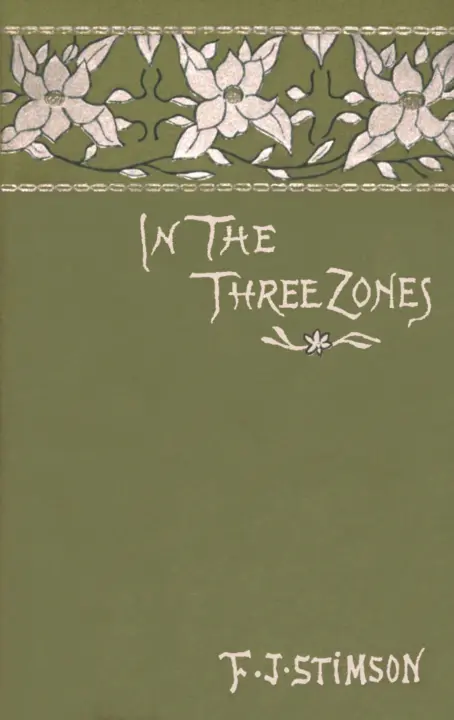
THE CLASSIC COLLECTION · 1893
"In the Three Zones" by Frederic Jesup Stimson is a novel written in the late 19th century. The book explores themes of idealism, materialism, and the complexities of human relationships through the journey of its main character, Rousseau Tetherby. Tetherby’s struggles with his health and the intellectual debates he encounters at college set the stage for his interactions with key figures around him, particularly a mysterious German professor named Dr. Materialismus. The opening of the novel establishes Rousseau Tetherby as a thoughtful and somewhat troubled character, originating from a cold region of Maine where people engage deeply with philosophical discussions. As he adjusts to life at a university where he develops a passion for debate, he becomes entangled in the ideas propagated by Dr. Materialismus, who represents scientific detachment and materialism. Their conversations challenge Tetherby’s beliefs and lead him to encounter both friendship and rivalry, particularly concerning the captivating Althea Hardy, a woman who embodies the emotional depth that Tetherby yearns for. Ultimately, the beginning of the story sets up a rich exploration of conflicting ideologies and human connections against the backdrop of Tetherby's struggles with his own identity and desires.
Introduction adapted from the source catalogue; source summaries may be automatically generated.
Free to read · English · 35,724 words · No account needed
MAKE TIME FOR A GOOD BOOK
On by default. Untick to stop anonymous reading totals. Each page counts after 10 seconds in view. How this works.
Anonymous counting is on unless you have switched it off.
As she finished writing, the General was announced. His face was bloodless, but his wounds had been carefully dressed, so that the bandages could not be seen. He knelt over her hand, though the kneeling set them bleeding once again. But Dolores, timid only in her love, still saw but remorse and duty in his eyes. With him he brought his own priest, a priest from the Liberal army. “Pobra,” he said, “we must be married early--early and privately.”
She sought his eyes timidly and tried to say it; to say what words her note said in her hand. But she could not. She could only say, “I know--I have heard,” and she clenched the letter closer in her hand. She could not give it to him.
Del Torre’s face could not turn whiter. But he said: “Forgive me--only your forgiveness I can ask. At noon, then?”
“At noon.” She saw him leave the house; then, then she turned and cried to Jacinta: “Run, run, and give him this letter--at the Cathedral.”
And again, upon her wedding-morning, Dolores went to pray. She was interrupted by a visit from the Archbishop. Some presentiment made her rise in apprehension; and as she stood erect, she saw, through the priest, the man. And she saw that he, too, had her secret; first the lover, then the priest, had found it out.
“This marriage must not be,” said he.
“Holy Father, I have confessed yesterday.”
“This marriage must not be. You loved Don Ramon.”
Dolores’s lips curled. “I confessed, yesterday. I see you have been
told.”
“Yesterday ’twas a duty--to-day it is a sin. Thou lovest Ramon.”
Then Dolores rose to her full height and her blue eyes flamed like ice. “Sebastian, the Liberador, him I love, in this life and the next; God knows it, and Ramon knows it, and now may you, and soon, please God, shall he!”
All forewarned that he was, the priest started at her vehemence. Fool
that he had been!
“He has murdered his nephew--and thou art the cause.”
The Countess was silent. All Catholic that she was, she had resolved to appeal from his judgment to God’s.
“Thou wilt not obey?” said the priest.
Her lips half formed the word no.
“Then on thee and on him, on thy house I pronounce the curse of God. Thy family shall have cause to remember this day, this Holy Thursday, until it and both thy names shall have vanished from the earth.”
Your reading position is saved on this browser. Take it to another device with a library code. Reading pages adapt to text, rather than matching a printed edition.
Frederic Jesup Stimson
Frederic Jesup Stimson
Frederic Jesup Stimson
Frederic Jesup Stimson
BEHIND THE BOOK
This eBook is for the use of anyone anywhere in the United States and most other parts of the world at no cost and with almost no restrictions whatsoever. You may copy it, give it away or re-use it under the terms of the Project Gutenberg License included with this eBook or online at www.gutenberg.org. If you are not located in the United States, you will have to check the laws of the country where you are located before using this eBook. Read the source licence.
The original source file, including credits and licence, is retained by this library. Request an original-format copy at no charge. Please include the book title and Project Gutenberg identifier #68351.
KEEP YOUR CURIOSITY GOING
Coulson Kernahan

Maurice Baring
Frances Wright
Cécile Tormay
Frederic Jesup Stimson

W. H. P. (William Henry Pope) Jarvis