THE CLASSIC COLLECTION✦A dead man’s diaryCLASSIC FREE BOOKS
A dead man’s diary
Coulson Kernahan
THE CLASSIC COLLECTION · 1898
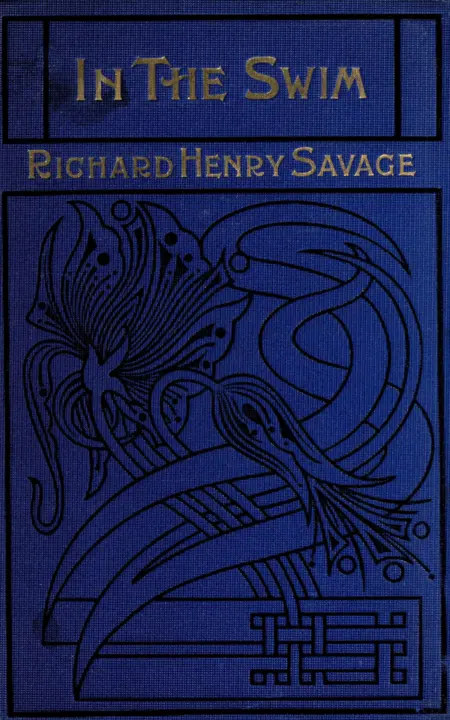
"In the Swim: A Story of Currents and Under-Currents in Gayest New York" by Richard Henry Savage is a novel written in the late 19th century. The story unfolds in the vibrant and dynamic setting of New York City, focusing on the life of Harold Vreeland, a young man returning from the West to navigate the complexities of societal ambition and romantic entanglements in high society. The narrative hints at themes of ambition, class struggle, and the pursuit of wealth and love. The opening of the novel introduces Harold Vreeland as he travels back to New York on a train, reflecting on his past experiences and the emotional burden he carries due to his father's shady legacy. Despite his handsome appearance and physical prowess, Vreeland feels adrift, resentful of the new social elite he perceives as controlling wealth and power. As he arrives in the city, his thoughts turn to his ambition of integrating into high society, setting the stage for his interactions with various characters, including the wealthy Elaine Willoughby and others who inhabit the sweltering social scene. Vreeland’s internal conflicts and aspirations are effectively established, foreshadowing the twists and turns of his journey to find his place in this opulent yet treacherous world.
Introduction adapted from the source catalogue; source summaries may be automatically generated.
Free to read · English · 97,373 words · No account needed
MAKE TIME FOR A GOOD BOOK
On by default. Untick to stop anonymous reading totals. Each page counts after 10 seconds in view. How this works.
Anonymous counting is on unless you have switched it off.
“‘The Doctor was making money too fast, and there was a very suspicious mortality among the little girls. It reappeared as the “House of the Good Samaritan,” at a little village in Westchester County. The old Doctor has gone either to his reward, or punishment. Probably, the latter.
“‘But the sly hypocrite who sported a D. D., as well as a medical title, left the Westchester property to a buxom grass widow, who long officiated as his matron.
“‘This woman is now forty years old—well-to-do—and is married to a thrifty young farmer—a man who is not particular as to how she earned the handsome property which they enjoy.’
“Mrs. Willoughby was softly sobbing when he finished.
“‘By the lavish use of money and a compact of immunity, she agreed to privately examine the books and records. Of course she has not got them. “It is a friend—and so on.” We did not dare to force her. For, she is a very sly bird.
“‘She was only twenty-two when she eased the good Doctor’s lonely hours, and she is a remarkably cool hand at the game of life.’
“The old man sighed, as he said, ‘It appears that the enthusiastic childless woman, who first adopted the child, died in two years after your babe was taken away from the “private Orphan Asylum,” and, as her young husband remarried in a year, he brought the pretty child back and left her again on McLloyd’s hands—with a handsome present.
“‘The girl was a beautiful three-year-old fairy, and the “matron” remembers her especially. But, McLloyd, always anxious for profit, gave her to the first decent applicants, a respectable childless couple, from Western New York.
“‘Under the name of “Alva Whiting”—full orphan—she was sent away for the second time.
“‘I must find her! You must advertise!’ cried Madame.
“‘Ah!’ said the old lawyer. ‘There is no hope. The young widower came back, after his second wedding was all safe, returning from a three years’ visit in Europe. By a strange chance, his later union was also childless.
“‘Rich, and now thoroughly independent, he, too, wished to trace “Alva Whiting,” and to reclaim her.
“‘But the matron says that even the wily McLloyd, tempted by a handsome reward, failed to find her. The Western New York people may have given a false name, to prevent the child from ever knowing that she was not their own.
“‘That is all—the matron would gladly earn our offered money—she knows
nothing.
“‘And now, God alone can, in his infinite mercy, ever reclaim “Alva
Whiting.”
Your reading position is saved on this browser. Take it to another device with a library code. Reading pages adapt to text, rather than matching a printed edition.
BEHIND THE BOOK
This eBook is for the use of anyone anywhere in the United States and most other parts of the world at no cost and with almost no restrictions whatsoever. You may copy it, give it away or re-use it under the terms of the Project Gutenberg License included with this eBook or online at www.gutenberg.org. If you are not located in the United States, you will have to check the laws of the country where you are located before using this eBook. Read the source licence.
The original source file, including credits and licence, is retained by this library. Request an original-format copy at no charge. Please include the book title and Project Gutenberg identifier #71751.
KEEP YOUR CURIOSITY GOING
Coulson Kernahan

Maurice Baring
Frances Wright
Cécile Tormay

Frederic Jesup Stimson

W. H. P. (William Henry Pope) Jarvis