THE CLASSIC COLLECTION✦Sunshine and snowCLASSIC FREE BOOKS
Sunshine and snow
Harold Bindloss
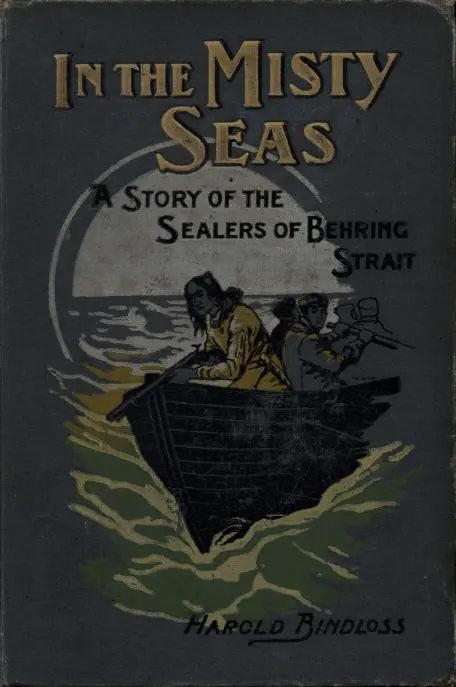
THE CLASSIC COLLECTION · 1905
"In the Misty Seas: A Story of the Sealers of Behring Strait" by Harold Bindloss is a novel written in the late 19th century. The story begins at a school where the main characters, Niven and Appleby, are young boys facing the imminent end of term. They are eager to take to the sea, but their aspirations are soon tested by the harsh realities that accompany life aboard a sealing ship. The opening portion of the book introduces readers to the camaraderie and mischief of schoolboys, focusing particularly on Appleby and Niven's adventurous spirits. As the boys scheme to retrieve a duck belonging to a fellow student, they showcase their youthful determination, setting the stage for their transition from the sheltered life at school to the unforgiving life at sea. The chapter encapsulates not only the boys' antics but foreshadows the challenges and trials they will face as they venture into the vast unknown of the ocean.
Introduction adapted from the source catalogue; source summaries may be automatically generated.
Free to read · English · 80,784 words · No account needed
MAKE TIME FOR A GOOD BOOK
On by default. Untick to stop anonymous reading totals. Each page counts after 10 seconds in view. How this works.
Anonymous counting is on unless you have switched it off.
"Appleby knows that already," said Niven, whose eyes twinkled as he
glanced at his friend.
Appleby made a grimace, and Lawson laughed.
"Then it's a good deal more than you do, though I expect the mate will teach you the first of it," he said.
"Now, when Cally put soft-soap in your singlet and sewed your trousers up you should have laughed fit to split yourself, as Appleby did. Cally tarred his hair for him, and there's some in yet, but any one would have fancied that he liked it."
Niven wriggled a little. "Oh, shut up! That's not what we want to
know," he said.
"No?" said Lawson. "Then we'll get on to the healthful art and practice of seamanship. Am I to commence at the end, or half-way through? The beginning will not be much use to you."
"I'll climb down," said Niven. "Made an ass of myself, as usual. Now, do you want me to lick your boots for you? Begin at the beginning, and make it simple."
Lawson chuckled. "You'll get on while you're in that frame of mind, my son," he said. "Well, now, there are, generally speaking, two kinds of sailing ships--first the fore-and-afters, examples, cutter, ketch, and schooner, with their canvas on one side only of the mast. They're to be described as tricky, especially when you jibe them going free, but when you jam them on the wind they'll beat anything."
"Jam them on the wind?" said Appleby.
Lawson nodded. "Close-hauled sailing. That's what I'm coming to," he said. "In the meanwhile there's the other kind, the one the Britisher holds to, while the Yankee who knows how to run cheap ships smiles, the square-riggers, examples, the ship and brig. Their sails are bent to yards which cross the masts, and, as you have found out, you've got to go aloft in all weathers to handle them, which is not one of their advantages. Then we come to the modifications or crosses between them, the barque, two masts square-rigged, fore-and-aft on mizzen, of which the Aldebaran is a tolerably poor example, topsail schooner, brigantine, which has yards on her foremast and fore-and-aft main, and barquentine with foremast square-rigged and two mainmasts carrying fore-and-aft canvas, though they call the last of them the mizzen. The other kind I didn't mention is the one that makes the money, and sails with a screw. Got that into you?"
"Oh, yes," said Niven, yawning. "Can't you get on? I knew it all years
ago."
Lawson grinned. "Of course!" he said. "Well, I'll leave the mate to
talk to you."
Your reading position is saved on this browser. Take it to another device with a library code. Reading pages adapt to text, rather than matching a printed edition.
Harold Bindloss
Harold Bindloss
Harold Bindloss
Harold Bindloss
BEHIND THE BOOK
This eBook is for the use of anyone anywhere in the United States and most other parts of the world at no cost and with almost no restrictions whatsoever. You may copy it, give it away or re-use it under the terms of the Project Gutenberg License included with this eBook or online at www.gutenberg.org. If you are not located in the United States, you will have to check the laws of the country where you are located before using this eBook. Read the source licence.
The original source file, including credits and licence, is retained by this library. Request an original-format copy at no charge. Please include the book title and Project Gutenberg identifier #47992.
KEEP YOUR CURIOSITY GOING
Coulson Kernahan

Maurice Baring
Frances Wright
Cécile Tormay

Frederic Jesup Stimson

W. H. P. (William Henry Pope) Jarvis