THE CLASSIC COLLECTION✦Studies in the South and West, with Comments on CanadaCLASSIC FREE BOOKS
Studies in the South and West, with Comments on Canada
Charles Dudley Warner

THE CLASSIC COLLECTION · 1877
"In the Levant" by Charles Dudley Warner is a travelogue written in the late 19th century. The book recounts the author's observations and experiences during a journey through the Levant region, including historical and cultural reflections on places like Jaffa and Jerusalem. It provides a vivid depiction of both the ancient and contemporary aspects of the region, touching upon the rich tapestry of history that characterizes this significant part of the world. The beginning of "In the Levant" introduces the reader to Warner's voyage from Jaffa to Jerusalem in April 1875, vividly describing the challenges of disembarking due to the lack of a proper harbor. As he arrives in Jaffa, Warner sketches a historical backdrop, referencing biblical figures such as Jonah and examining the town's significance over the centuries. He introduces his companions on the journey, including his dragoman, Mohammed Abd-el-Atti, and the Abyssinian servant, Ahman Abdallah. Through a mix of personal anecdotes and historical context, Warner sets the stage for his explorations, immersing readers in the vibrant, chaotic atmosphere of Jaffa while hinting at the profound historical remnants that await in Jerusalem.
Introduction adapted from the source catalogue; source summaries may be automatically generated.
Free to read · English · 141,918 words · No account needed
MAKE TIME FOR A GOOD BOOK
On by default. Untick to stop anonymous reading totals. Each page counts after 10 seconds in view. How this works.
Anonymous counting is on unless you have switched it off.
From this height, on the side of the Museum Hill, we see the grotto that has been dignified with the title of the “prison of Socrates,” but upon slight grounds. When the philosopher was condemned, the annual sacred ship which was sent with thank-offerings to Delos was still absent, and until its return no execution was permitted in Athens. Every day the soldiers who guarded Socrates ascended this hill, and went round the point to see if the expected vessel was in sight; and it is for their convenience that some antiquarian designated this grotto as the prison. The delay of the ship gave us his last immortal discourse.
We went one evening by the Temple of Jupiter, along the Ilissus, to the old Stadium. This classic stream, the Ilissus, is a gully, with steep banks and a stony bottom, and apparently never wet except immediately after a rain. You would think by the flattery it received from the ancient Athenians that it was larger than the Mississippi. The Panathenaic Stadium, as it is called, because its chief use was in the celebration of the games of the great quadrennial festival, was by nature and art exceedingly well adapted to chariot races and other contests. Open at the end, where a bridge crossed the Ilissus, it extended a hundred feet broad six hundred and fifty feet into the hill, upon the three sloping sides of which, in seats of marble, could be accommodated fifty thousand spectators. Here the Greek youth contended for the prizes in the chariot race, and the more barbarous Roman emperors amused a degenerate people with the sight of a thousand wild beasts hunted and slain in a single celebration.
The Stadium has been lately re-excavated, and at the time of our visit the citizens were erecting some cheap benches at one end, and preparing, in a feeble way, for what it pleases them to call the Olympic Games, which were to be inaugurated the following Sunday. The place must inevitably dwarf the performance, and comparison render it ridiculous. The committee-men may seem to themselves Olympic heroes, and they had the earnest air of trying to make themselves believe that they were really reviving the ancient glory of Greece, or that they could bring it back by calling a horse-race and the wrestling of some awkward peasants an “Olympiad.” The revival could be, as we afterwards learned it was, only a sickly and laughable affair. The life of a nation is only preserved in progress, not in attempts to make dead forms live again. It is difficult to have chariot races or dramatic contests without chariots or poets, and I suppose the modern imitation would scarcely be saved from ludicrousness, even if the herald should proclaim that now a Patroclus and now an Aristophanes was about to enter the arena. The modern occupants of Athens seem to be deceiving themselves a little with names and shadows. In the genuine effort to revive in its purity the Greek language, and to inspire a love of art and literature, the Western traveller will wholly sympathize. In the growth of a liberal commercial spirit he will see still more hope of a new and enduring Greek state. But a puerile imitation of a society and a religion which cannot possibly have a resurrection excites only a sad smile. There is no more pitiful sight than a man who has lost his ideals, unless it be a nation which has lost its ideals. So long as the body of the American people hold fast to the simple and primitive conception of a republican society,—to the ideals of a century ago,—the nation can survive, as England did, a period of political corruption. There never was, not under Themistocles nor under Scanderbeg, a more glorious struggle for independence than that which the battle of Navarino virtually terminated. The world had a right to expect from the victors a new and vigorous national life, not a pale and sentimental copy of a splendid original, which is now as impossible of revival as the Roman Empire. To do the practical and money-getting Greeks justice, I could not learn that they took a deep interest in the “Olympiad”; nor that the inhabitants of ancient Sparta were jealous of the re-institution of the national games in Athens, since, they say, there are no longer any Athenians to be jealous of.
Your reading position is saved on this browser. Take it to another device with a library code. Reading pages adapt to text, rather than matching a printed edition.
Charles Dudley Warner
Charles Dudley Warner
Charles Dudley Warner
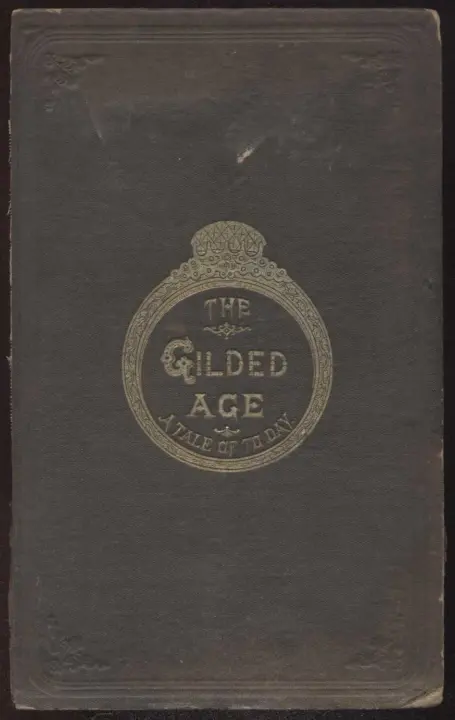
Mark Twain & Charles Dudley Warner
BEHIND THE BOOK
This eBook is for the use of anyone anywhere in the United States and most other parts of the world at no cost and with almost no restrictions whatsoever. You may copy it, give it away or re-use it under the terms of the Project Gutenberg License included with this eBook or online at www.gutenberg.org. If you are not located in the United States, you will have to check the laws of the country where you are located before using this eBook. Read the source licence.
The original source file, including credits and licence, is retained by this library. Request an original-format copy at no charge. Please include the book title and Project Gutenberg identifier #52213.
KEEP YOUR CURIOSITY GOING
Wilfrid Scawen Blunt
Wilfrid Scawen Blunt

E. W. (Edgar Watson) Howe
Francis Greenleaf Allinson & Anne C. E. (Anne Crosby Emery) Allinson
Cyrenus Cole

John Martineau