THE CLASSIC COLLECTION✦Studies in the South and West, with Comments on CanadaCLASSIC FREE BOOKS
Studies in the South and West, with Comments on Canada
Charles Dudley Warner

THE CLASSIC COLLECTION · 1877
"In the Levant" by Charles Dudley Warner is a travelogue written in the late 19th century. The book recounts the author's observations and experiences during a journey through the Levant region, including historical and cultural reflections on places like Jaffa and Jerusalem. It provides a vivid depiction of both the ancient and contemporary aspects of the region, touching upon the rich tapestry of history that characterizes this significant part of the world. The beginning of "In the Levant" introduces the reader to Warner's voyage from Jaffa to Jerusalem in April 1875, vividly describing the challenges of disembarking due to the lack of a proper harbor. As he arrives in Jaffa, Warner sketches a historical backdrop, referencing biblical figures such as Jonah and examining the town's significance over the centuries. He introduces his companions on the journey, including his dragoman, Mohammed Abd-el-Atti, and the Abyssinian servant, Ahman Abdallah. Through a mix of personal anecdotes and historical context, Warner sets the stage for his explorations, immersing readers in the vibrant, chaotic atmosphere of Jaffa while hinting at the profound historical remnants that await in Jerusalem.
Introduction adapted from the source catalogue; source summaries may be automatically generated.
Free to read · English · 141,918 words · No account needed
MAKE TIME FOR A GOOD BOOK
On by default. Untick to stop anonymous reading totals. Each page counts after 10 seconds in view. How this works.
Anonymous counting is on unless you have switched it off.
We alighted at our hotel on the palace place, ascended steps decked with flowering plants, and entered cool apartments looking upon the square, which is surrounded with handsome buildings, planted with native and exotic trees, and laid out in walks and beds of flowers. To the right rises the plain façade of the royal residence, having behind it a magnificent garden, where the pine rustles to the palm, and a thousand statues revive the dead mythology; beyond rises the singular cone of Lycabettus. Commendable foresight is planting the principal streets with trees, the shade of which is much needed in the long, dry, and parching summer.
From the side windows we looked also over the roofs to the Acropolis, which we were impatient and yet feared to approach. For myself, I felt like deferring the decisive moment, playing with my imagination, lingering about among things I did not greatly care for, whetting impatience and desire by restraining them, and postponing yet a little the realization of the dream of so many years,—to stand at the centre of the world's thought, at the spring of its ideal of beauty. While my companions rested from the fatigue of our sea voyage, I went into the street and walked southward towards the Ilissus. The air was bright and sparkling, the sky deep blue like that of Egypt, the hills sharp and clear in every outline, and startlingly near; the long reach of Hymettus wears ever a purple robe, which nature has given it in place of its pine forests. Travellers from Constantinople complained of the heat: but I found it inspiring; the air had no languor in it; this was the very joyous Athens I had hoped to see.
When you take up the favorite uncut periodical of the month, you like to skirmish about the advertisements and tease yourself with dipping in here and there before you plunge into the serial novel. It was absurd, but my first visit in Athens was to the building of the Quadrennial Exposition of the Industry and Art of Greece,—a long, painted wooden structure, decked with flags, and called, I need not say, the Olympium. To enter this imitation of a country fair at home, was the rudest shock one could give to the sentiment of antiquity, and perhaps a dangerous experiment, however strong in the mind might be the subtone of Acropolis. The Greek gentleman who accompanied me said that the exhibition was a great improvement over the one four years before. It was, in fact, a very hopeful sign of the prosperity of the new state; there was a good display of cereals and fruits, of silk and of jewelry, and various work in gold and silver,—the latter all from Corfu; but from the specimens of the fine arts, in painting and sculpture, I think the ancient Greeks have not much to fear or to hope from the modern; and the books, in printing and binding, were rude enough. But the specimens from the mines and quarries of Greece could not be excelled elsewhere; the hundred varieties of exquisite marbles detained us long; there were some polished blocks, lovely in color, and you might almost say in design, that you would like to frame and hang as pictures on the wall. Another sign of the decadence of the national costume, perhaps more significant than its disappearance in the streets, was its exhibition here upon lay figures. I saw a countryman who wore it sneaking round one of these figures, and regarding it with the curiosity of a savage who for the first time sees himself in a mirror. Since the revolution the Albanian has been adopted as the Grecian costume, in default of anything more characteristic, and perhaps because it would puzzle one to say of what race the person calling himself a modern Greek is. But the ridiculous fustanella is nearly discarded; it is both inconvenient and costly; to make one of the proper fulness requires forty yards of cotton cloth; this is gathered at the waist, and hangs in broad pleats to the knees, and it is starched so stiffly that it stands out like a half-open Chinese umbrella. As the garment cannot be worn when it is the least soiled, and must be done up and starched two or three times a week, the wearer finds it an expensive habit; and in the whole outfit—the jacket and sleeves may be a reminiscence of defensive armor—he has the appearance of a landsknecht above and a ballet-girl below.
Your reading position is saved on this browser. Take it to another device with a library code. Reading pages adapt to text, rather than matching a printed edition.
Charles Dudley Warner
Charles Dudley Warner
Charles Dudley Warner
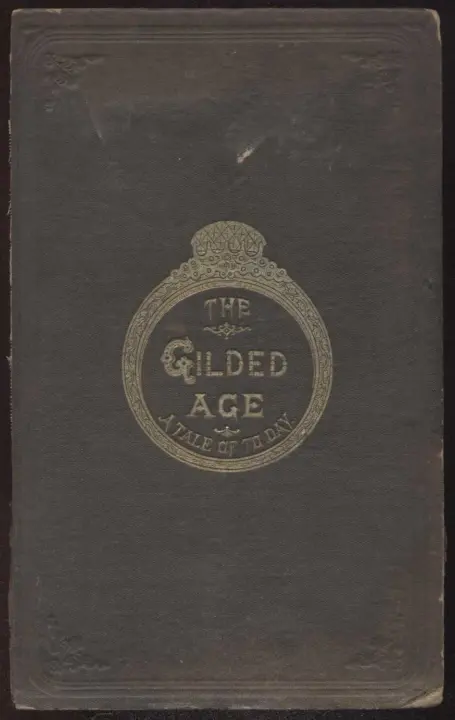
Mark Twain & Charles Dudley Warner
BEHIND THE BOOK
This eBook is for the use of anyone anywhere in the United States and most other parts of the world at no cost and with almost no restrictions whatsoever. You may copy it, give it away or re-use it under the terms of the Project Gutenberg License included with this eBook or online at www.gutenberg.org. If you are not located in the United States, you will have to check the laws of the country where you are located before using this eBook. Read the source licence.
The original source file, including credits and licence, is retained by this library. Request an original-format copy at no charge. Please include the book title and Project Gutenberg identifier #52213.
KEEP YOUR CURIOSITY GOING
Wilfrid Scawen Blunt
Wilfrid Scawen Blunt

E. W. (Edgar Watson) Howe
Francis Greenleaf Allinson & Anne C. E. (Anne Crosby Emery) Allinson
Cyrenus Cole

John Martineau