THE CLASSIC COLLECTION✦Little MetacometCLASSIC FREE BOOKS
Little Metacomet
Hezekiah Butterworth
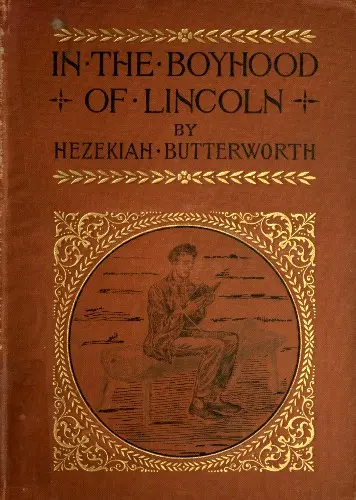
THE CLASSIC COLLECTION · 1892
"In The Boyhood of Lincoln" by Hezekiah Butterworth is a historical fiction work written in the late 19th century. The narrative focuses on the formative years of Abraham Lincoln, highlighting the character-building experiences and the influential figures in his early life, particularly a traveling schoolmaster named Jasper, who shapes the ideals of young Lincoln. At the start of the book, we are introduced to Jasper the Parable, a Tunker schoolmaster traveling through rural Indiana. As he makes his way to a school, he encounters various locals, including a young boy who informs him about the infamous schoolmaster Crawford, known for his strict discipline. Jasper arrives at the school just in time to witness a lively spelling class riddled with both humor and chaos, where we meet the tall, serious figure of Abraham Lincoln, a student there. The opening sets the tone for the intertwining of historical reality and fictional narrative that explores the themes of education, moral integrity, and the cultivation of character that will ultimately shape Lincoln into a pivotal figure in American history.
Introduction adapted from the source catalogue; source summaries may be automatically generated.
Free to read · English · 70,177 words · No account needed
MAKE TIME FOR A GOOD BOOK
On by default. Untick to stop anonymous reading totals. Each page counts after 10 seconds in view. How this works.
Anonymous counting is on unless you have switched it off.
"That boy'll have a fit," said Aunt Olive. "Don't let him read any more,
for massy sake!"
"O--What's that word, master? S-o-l-i-t-u-d-e, so-li-tu-de.
O--So-li-tu-de."
"O Solitude, where are the charms?" read Mr. Andrew Crawford,
"That sages have seen in thy face?
Better dwell in the midst of alarms
Than reign in this horrible place."
Nathaniel followed the master like a race-horse. He went on smoothly until he came to "this horrible place," when his face assumed a startled expression, like one who had met with an apparition. He began to spell out horrible, "h-o-r-, hor--there's your hor, hor; r-i-b-, there's your rib, horrib--"
"Don't let that boy read any more," said Aunt Olive.
Nathaniel dropped his book by his side, and cast a far-away glance into
the timber.
"I guess I ain't much of a reader," he remarked, dryly.
"Stop, sir!" said the master.
Poor Nathaniel! Once, in attempting to read a Bible story, he read, "And he smote the Hittite that he died"--"And he smote him Hi-ti-ti-ty, that he did" with great emphasis and brief self-congratulation.
In wonderful contrast to Nathaniel's efforts was the reading in concert by the whole class. Here was shown fine preparation for a forest school. The reading of verses, in which "sound corresponded to the signification," was smoothly, musically, and admirably done, and we give some of these curious exercises here:
Felling trees in a wood.
Loud sounds the axe, redoubling strokes on strokes; On all sides round the forest hurls her oaks Headlong. Deep echoing groan the thickets brown, Then rustling, crackling, crashing, thunder down.
Sounds of a bow-string.
The string let fly
Twanged short and sharp, like the shrill swallow's cry.
The pheasant.
See! from the brake the whirring pheasant springs,
And mounts exulting on triumphant wings.
Scylla and Charybdis.
Dire Scylla there a scene of horror forms, And here Charybdis fills the deep with storms. When the tide rushes from her rumbling caves, The rough rock roars; tumultuous boil the waves.
Boisterous and gentle sounds.
Two craggy rocks projecting to the main,
The roaring winds' tempestuous rage restrain:
Within, the waves in softer murmurs glide,
And ships secure without their hawsers ride.
Laborious and impetuous motion.
With many a weary step, and many a groan, Up the high hill he heaves a huge round stone: The huge round stone resulting with a bound, Thunders impetuous down, and smokes along the ground.
Regular and slow movement.
First march the heavy mules securely slow; O'er hills, o'er dales, o'er crags, o'er rocks they go.
Motion slow and difficult.
A needless Alexandrine ends the song, That, like a wounded snake, drags its slow length along.
Your reading position is saved on this browser. Take it to another device with a library code. Reading pages adapt to text, rather than matching a printed edition.
Hezekiah Butterworth
Hezekiah Butterworth
Hezekiah Butterworth
Hezekiah Butterworth
BEHIND THE BOOK
This eBook is for the use of anyone anywhere in the United States and most other parts of the world at no cost and with almost no restrictions whatsoever. You may copy it, give it away or re-use it under the terms of the Project Gutenberg License included with this eBook or online at www.gutenberg.org. If you are not located in the United States, you will have to check the laws of the country where you are located before using this eBook. Read the source licence.
The original source file, including credits and licence, is retained by this library. Request an original-format copy at no charge. Please include the book title and Project Gutenberg identifier #25672.
KEEP YOUR CURIOSITY GOING
Cécile Tormay

Moritz Busch
Coulson Kernahan
John L. Ransom

Maurice Baring
Frances Wright