THE CLASSIC COLLECTION✦From Gretna Green to Land’s End: A Literary Journey in England.CLASSIC FREE BOOKS
From Gretna Green to Land’s End: A Literary Journey in England.
Katharine Lee Bates
THE CLASSIC COLLECTION · 1913
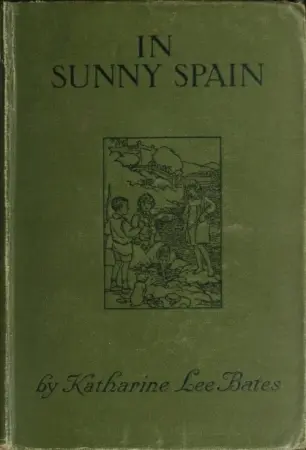
"In Sunny Spain with Pilarica and Rafael" by Katharine Lee Bates is a fictional children's book likely written in the early 20th century. The narrative follows the adventures of two young siblings, Pilarica and Rafael, as they explore their enchanting surroundings in Granada, Spain, filled with cultural richness and vivid imagery. The story weaves together their playful interactions, family dynamics, and the warmth of relationships against the backdrop of historical references and local traditions. The opening chapters introduce Pilarica, a lively little girl, fidgeting after finishing some embroidery and eager to play in the beautiful Moorish garden that once belonged to her ancestors. After a brief encounter with her older brother Rafael, who has quickly transitioned into a playful game where he takes on the role of a Moorish prince, the children engage in whimsical adventures and riddles with their grandfather. As they explore the garden, their interactions encapsulate the themes of childhood innocence, familial love, and the allure of the past. The stage is set for the siblings' adventures in a world marked by rich folklore and childhood imagination.
Introduction adapted from the source catalogue; source summaries may be automatically generated.
Free to read · English · 54,464 words · No account needed
MAKE TIME FOR A GOOD BOOK
On by default. Untick to stop anonymous reading totals. Each page counts after 10 seconds in view. How this works.
Anonymous counting is on unless you have switched it off.
“Good-day, sir,” said Pilarica, who knew no reason why one should not be as polite to a goatherd as to a grandee.
Scared peasant though he was, he had Castilian manners.
“Will your Grace eat?” he stammered, offering his humble fare.
Pilarica declined with a courteous gesture of her little hand, now almost as brown as his own, and the customary Spanish phrase:
“May it do you good!”
He started again at the sound of her voice, but gulped down the rest of his bread, corked the cow’s-horn, thrust it into his rough leather wallet and then went to his flock, soon returning with warm milk in a bottle. Not daring, apparently, to reach across Pilarica, he pointed to the baby.
“Oh, may I!” exclaimed the little girl in ecstasy and, gathering that kid-skin bundle into her lap, she administered the milk as best she could, singing meanwhile, over and over, one of Grandfather’s lullabies:
“Recotín, recotón!
The bells of Saint John!
There’s a festival on!
Recotín, recotín, recotón!”
The goatherd, to whom Pilarica’s sweet treble had an unearthly sound, crossed himself and backed still further away.
“What is the darling’s name?” she asked, too much engrossed in her new, delightful occupation to notice the peasant’s fright.
“The Child of Hunger,” replied the goatherd. He had a few words, at the best, and was, besides, more and more terrified in the presence of one whom he took to be a fairy. For he was but a simple-minded fellow, believing all the tales that he had heard from wandering shepherds on the windy waste or from old wives in rough-hewn chimney-corners. Whenever a lizard glided across his path, he saluted the little green creature with his best bow, for he believed that the lizard is itself so courteous that it will not go to sleep on a sunny wall without descending first to kiss the earth. When his eyes were hurting him, he would watch the swallows in their wheeling flight, for he believed that swallows know of a secret herb that cures sore eyes and that they pluck off its leaves to carry to their nestlings. He always trembled and crossed himself when he came upon even the prettiest little striped snake, for he believed that snakes never die, but when they see Death walking over the plain, looking for them, slip out of their skins and run away, growing into huge serpents with the years and becoming, in the centuries, scaly dragons that devour the flocks. This, he knew, was St. John’s Eve, when, as he had heard since childhood, from every fountain springs forth a fairy princess to spread her linen, white as snow and fine as cobwebs, out to dry in the dew. His young wife had perished of the fever a few weeks before and he could not leave their baby alone in the poor little hut of their brief happiness. So he had, while tending his flock, carried the child about with him, but the little one did not thrive. It would be better to give him to this gentle princess, who, perhaps, had come so far from her fountain to seek a playmate for that tiny fairy-baby with the golden hair and the bright blue eyes that never once winked as they looked out straight upon the western sun. What if the princess were waiting for a herd of elfin goats to bring that dainty creature milk? It would be as well for his honest Christian goats not to meet them. No harm could come to the child in the shining diamond grotto under the fountain, for the christening dews upon the little head would guard it from all evil. So the goatherd slyly picked up his coarse brown cloak and stealthily moved away with his flock, somewhat troubled in mind, for he thought Saint John might better have sent an angel than a fairy to their need, and missing so much the accustomed weight, lighter with every week, upon his arm, that he picked up a young kid and carried this for comfort.
Your reading position is saved on this browser. Take it to another device with a library code. Reading pages adapt to text, rather than matching a printed edition.
Katharine Lee Bates
Katharine Lee Bates
Katharine Lee Bates
BEHIND THE BOOK
This eBook is for the use of anyone anywhere in the United States and most other parts of the world at no cost and with almost no restrictions whatsoever. You may copy it, give it away or re-use it under the terms of the Project Gutenberg License included with this eBook or online at www.gutenberg.org. If you are not located in the United States, you will have to check the laws of the country where you are located before using this eBook. Read the source licence.
The original source file, including credits and licence, is retained by this library. Request an original-format copy at no charge. Please include the book title and Project Gutenberg identifier #45441.
KEEP YOUR CURIOSITY GOING
Coulson Kernahan

Maurice Baring
Frances Wright
Cécile Tormay

Frederic Jesup Stimson

W. H. P. (William Henry Pope) Jarvis