THE CLASSIC COLLECTION✦From Gretna Green to Land’s End: A Literary Journey in England.CLASSIC FREE BOOKS
From Gretna Green to Land’s End: A Literary Journey in England.
Katharine Lee Bates
THE CLASSIC COLLECTION · 1913
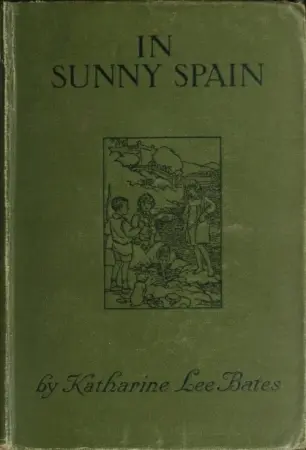
"In Sunny Spain with Pilarica and Rafael" by Katharine Lee Bates is a fictional children's book likely written in the early 20th century. The narrative follows the adventures of two young siblings, Pilarica and Rafael, as they explore their enchanting surroundings in Granada, Spain, filled with cultural richness and vivid imagery. The story weaves together their playful interactions, family dynamics, and the warmth of relationships against the backdrop of historical references and local traditions. The opening chapters introduce Pilarica, a lively little girl, fidgeting after finishing some embroidery and eager to play in the beautiful Moorish garden that once belonged to her ancestors. After a brief encounter with her older brother Rafael, who has quickly transitioned into a playful game where he takes on the role of a Moorish prince, the children engage in whimsical adventures and riddles with their grandfather. As they explore the garden, their interactions encapsulate the themes of childhood innocence, familial love, and the allure of the past. The stage is set for the siblings' adventures in a world marked by rich folklore and childhood imagination.
Introduction adapted from the source catalogue; source summaries may be automatically generated.
Free to read · English · 54,464 words · No account needed
MAKE TIME FOR A GOOD BOOK
On by default. Untick to stop anonymous reading totals. Each page counts after 10 seconds in view. How this works.
Anonymous counting is on unless you have switched it off.
Little Alfonso.
=Alfonso.= (Al-fŏn´-so.)
Alphonso. A boy’s name meaning Ready. The present king of Spain is
Alfonso XIII.
=Alhambra.= (Al-hăm´-brah.)
The famous fortress and palace built by the Moors on a hilltop overlooking Granada. The name is Arabic and means Ruddy, perhaps from the color of the stone.
=Ana.= (Ah´-nah.)
Anna. Hannah. Anne. A girl’s name meaning Gracious. St. Anne, the mother of the Madonna, is much beloved in Spain.
=Angelito.= (An-hel-lee´-to.)
Little angel.
=Arnaldo.= (Ar-năl´-do.)
Arnold. A boy’s name meaning Strong as an Eagle.
=Arré.= (Ar´-ray.)
Gee. The shout of a Spanish driver in urging on his mule.
=Arriero.= (Ar-re-er´-o.)
Muleteer; carrier.
=Ay de mi.= (I´ day mee´.)
Alas, poor me!
=Bastiano.= (Bäs-te-ah´-no.)
Short for Sebastiano. Sebastian. A boy’s name meaning Reverend. St. Sebastian, a brave and beautiful young martyr shot all over with arrows, is a favorite saint in Spain and Italy.
=Bavieca.= (Bah-ve-ā´-ca.)
The name of the Cid’s horse, mentioned in almost every one of the
hundred ballads of the Cid.
=Benito.= (Bā-nee´-to.)
Benedict. A boy’s name meaning Blessed.
=Bernardo del Carpio.= (Ber-nar´-do del Car´-pe-o.)
A Spanish warrior of the eighth or ninth century. The king long held the father of Bernardo in cruel imprisonment and when at last obliged to restore the captive, had him murdered in his dungeon, mounted the dead body, in full armor, on horseback, and sent that forth to the expectant son, who, in his grief and rage, went over to the Moors. See page 84.
=Blanco.= (Blan´-co.)
White. In this story, the name of a white mule.
=Bolondron.= (Bō-lon-drŏn´.)
A sonorous name fit for a braggart.
=Brasero.= (Brä-sā´-ro.)
Brasier. A pan for holding burning coals.
=Cadiz.= (Cä´deth. More often pronounced by the Andalusians Cä´-de.)
A fortified city on the southern coast of Spain.
=Capitana.= (Cah-pe-tah´-nah.)
Captainess. In this story, the name of a mule who insists on taking the
lead.
=Carbonera.= (Car-bon-er´-ah.)
Derived from =carbon= (car-bone´), meaning charcoal. In this story, the name of a soot-colored mule.
=Carlos.= (Car´-los.)
Charles. A boy’s name meaning Noble of Spirit.
=Carmencita.= (Car-men-thee´-tah.)
Little Carmen. A girl’s name.
=Catalina.= (Cah-tah-lee´-nah.)
Catherine or Katharine.
=Celestino.= (Thel-es-tee´-no.)
Celestine. A boy’s name not uncommon in Spain.
=Cid.= (Pronounced in English, Sĭd; in Spanish, Thed.)
An Arabic word, meaning lord, given as a title of honor to Rodrigo (Ro-dree´-go) or Ruy (Roo´-e) Diaz (Dee´-ath) de Bivar (Be-var´), a Spanish hero of the eleventh century.
=Cigarron.= (Thie-gar-rón.)
Your reading position is saved on this browser. Take it to another device with a library code. Reading pages adapt to text, rather than matching a printed edition.
Katharine Lee Bates
Katharine Lee Bates
Katharine Lee Bates
BEHIND THE BOOK
This eBook is for the use of anyone anywhere in the United States and most other parts of the world at no cost and with almost no restrictions whatsoever. You may copy it, give it away or re-use it under the terms of the Project Gutenberg License included with this eBook or online at www.gutenberg.org. If you are not located in the United States, you will have to check the laws of the country where you are located before using this eBook. Read the source licence.
The original source file, including credits and licence, is retained by this library. Request an original-format copy at no charge. Please include the book title and Project Gutenberg identifier #45441.
KEEP YOUR CURIOSITY GOING
Coulson Kernahan

Maurice Baring
Frances Wright
Cécile Tormay

Frederic Jesup Stimson

W. H. P. (William Henry Pope) Jarvis