THE CLASSIC COLLECTION✦In the Heart of a FoolCLASSIC FREE BOOKS
In the Heart of a Fool
William Allen White
THE CLASSIC COLLECTION · 1906
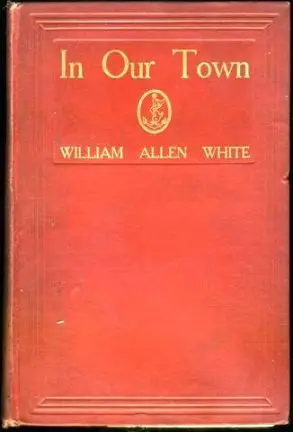
"In Our Town" by William Allen White is a novel written in the early 20th century. The book provides a vivid portrayal of life in a small American town, focusing on the newspaper office that serves as the social hub and chronicler of community events. The narrative captures the quirks and dynamics of the townspeople, showcasing their interactions, the local gossip, and the intricate web of relationships that constitute small-town life. The opening of "In Our Town" introduces a community where the local newspaper plays a crucial role in reflecting the essence of everyday life. The narrator, who appears to be part of the newspaper staff, shares anecdotes about the town's residents, revealing their secrets, triumphs, and tribulations. Key characters include the country editor, who provides insightful commentary on the human condition and how the paper reflects the moral fabric of the community. The chapter paints a picture of a place filled with both humor and heartache, where the mundane aspects of life are celebrated and scrutinized, setting the stage for the deeper themes and stories that are likely to unfold throughout the novel.
Introduction adapted from the source catalogue; source summaries may be automatically generated.
Free to read · English · 72,620 words · No account needed
MAKE TIME FOR A GOOD BOOK
On by default. Untick to stop anonymous reading totals. Each page counts after 10 seconds in view. How this works.
Anonymous counting is on unless you have switched it off.
We knew that Joe Nevison was in the West. People from our town, who seem to swarm over the earth, wrote back that they had met Joe in Dodge City, in Leoti, in No-Man's-Land, in Texas, in Arizona--wherever there was trouble. Sometimes he was the hired bad man of a desert town, whose business it was to shoot terror into the hearts of disturbers from rival towns; sometimes he was a free lance--living the devil knows how--always dressed like a fashion-plate of the plains in high-heeled boots, wide felt hat, flowing necktie, flannel shirt and velvet trousers. They say that he did not gamble more than was common among the sporting men of his class, and that he never worked. Sometimes we heard of him adventuring as a land dealer, sometimes as a cattleman, sometimes as a mining promoter, sometimes as a horseman, but always as the sharper, who rides on the crest of the forward wave of civilization, leaving a town when it tears down its tents and puts up brick buildings, and then appearing in the next canvas community, wherein the night is filled with music, and the cares that infest the day are drowned in bad whiskey or winked out with powder and shot. And thus Joe Nevison closed his twenties--a desert scorpion, outcast by society and proud of it. As he passed into his thirties he left the smoky human crystals that formed on the cow trails and at the mountain gold camps. Cripple Creek became too effete for him, and an electric light in a tent became a target he could not resist; wherefore he went into the sage brush and the short grass, seeking others of his kind, the human rattlesnake, the ranging coyote and the outlawed wolf. Joe Nevison rode with the Dalton gang, raided ranches and robbed banks with the McWhorters and held up stages as a lone highwayman. At least, so men said in the West, though no one could prove it, and at the opening of Lawton he appeared at the head of a band of cutthroats, who were herded out of town by the deputy United States marshals before noon of the first day. Not until popular government was established could they get in to open their skin-game, which was better and safer for them than ordinary highway faring. At Lawton our people saw Joe and he asked about the home people, asked about the boys--the old boys he called them--and becoming possessed of a post-office address, Joe wrote a long letter to George Kirwin, the foreman of our office. We call him old George, because he is still under forty. Joe being in an expansive mood, and with more money on his clothes than he cared for, sent old George ten dollars to pay for a dollar Joe had borrowed the day he left town in the eighties. We printed Joe's letter in our paper, and it pleased his mother. That was the beginning of a regular correspondence between the rover and the home-stayer. George Kirwin, gaunt, taciturn, and hard-working, had grown out of the dreamy, story-loving boy who had been one of the Slaves of the Magic Tree and into a shy old bachelor who wept over "East Lynne" whenever it came to the town opera house, and asked for a lay-off only when Modjeska appeared in Topeka, or when there was grand opera at Kansas City. But he ruled the back office with an iron hand and superintended the Mission Sunday-School across the track, putting all his spare money into Christmas presents for his pupils. After that first letter that came from Joe Nevison, no one had a hint of what passed between the two men. But a month never went by that Joe's letter missed. When Lawton began to wane, Joe Nevison seemed to mend his wayward course. He moved to South McAlester and opened a faro game--a square game they said it was--for the Territory! This meant that unless Joe was hard up every man had his chance before the wheel. Old George took the longest trip of his life, when we got him a pass to South McAlester and he put on his black frock coat and went to visit Joe. All that we learned from him was that Joe "had changed a good deal," and that he was "taking everything in the drug store, from the big green bottle at the right of the front door clear around past the red prescription case, and back to the big blue bottle at the left of the door." But after George came home the Mission Sunday-School began to thrive. George was not afraid of tainted money, and the school got a new library, which included "Tom Sawyer" and "Huckleberry Finn," as well as "Hans Brinker and the Silver Skates" for the boys, and all the "Pansy" books for the girls. It was a quaint old lot of books, and George Kirwin was nearly a year getting it together. Also he bought a new stove for his Sunday-School room, and a lot of pictures for the church walls, among others "Wide Awake and Fast Asleep," "Simply to Thy Cross," and "The Old Oaken Bucket." He gave to the school a cabinet organ with more stops than most of the children could count.
Your reading position is saved on this browser. Take it to another device with a library code. Reading pages adapt to text, rather than matching a printed edition.
William Allen White
William Allen White
William Allen White
BEHIND THE BOOK
This eBook is for the use of anyone anywhere in the United States and most other parts of the world at no cost and with almost no restrictions whatsoever. You may copy it, give it away or re-use it under the terms of the Project Gutenberg License included with this eBook or online at www.gutenberg.org. If you are not located in the United States, you will have to check the laws of the country where you are located before using this eBook. Read the source licence.
The original source file, including credits and licence, is retained by this library. Request an original-format copy at no charge. Please include the book title and Project Gutenberg identifier #26207.
KEEP YOUR CURIOSITY GOING
Coulson Kernahan

Maurice Baring
Frances Wright
Cécile Tormay

Frederic Jesup Stimson

W. H. P. (William Henry Pope) Jarvis