
Dead letters
Maurice Baring
THE CLASSIC COLLECTION · 1897
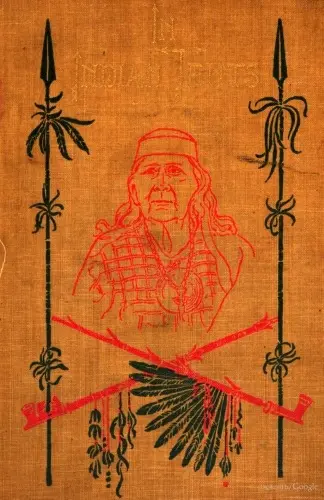
"In Indian Tents" by Abby Langdon Alger is a collection of stories told by Penobscot, Passamaquoddy, and Micmac Indians, written in the late 19th century. This work seeks to preserve Indigenous folklore, as Alger transcribes various legends and myths that highlight the cultural heritage and belief systems of these tribes. Through these narratives, the collection offers insights into the values, fears, and experiences of Native American communities through the lens of their storytelling tradition. The opening of the collection introduces the reader to the origins of these tales and the experience of the author in gathering these stories. Alger recounts her efforts to preserve the oral traditions of the Indian elders, emphasizing the importance of storytelling as a means of cultural survival. The first stories presented include the creation myth featuring Glūs-kābé, the Indian god, alongside tales of Grandfather Thunder and the Giant Witch, introducing readers to key figures within the folklore. These stories not only entertain but also convey moral lessons and cultural values inherent to the Indigenous peoples of the region, setting the stage for a deeper exploration of their myths throughout the rest of the collection.
Introduction adapted from the source catalogue; source summaries may be automatically generated.
Free to read · English · 26,885 words · No account needed
MAKE TIME FOR A GOOD BOOK
On by default. Untick to stop anonymous reading totals. Each page counts after 10 seconds in view. How this works.
Anonymous counting is on unless you have switched it off.
“K’chī Megūsawess,” the Martin, taught him the language of other animals, to enable him to keep out of danger, and Mūinsq’, Mistress Bear, Glūskap’s adopted grandmother, gave him the Law, with much good advice; for all Bears are wise, and she was wisest of them all. She said:--
“You must never speak in praise of yourself, but pay attention to all
that is said to you.
“Always control your temper; and, when enraged, say, chim, chim, chim,[26] over and over, as fast as you can, until your anger is over.
“The Law is: ‘Mind your own business.’
“Do this and you will be wise and wealthy.”
Mīko then started out on his travels, but had not gone far when he remembered a bird named “Laffy Latwin,”[27] whose home in a tall birch-tree was his especial envy.
He said to himself: “Now is my chance to try the wings of ‘Set-cāto,’ the Flying Squirrel,” and at once he half climbed, half flew, up the tree, where he found Laffy Latwin still at home.
Laffy Latwin was always good-natured; and all the little birds as well as insects visited his abode. The little worms too would crawl up the birch-tree to see their friend. He sang the vesper song every night, as a signal to them all to go to sleep. When he sings:
“Woffy[28] Latwin, Laffy Latwin, wickīūtūwit,”
he shuts his eyes for the night; and all the little birds are silent until his voice is again heard in the morning, when all awake, for they know that another day has dawned.
When Mīko, who now styled himself Set-cāto, reached the home of Laffy
Latwin, he said:--
“How long have you lived in this tree?”
“Ever since your great grandfather, ‘K’chī Mūsos,’ was born in that hollow cedar-tree which you just left,” replied Laffy Latwin.
“How long do you mean to stay here?”
“As long as this tree lasts. When this one is gone, I will move to another,” replied Laffy Latwin.
But Mīko, or Set-cāto, as we must now call him, had never before been so high above the ground; and though the home of Laffy Latwin was cold and damp, he was greatly pleased with the situation, and wished to build a house for himself in the very same hole, so he said:
“My friend, you have lived here long enough. You had better move out,
and let me move in.”
Laffy Latwin was troubled, yet he answered in his usual good-natured
way:--
Your reading position is saved on this browser. Take it to another device with a library code. Reading pages adapt to text, rather than matching a printed edition.
BEHIND THE BOOK
This eBook is for the use of anyone anywhere in the United States and most other parts of the world at no cost and with almost no restrictions whatsoever. You may copy it, give it away or re-use it under the terms of the Project Gutenberg License included with this eBook or online at www.gutenberg.org. If you are not located in the United States, you will have to check the laws of the country where you are located before using this eBook. Read the source licence.
The original source file, including credits and licence, is retained by this library. Request an original-format copy at no charge. Please include the book title and Project Gutenberg identifier #51908.
KEEP YOUR CURIOSITY GOING
Maurice Baring
Francis Greenleaf Allinson & Anne C. E. (Anne Crosby Emery) Allinson
Stuart Dodgson Collingwood
Percy Keese Fitzhugh
Mary Macleod & Edmund Spenser

Cooke Don-Carlos