
Dead letters
Maurice Baring
THE CLASSIC COLLECTION · 1897
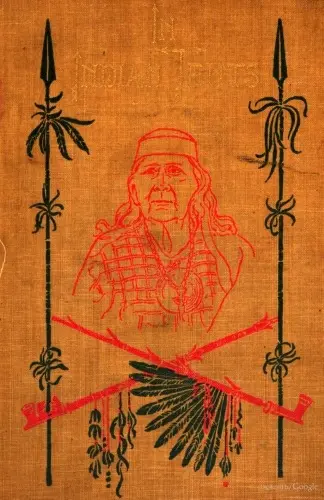
"In Indian Tents" by Abby Langdon Alger is a collection of stories told by Penobscot, Passamaquoddy, and Micmac Indians, written in the late 19th century. This work seeks to preserve Indigenous folklore, as Alger transcribes various legends and myths that highlight the cultural heritage and belief systems of these tribes. Through these narratives, the collection offers insights into the values, fears, and experiences of Native American communities through the lens of their storytelling tradition. The opening of the collection introduces the reader to the origins of these tales and the experience of the author in gathering these stories. Alger recounts her efforts to preserve the oral traditions of the Indian elders, emphasizing the importance of storytelling as a means of cultural survival. The first stories presented include the creation myth featuring Glūs-kābé, the Indian god, alongside tales of Grandfather Thunder and the Giant Witch, introducing readers to key figures within the folklore. These stories not only entertain but also convey moral lessons and cultural values inherent to the Indigenous peoples of the region, setting the stage for a deeper exploration of their myths throughout the rest of the collection.
Introduction adapted from the source catalogue; source summaries may be automatically generated.
Free to read · English · 26,885 words · No account needed
MAKE TIME FOR A GOOD BOOK
On by default. Untick to stop anonymous reading totals. Each page counts after 10 seconds in view. How this works.
Anonymous counting is on unless you have switched it off.
In the days of which I speak, one family had been almost exterminated by the spells of a famous m’téūlin, and only one old woman named “M’déw’t’len,” the Loon, and her infant grandson were left alive; and she, fearing lest they should meet with the same fate, strapped the baby on her back upon a board bound to her forehead, as was the ancient way, and set forth into the wilderness. At night she halted, built a wigwam of boughs and bark, and lay down, lost in sad thoughts of the future; for there was no brave now to hunt and fish for her, and she must needs starve and the baby too. As she mourned her desolate state, a voice said in her ear: “You have a man, a brave man, Wālūt,[3] the mighty warrior; and all shall be well if you will take the beaver skin from your old ’t’bān-kāgan,’[4] spread it on the floor, and place the baby on it.” This she did, and then fell peacefully asleep. When she waked, she saw, standing in the middle of the skin, a tall man. At first, she was terrified; but the stranger said, “Fear not, ‘Nochgemiss,’[5] it is only I!” and truly, as she gazed, she recognized the features of the baby whom she had laid upon the beaver fur, so few hours before. Even before day dawned, he had brought in a huge bear, skinned and dressed it. All day he came and went, bringing fish and game, great and small, and the old woman was glad.
Next morning, the skin which hung at the door of the wigwam was raised, and a girl looked in and smiled at Wālūt. His grandmother said, “Follow her not, for she is a witch, and would destroy you.” The next day and the next and so on, for five days, the same thing was repeated; but on the sixth day, the girl not only lifted the curtain, but she entered in, went straight to Wālūt’s sleeping place and began to arrange his bed. This done, she drew from her bosom “nokoksis,” tiny brass kettles, and proceeded to cook a meal,--soup, corn and meat,--all in perfect silence. Grandmother watched her, but said nothing. When the meal was cooked, the girl set a birch-bark dish before grandmother and Wālūt, and began to ladle out the soup. Although the kettle was so small that it seemed no bigger than a child’s toy, both the dishes were filled and plenty then remained. No word was said; but when night came, the girl lay down beside Wālūt and thus, by ancient Indian law, became his wife. Their happy life, however, was of short duration, for the girl’s mother, “Tomāquè,” the Beaver, was a mighty magician, and was angry because her daughter had married without her consent. She therefore stole her away and deprived her of all memory of her husband and the past. Wālūt was determined to recover his bride, and his grandmother, wishing to help him, took from the old bark kettle a miniature bow and arrows. These she stretched and stretched until they became of heroic size. She strung the bow with a strand of her own hair, and gave it to her grandson, telling him that no arrow shot from that bow could ever miss its mark. She also dressed him from head to foot in the garb of an ancient warrior, formerly the property of his grandfather, as was the bow. She told him that he had a long, hard road to go, and many trials to overcome; but he was not afraid. All day he travelled, and, at night fall, came to a wigwam in which lived an old man. Wālūt asked him where Tomāquè might be found. The old man answered: “I cannot tell you, my child. You must ask my brother who lives farther on. He is much older than I, and he may know. To-night you can rest here, if you can put up with the hardships of my wigwam.” Wālūt accepted this offer, and the old man began to heap great stones on the fire. It grew hotter and hotter, and Wālūt thought his last hour had come; but he said to himself, “I can suffer,” and he piled more stones on the fire, and built a wall of them about the wigwam, so that it grew hotter than ever, and the old man said, “Let me out, let me out, I am too hot!” But Wālūt said, “I am cold, I am cold!” and so he conquered the first magician.
Your reading position is saved on this browser. Take it to another device with a library code. Reading pages adapt to text, rather than matching a printed edition.
BEHIND THE BOOK
This eBook is for the use of anyone anywhere in the United States and most other parts of the world at no cost and with almost no restrictions whatsoever. You may copy it, give it away or re-use it under the terms of the Project Gutenberg License included with this eBook or online at www.gutenberg.org. If you are not located in the United States, you will have to check the laws of the country where you are located before using this eBook. Read the source licence.
The original source file, including credits and licence, is retained by this library. Request an original-format copy at no charge. Please include the book title and Project Gutenberg identifier #51908.
KEEP YOUR CURIOSITY GOING
Maurice Baring
Francis Greenleaf Allinson & Anne C. E. (Anne Crosby Emery) Allinson
Stuart Dodgson Collingwood
Percy Keese Fitzhugh
Mary Macleod & Edmund Spenser

Cooke Don-Carlos