THE CLASSIC COLLECTION✦La cuisine creoleCLASSIC FREE BOOKS
La cuisine creole
Lafcadio Hearn
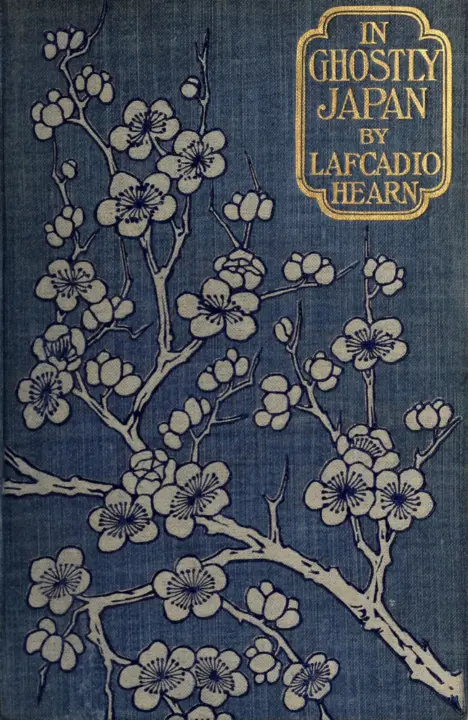
THE CLASSIC COLLECTION · 1899
"In Ghostly Japan" by Lafcadio Hearn is a collection of supernatural stories written during the late 19th century. This work delves into various aspects of Japanese folklore, spirituality, and cultural practices that intertwine the earthly with the ethereal, showcasing themes of love, death, and reincarnation. Through evocative narratives that draw on Hearn's personal experiences in Japan, the book invites readers into a realm where the ordinary and the ghostly coexist, offering a window into the complexities of Japanese beliefs and traditions. At the start of "In Ghostly Japan," the narrative introduces a haunting ascent up a desolate mountain led by a wise Bodhisattva, exploring themes of illusion, fear, and personal realization as the young companion is confronted with skulls that symbolize his past lives. Following this fragment, the tale shifts to the story of a cursed furisodé robe, which is linked to a series of tragic deaths, adding layers of mystery and fate. The opening portion culminates in reflections on incense's profound significance within Japanese culture, revealing its dual role in spiritual practice and as a means of connecting with the dead. Through these interconnected stories, Hearn illuminates the spectral yet deeply poignant aspects of Japanese life.
Introduction adapted from the source catalogue; source summaries may be automatically generated.
Free to read · English · 37,503 words · No account needed
MAKE TIME FOR A GOOD BOOK
On by default. Untick to stop anonymous reading totals. Each page counts after 10 seconds in view. How this works.
Anonymous counting is on unless you have switched it off.
[62] Within the Three States (Sangai), or universes, of Desire, Form, and Formlessness; and within the Six Worlds, or conditions of being,—Jigokudō (Hell), Gakidō (Pretas), Chikushōdō (Animal Life), Shuradō (World of Fighting and Slaughter), Ningendō (Mankind), Tenjōdō (Heavenly Spirits)—all existence is included. Beyond there is only Nirvâna. “There is no fence,” “no neighborhood,”—that is to say, no limit beyond which to escape,—no middle-path between any two of these states. We shall be reborn into some one of them according to our karma.—Compare with No. 74.
77.—Sangé ni wa sannen no tsumi mo hōrobu. One confession effaces the sins of even three years.
78.—San nin yoréba, kugai. Where even three persons come together, there is a world of pain.[63]
[63] Kugai (lit.: “bitter world”) is a term often used to describe the life of a prostitute.
79.—San nin yoréba, Monjū no chié. Where three persons come together, there is the wisdom of Monjū.[64]
[64] Monjū Bosatsu [Mañdjus’ri Bodhisattva] figures in Japanese Buddhism as a special divinity of wisdom.—The proverb signifies that three heads are better than one. A saying of like meaning is, Hiza to mo dankō: “Consult even with your own knee;” that is to say, Despise no advice, no matter how humble the source of it.
80.—Shaka ni sekkyō.
Preaching to Sâkyamuni.
81.—Shami kara chōrō.
To become an abbot one must begin as a novice.
82.—Shindaréba, koso ikitaré.
Only by reason of having died does one enter into life.[65]
[65] I never hear this singular proverb without being re-minded of a sentence in Huxley’s famous essay, On the Physical Basis of Life:—“The living protoplasm not only ultimately dies and is resolved into its mineral and lifeless constituents, but is always dying, and, strange as the paradox may sound, could not live unless it died.”
83.—Shiranu ga, hotoké; minu ga, Gokuraku. Not to know is to be a Buddha; not to see is Paradise.
84.—Shōbo ni kidoku nashi.
There is no miracle in true doctrine.[66]
[66] Nothing can happen except as a result of eternal and irrevocable
law.
85.—Shō-chié wa Bodai no samatagé. A little wisdom is a stumbling-block on the way to Buddhahood.[67]
[67] Bodai is the same word as the Sanscrit Bodhi, signifying the supreme enlightenment,—the knowledge that leads to Buddhahood; but it is often used by Japanese Buddhists in the sense of divine bliss, or the Buddha-state itself.
86.—Shōshi no kukai hetori nashi. There is no shore to the bitter Sea of Birth and Death.[68]
[68] Or, “the Pain-Sea of Life and Death.”
Your reading position is saved on this browser. Take it to another device with a library code. Reading pages adapt to text, rather than matching a printed edition.
Lafcadio Hearn
Lafcadio Hearn

Lafcadio Hearn

Lafcadio Hearn
BEHIND THE BOOK
This eBook is for the use of anyone anywhere in the United States and most other parts of the world at no cost and with almost no restrictions whatsoever. You may copy it, give it away or re-use it under the terms of the Project Gutenberg License included with this eBook or online at www.gutenberg.org. If you are not located in the United States, you will have to check the laws of the country where you are located before using this eBook. Read the source licence.
The original source file, including credits and licence, is retained by this library. Request an original-format copy at no charge. Please include the book title and Project Gutenberg identifier #8128.
KEEP YOUR CURIOSITY GOING

Maurice Baring
Francis Greenleaf Allinson & Anne C. E. (Anne Crosby Emery) Allinson
Stuart Dodgson Collingwood
Percy Keese Fitzhugh
Mary Macleod & Edmund Spenser

Cooke Don-Carlos