
Through the Dark Continent, Vol. 1 (of 2)
Henry M. (Henry Morton) Stanley
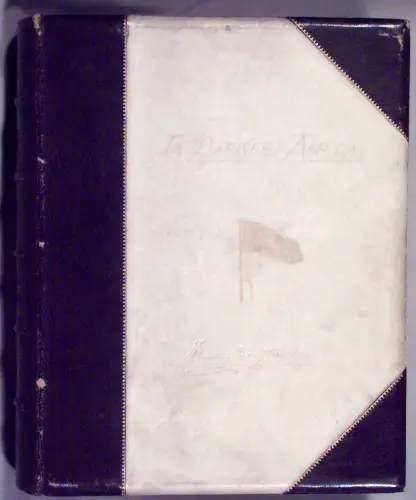
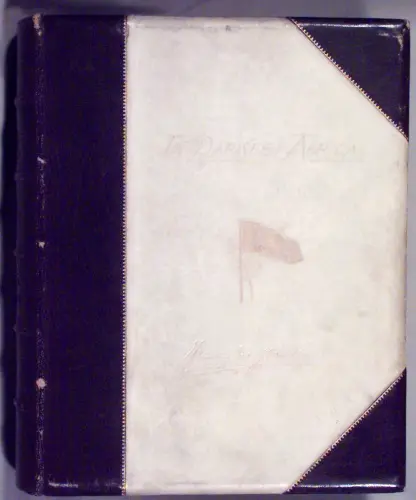
THE CLASSIC COLLECTION · 1890
"In Darkest Africa, Vol. 1; or, The Quest, Rescue, and Retreat of Emin, Governor…" by Henry M. Stanley is a historical account written in the late 19th century. The book chronicles Stanley's exploration and the relief expedition aimed at rescuing Emin Pasha, who was isolated during a tumultuous period in Sudan. The narrative not only focuses on the perilous journey through Africa but also touches upon the broader political and social contexts that influenced the events surrounding the Soudan. At the start of the narrative, Stanley reflects on the historical calamities associated with British involvement in Egypt and the Soudan, setting the scene for the dire circumstances faced by those like Emin Pasha. He offers insight into the socio-political turmoil that preceded his expedition, including the rise of the Mahdi and the failures of the Egyptian government. Stanley outlines the motivations behind the relief expedition and provides background on Emin Pasha, detailing his loyal governance in Equatoria and the dire straits he faced as communication lines with the outside world were severed. The beginning establishes the urgency and gravity of the mission, as Stanley prepares both himself and his potential audience for the journey and challenges ahead.
Introduction adapted from the source catalogue; source summaries may be automatically generated.
Free to read · English · 179,233 words · No account needed
MAKE TIME FOR A GOOD BOOK
On by default. Untick to stop anonymous reading totals. Each page counts after 10 seconds in view. How this works.
Anonymous counting is on unless you have switched it off.
"19th July.--Early this morning a Manyuema woman commenced beating a drum and singing. It is their daily custom. The Major sent his boy Soudi, who was only about thirteen years old, to stop them, but at once loud and angry voices were heard, followed by two shots by way of defiance. The Major ordered some Soudanese to go and find the men who were firing, at the same time getting up from bed himself and taking his revolvers from the case. He said, 'I will shoot the first man I catch firing.' I told him not to interfere with the people's daily custom, to remain inside, and not go out, inasmuch as they would soon be quiet. He went out revolver in hand to where the Soudanese were. They told him that they could not find the men who were firing. The Major then pushed aside some Manyuema and passed through them towards the woman who was beating the drum and singing, and ordered her to desist. Just then a shot was fired through a loophole, in an opposite hut from within, by Sanga, the woman's husband. The charge penetrated just below the region of the heart and passed out behind, lodging finally in a part of the verandah under which the Major fell dead.
"The Soudanese ran away, and refused to follow me to get the Major's body; but I went, and was followed by one Somali, and one Soudanese, who with myself carried the body to my house. From the screaming I thought a general massacre had commenced, for I had not seen a single Zanzibari. They were either hiding within their houses or joining in the general stampede that followed. I now turned and saw one of the headmen of the Manyuema, who with rifle and revolver in hand was leading a body of sixty of his people to attack me. I had no arms. I walked up to him and asked him if he was leading his men to fight me. He replied 'No.' I said, 'Then take your men quietly to their houses and bring all the headmen to me, for I wish to speak to them.' Some headmen shortly afterwards made their appearance, and I said to them, 'The trouble is not mine, but Tippu-Tib's. I want you to bring me all the loads, and tell all your fellows to do the same. Tippu-Tib knows what each of you has in charge and is responsible for them. This is Tippu-Tib's trouble. Tippu-Tib will have to pay up if the goods are lost, and will punish the headman who causes him a loss. I shall write to him, and he will come here, and he shall know the name of him who refuses to do what I now wish.' This resulted in my getting back to the storeroom about 150 loads. I now sent my men to collect what goods they could, and before long I recovered 299 porter loads. They had been scattered all over the place, some in the forest, in the rice field, and in the village huts hidden away within and without, in fact everywhere. Some of the bead sacks and ammunition boxes had already been ripped or broken open, and the whole of their contents, or in part, gone. After counting up I found I was forty-eight loads short. The inhabitants of the village numbered about 200 or 300 people. I had arrived with about 100 men; Muni Sumai, the chief headman of the Manyuema, with 430 carriers and about 200 followers, making a total of about 1000 people, of whom 900 were cannibals, all confined within an area 160 yards by 25 yards. You can therefore better judge than I can describe the scene when the general stampede commenced, the screaming, firing, shouting, looting our stores, &c., &c. I regret to say that the Soudanese and Zanzibaris without exception joined in the looting, but in my turn I raided their houses and haunts and captured a quantity of cloth, beads, rice, &c. I had to punish severely before I succeeded in stopping it. I now wrote to Mr. Jameson, who was about four days off bringing up the remaining loads. I also wrote to Mons. Baert, a Congo State officer, and secretary to Tippu-Tib at Stanley Falls, explaining what had taken place, how I was situated, and asking him to use all his tact with Tippu-Tib to get him to come here or send some chief to replace Muini Sumai, who had been one of the first to abscond. I told Mons. Baert to tell Tippu-Tib that all Europe would blame him if he did not assist us. I then buried the Major, after sewing the body up in a blanket. I dug a grave just within the forest, placing leaves as a cushion at the bottom of the grave, and covered the body with the same. I then read the church service from our Prayer-Book over the body, and this brought the terrible day to a close.
Your reading position is saved on this browser. Take it to another device with a library code. Reading pages adapt to text, rather than matching a printed edition.
Henry M. (Henry Morton) Stanley
Henry M. (Henry Morton) Stanley
Thomas Wallace Knox & Henry M. (Henry Morton) Stanley
Henry M. (Henry Morton) Stanley
BEHIND THE BOOK
This eBook is for the use of anyone anywhere in the United States and most other parts of the world at no cost and with almost no restrictions whatsoever. You may copy it, give it away or re-use it under the terms of the Project Gutenberg License included with this eBook or online at www.gutenberg.org. If you are not located in the United States, you will have to check the laws of the country where you are located before using this eBook. Read the source licence.
The original source file, including credits and licence, is retained by this library. Request an original-format copy at no charge. Please include the book title and Project Gutenberg identifier #43654.
KEEP YOUR CURIOSITY GOING
Wilfrid Scawen Blunt
Wilfrid Scawen Blunt

E. W. (Edgar Watson) Howe
Cécile Tormay

Moritz Busch
John L. Ransom